British Airways – Global Header

Building once, deploying everywhere: Creating a scalable approach to digital experiences for British Airways
A single source of truth for global navigation

Shared navigation can be managed centrally, enabling updates to be made in one location rather than requiring multiple independent changes.

Reduced development effort

Reusable BAgel components reduce the need for teams to recreate and independently maintain shared functionality, supporting more efficient development and future component adoption.

‍

Reduced editorial duplication

Navigation updates that previously required changes across two or three locations can now largely be managed from a single source, simplifying content maintenance and improving editorial efficiency.

‍

SITUATION

Overview  


British Airways had invested heavily in its design system, BAgel, to create a consistent customer experience across its digital estate. This unified approach to design supports enterprise-scale consistency, promotes component reuse and ensures accessibility is considered from the outset.

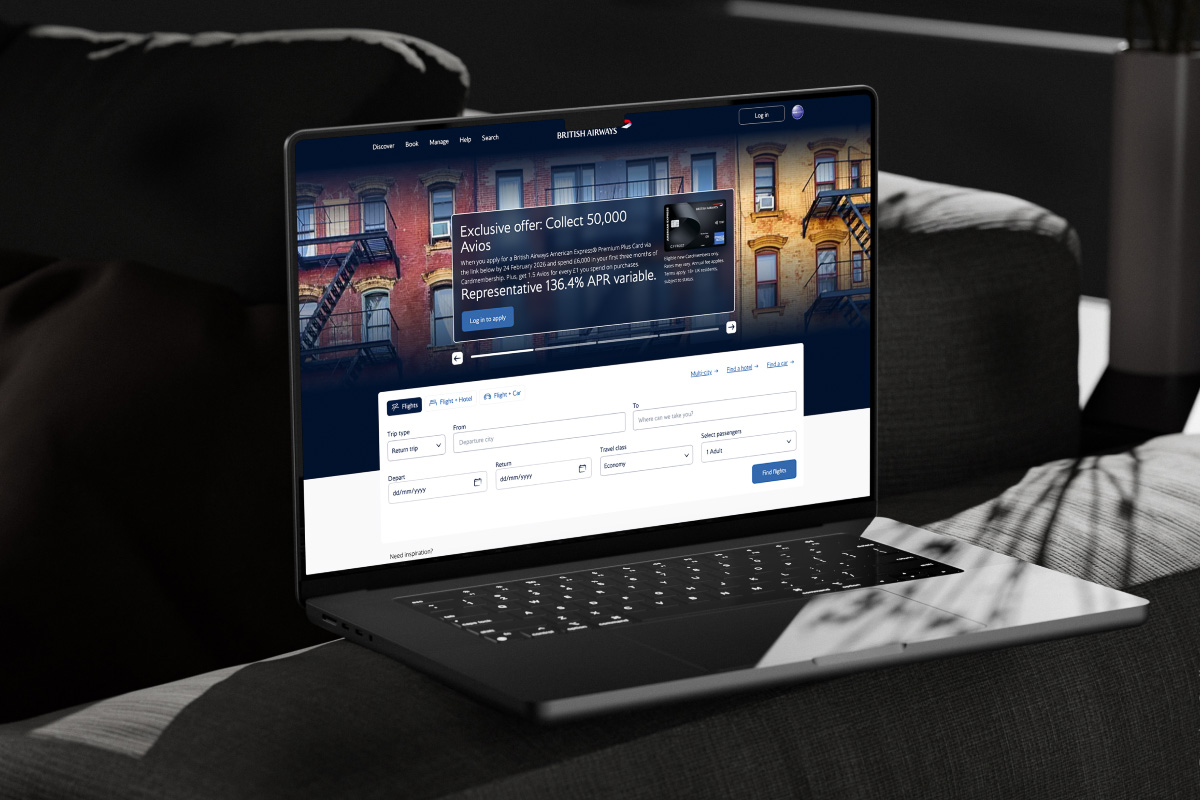
One of the most visible elements of the customer experience – the global header – needed to be deployed across the newly launched BA.com platform. The header plays a critical role in helping customers navigate the website and access essential services, from managing bookings and checking flight status to accessing customer support.

Historically, managing shared navigation elements across different areas of the website created duplicated development and editorial effort. Updates could require changes in multiple locations, making it more challenging to maintain consistency and retain central control over the brand experience.

British Airways needed a more sustainable approach that would enable the header to be managed centrally while accommodating the different languages, markets and functional requirements of its global audience.

More than a component implementation, the project presented an opportunity to demonstrate how shared digital components could be built once, managed centrally and made available for adoption across different platforms and technical environments.

Solution

Building a reusable, centrally managed global header


Leighton played a key role in the development of British Airways' BAgel design system, with its engineers forming a significant proportion of the BAgel team and developing the majority of its reusable components.

Building on this expertise, Leighton contributed extensively to the development of the global header, including its navigation functionality and integration with British Airways' content management system (CMS).

The project was approached as more than a one-off technical delivery. The objective was to establish a repeatable model for how shared components could be built, governed, configured and consumed across the wider digital estate.

A key part of the approach was cross-functional collaboration, bringing together design system owners, developers, content and editorial teams, platform stakeholders and the wider delivery community. This helped establish a shared understanding of the technical, operational and customer experience requirements of a universally reusable component.

Establishing a single source of truth


A central principle of the solution was to separate the shared component and its configuration from the individual applications consuming it.

Rather than requiring teams to independently implement and maintain navigation elements, the global header was integrated with British Airways' CMS, establishing a single source of truth for centrally managed navigation and content.

This enables navigation elements to be updated or disabled from a central location, reducing the need for duplicated changes across different areas of the website and giving editorial teams greater control over the customer experience.

The approach also helps British Airways retain control over its brand, ensuring that shared navigation elements remain consistent while accommodating the specific requirements of different markets and customer journeys.

Designing for universal adoption


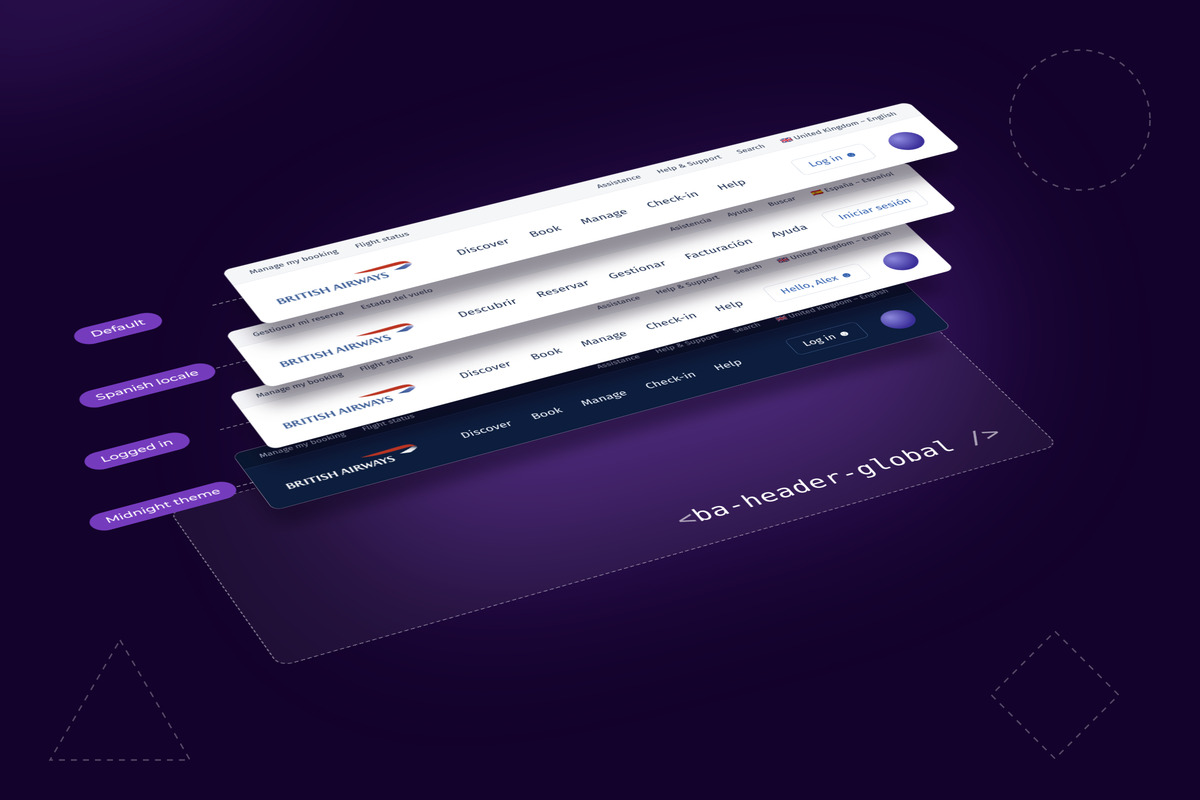
Using BAgel's StencilJS-based component architecture and web-standard technologies, the team developed a framework-independent approach that enables shared components to be consumed across different technical environments.

The global header was designed with configurable functionality, enabling consuming applications to adapt the component to their specific requirements without recreating its underlying functionality.

Individual navigation elements, such as search, login, flight status and manage my booking, can be selectively displayed or hidden. The header also supports configurable colour themes and locale-specific content through country and language settings.

This provides the flexibility required to support different customer journeys while retaining a consistent, centrally governed component architecture.

With the global header successfully deployed on BA.com, the approach provides a practical blueprint for wider component adoption. British Airways is now exploring how the same principles can be applied to its global footer, extending the value of the approach beyond the original implementation.

‍

Tech stack  

A framework-independent, reusable component architecture

The implementation brought together British Airways' existing design system and content management capabilities with web-standard technologies to support a portable, configurable and scalable component architecture.

StencilJS underpins the development of reusable BAgel components, while integration with Adobe Experience Manager enables centralised content and navigation management. Together, these technologies support the separation of shared component functionality from the individual platforms consuming it.

Stencil
JavaScript
CSS3
AEM
Java
GitHub
IMPACT

Reducing duplication and establishing a blueprint for scalable component adoption

The successful deployment of the global header on BA.com delivered a more consistent, centrally managed navigation experience while reducing the development and editorial effort required to maintain it.

By establishing a single source of truth for shared navigation, British Airways can now manage updates centrally rather than duplicating changes across multiple locations. This simplifies ongoing maintenance, gives editorial teams greater control and helps protect the consistency of the British Airways brand.

The wider significance of the project extends beyond the header itself. By demonstrating how a complex, business-critical component can be built around a reusable, framework-independent architecture, the project established a blueprint for the wider adoption of shared BAgel components.

With the same approach now being explored for the global footer, British Airways is building on these foundations to support a more consistent, efficient and sustainable digital estate.

  • A single source of truth for global navigation

    Shared navigation can be managed centrally, enabling updates to be made in one location rather than requiring multiple independent changes.

  • Reduced development effort

    Reusable BAgel components reduce the need for teams to recreate and independently maintain shared functionality, supporting more efficient development and future component adoption.

    ‍

  • Reduced editorial duplication

    Navigation updates that previously required changes across two or three locations can now largely be managed from a single source, simplifying content maintenance and improving editorial efficiency.

    ‍

  • Greater brand consistency and control

    Centralised management of shared navigation helps British Airways retain control over its brand experience while accommodating market-specific content, languages and customer journey requirements.

    ‍

  • Flexible, framework-independent component architecture

    Configurable web components support different functional, visual and localisation requirements while providing a reusable foundation for adoption across different technical environments.

    ‍

  • A blueprint for wider digital component rollout

    The successful implementation of the global header on BA.com established a repeatable approach to shared component development and governance, with the same principles now being explored for the global footer and wider BAgel component adoption.

    ‍

Similar case studies
Helping BA become the UK's most accessible airline
British Airways - Design System
View case study
Reducing global lounge app costs by 96% with AWS serverless modernisation
British Airways - Lounge App
View case study
Building resilient middleware for seamless loyalty point exchange
Avios - Middleware
View case study
Mock up of the Avios Shop displayed on a Macbook. Mockup shows Avios Shop basket page.
Delivering a serverless OMS for multi-brand fulfilment at scale
Avios - OMS
View case study
From proof of concept to scalable storefront: the new Avios Shop
Avios - Storefront
View case study

Let's talk about your next project.

+44 (0)191 305 5140

Thank you!

Thank you! Your submission has been received!
A member of the team will be in touch with you shortly.
Oops! Something went wrong while submitting the form.
By clicking “Accept All Cookies”, you agree to the storing of cookies on your device to enhance site navigation, analyze site usage, and assist in our marketing efforts. View our Privacy Policy for more information.
-->