From inspiration to conversion roundtable learnings: Turning AI hype into practical advantage



As travellers increasingly begin their journeys with inspiration-led and AI-powered discovery, travel brands face a growing challenge, how do you turn upstream exploration into downstream conversion and retail revenue.
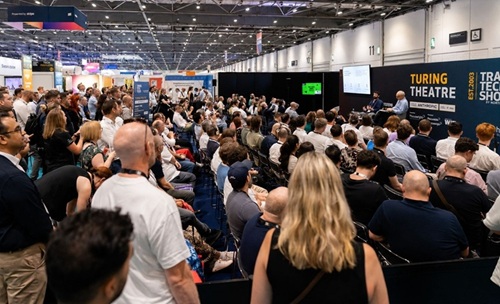
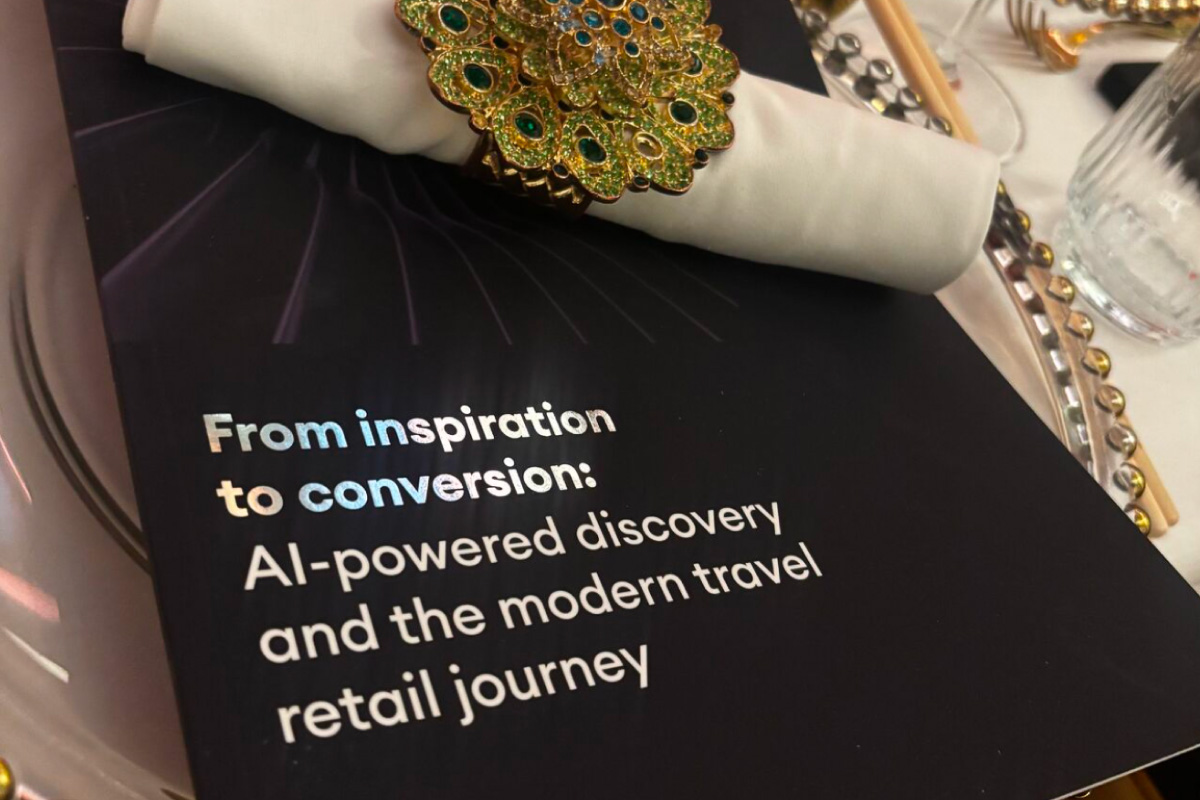
Leighton’s recent roundtable brought together technical leaders from some of the biggest brands in travel, aviation, and hospitality to explore the findings from our inaugural industry report ‘From Inspiration to Conversion: AI-Powered Discovery and the Modern Travel Retail Journey’.
Based on research with 1,000 recent travel buyers, the report examines the full end-to-end purchase journey, from initial search and discovery, through evaluation and booking, to post-purchase retail and ancillary services. It also looks to identify where technology can most strongly shape buying behaviour.
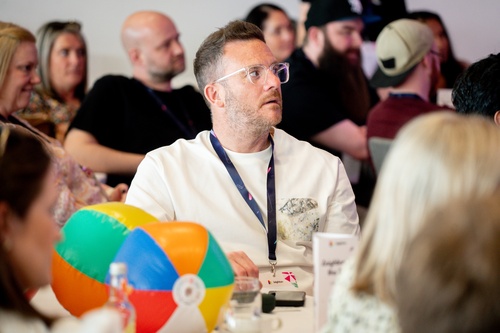
The roundtable, held at the Ivy Asia Mayfair, brought together representatives from IAG Loyalty Retail, TUI, TourAxis, Travel pack, Expedia, AWS, PwC, IHG Hotels and Resorts and London Gatwick Airport to discuss the insight from the report and how companies can move beyond AI theory and focus on what actually needs to change to generate meaningful commercial impact.
The focus was clear; this isn’t just about AI. It’s about fixing the fundamentals, your platforms, your UX, and even how you deliver value, while applying AI in ways that are genuinely useful. Here’s what stood out.
Throughout the evening there was strong alignment that competing on price alone is no longer viable, but also an acknowledgment that the industry still struggles to communicate value clearly.This struggle is likely to cause issues when it comes to ensuring travel, aviation and hospitality brands have a voice in the new AI-driven travel search and discovery ecosystem.
In the new AI-shaped journey, where options are summarised and decisions are compressed, offerings with unclear value simply get ignored.
The implication is practical:
If a customer, or an AI agent, can’t quickly interpret why something is better, it won’t make the shortlist.
A key concern was how brands show up in AI-driven discovery, particularly when responses are often built on third-party and user-generated content, especially the likes of forums where the information isn’t always correct.
The conversation quickly shifted from concern to action. The issue isn’t just loss of control; it’s lack of readiness.
To compete in AI environments, brands need to:
This is less about chasing algorithms and more about building a clean, reliable content foundation that AI can trust and reuse.
Legacy systems came under particular scrutiny during the discussion. For many organisations, operating on slow, fragmented, and often heavily customised legacy frameworks is still the norm. In many cases, these platforms have evolved incrementally over time, shaped by short-term business needs rather than long-term architectural strategy. As a result, modernisation has historically been deprioritised, viewed as costly, complex, and difficult to justify against more immediate commercial initiatives. However, that approach is no longer sustainable if businesses want to maximise on the AI opportunity.
The reality is that many organisations are attempting to layer AI capabilities and advanced personalisation on top of infrastructure that was never designed to support them. These legacy environments often lack the flexibility, scalability, and data accessibility required to make AI effective.
This creates several fundamental challenges. Disconnected systems make it difficult to unify customer data, limiting the ability to generate accurate, real-time insights. Rigid architectures slow down experimentation and iteration, meaning AI initiatives take longer to deliver value or fail to evolve. Performance constraints and technical debt further restrict the ability to scale successful use cases across channels and markets.
In practice, this means that while AI may be technically implemented, it rarely reaches its full potential. Equally attendees agreed that personalisation remains surface-level or inconsistent, and experiences fail to adapt in real time. Instead of enabling smarter, more relevant customer journeys, legacy platforms often dilute the impact of both AI and UX improvements.
Attendees agreed:
Put simply, you can’t deliver modern, responsive experiences or support truly AI-driven journeys on outdated infrastructure. Without addressing the underlying platform, organisations risk limiting AI to isolated use cases rather than unlocking its full, transformative value across the customer journey.
While discovery is increasingly happening outside owned channels, what happens on your platform remains fully in your control, and it matters more than ever.
The group emphasised:
As AI reshapes how users arrive, UX/UI is what determines whether customers stay, convert, and return. Even with most of the journey happening outside of your platform, the experience visitors have on your site and how you integrate with large-language models to provide a seamless journey will be what makes your brand stand out. Equally, thinking about the simplicity of how you present your offering to reduce friction throughout the journey will be imperative.
There was also clear shift in mindset around AI, from exploration to application. The most valuable use cases discussed were grounded and operational for example; improving search and discovery experiences, enhancing personalisation in meaningful, data-driven ways, streamlining content creation and management and supporting customer service with faster, more accurate responses and access to real-time information that can be delivered direct to customers.
The consensus was that AI should solve real problems, not just demonstrate capability. Organisations seeing progress are those aligning AI to specific outcomes, not treating it as a standalone innovation stream.
Personalisation remains a priority, but many acknowledged that as an industry it is still not widely implemented consistently well.
The barriers are familiar with disconnected data, rigid platforms and overly complex strategies causing friction when it comes to getting it right. The opportunity lies in simplifying. Companies should focus on high-impact use cases first, use AI to enhance, not overcomplicate and ensure personalisation adds clear, immediate value.
Done well, it strengthens both conversion and loyalty. Done poorly, it just adds noise.
The strongest takeaway from the evening was pragmatic. AI is accelerating change, but it’s also exposing existing weaknesses.
Success won’t come from isolated innovation.It will come from creating modern, flexible platforms capable of supporting innovation at scale, clear, effective UX/UI that reduces friction at every touch point, well-structured, trustworthy content to support integration strategies and focused, outcome-driven AI use cases.
The brands that get this right won’t just keep up with the new journey; they’ll help define it.
If you’d like to access the full report you can download the digital version here.
Leighton is a digital product engineering consultancy focused on application modernisation, cloud enablement, and practical AI adoption and implementation for the travel, aviation and hospitality industries.
We design, build, and continuously improve digital products and platforms that are scalable, secure, and commercially effective. Our expertise covers the full product lifecycle, including architecture, engineering, data, UX, QA, delivery and analysis. Our mission is to empower our customers to deliver value with greater speed and certainty.
Specialists in cloud enablement, we modernise applications and cloud infrastructure to improve performance, security, resilience, and cost efficiency. We also help organisations move beyond AI experimentation by identifying practical use cases, building AI-enabled features and automation, and putting the right governance in place to scale safely and responsibly.
We offer two clear starting points: a modernisation assessment to establish what needs to change and in what order, and an AI ideation workshop to turn AI ambition into prioritised, technically feasible use cases. Both are designed to move you from strategy to execution quickly.
If you have a project you’re working on, we’d love to talk. You can contact the team here.
As travellers increasingly begin their journeys with inspiration-led and AI-powered discovery, travel brands face a growing challenge, how do you turn upstream exploration into downstream conversion and retail revenue.
Leighton’s recent roundtable brought together technical leaders from some of the biggest brands in travel, aviation, and hospitality to explore the findings from our inaugural industry report ‘From Inspiration to Conversion: AI-Powered Discovery and the Modern Travel Retail Journey’.
Based on research with 1,000 recent travel buyers, the report examines the full end-to-end purchase journey, from initial search and discovery, through evaluation and booking, to post-purchase retail and ancillary services. It also looks to identify where technology can most strongly shape buying behaviour.
The roundtable, held at the Ivy Asia Mayfair, brought together representatives from IAG Loyalty Retail, TUI, TourAxis, Travel pack, Expedia, AWS, PwC, IHG Hotels and Resorts and London Gatwick Airport to discuss the insight from the report and how companies can move beyond AI theory and focus on what actually needs to change to generate meaningful commercial impact.
The focus was clear; this isn’t just about AI. It’s about fixing the fundamentals, your platforms, your UX, and even how you deliver value, while applying AI in ways that are genuinely useful. Here’s what stood out.
Throughout the evening there was strong alignment that competing on price alone is no longer viable, but also an acknowledgment that the industry still struggles to communicate value clearly.This struggle is likely to cause issues when it comes to ensuring travel, aviation and hospitality brands have a voice in the new AI-driven travel search and discovery ecosystem.
In the new AI-shaped journey, where options are summarised and decisions are compressed, offerings with unclear value simply get ignored.
The implication is practical:
If a customer, or an AI agent, can’t quickly interpret why something is better, it won’t make the shortlist.
A key concern was how brands show up in AI-driven discovery, particularly when responses are often built on third-party and user-generated content, especially the likes of forums where the information isn’t always correct.
The conversation quickly shifted from concern to action. The issue isn’t just loss of control; it’s lack of readiness.
To compete in AI environments, brands need to:
This is less about chasing algorithms and more about building a clean, reliable content foundation that AI can trust and reuse.
Legacy systems came under particular scrutiny during the discussion. For many organisations, operating on slow, fragmented, and often heavily customised legacy frameworks is still the norm. In many cases, these platforms have evolved incrementally over time, shaped by short-term business needs rather than long-term architectural strategy. As a result, modernisation has historically been deprioritised, viewed as costly, complex, and difficult to justify against more immediate commercial initiatives. However, that approach is no longer sustainable if businesses want to maximise on the AI opportunity.
The reality is that many organisations are attempting to layer AI capabilities and advanced personalisation on top of infrastructure that was never designed to support them. These legacy environments often lack the flexibility, scalability, and data accessibility required to make AI effective.
This creates several fundamental challenges. Disconnected systems make it difficult to unify customer data, limiting the ability to generate accurate, real-time insights. Rigid architectures slow down experimentation and iteration, meaning AI initiatives take longer to deliver value or fail to evolve. Performance constraints and technical debt further restrict the ability to scale successful use cases across channels and markets.
In practice, this means that while AI may be technically implemented, it rarely reaches its full potential. Equally attendees agreed that personalisation remains surface-level or inconsistent, and experiences fail to adapt in real time. Instead of enabling smarter, more relevant customer journeys, legacy platforms often dilute the impact of both AI and UX improvements.
Attendees agreed:
Put simply, you can’t deliver modern, responsive experiences or support truly AI-driven journeys on outdated infrastructure. Without addressing the underlying platform, organisations risk limiting AI to isolated use cases rather than unlocking its full, transformative value across the customer journey.
While discovery is increasingly happening outside owned channels, what happens on your platform remains fully in your control, and it matters more than ever.
The group emphasised:
As AI reshapes how users arrive, UX/UI is what determines whether customers stay, convert, and return. Even with most of the journey happening outside of your platform, the experience visitors have on your site and how you integrate with large-language models to provide a seamless journey will be what makes your brand stand out. Equally, thinking about the simplicity of how you present your offering to reduce friction throughout the journey will be imperative.
There was also clear shift in mindset around AI, from exploration to application. The most valuable use cases discussed were grounded and operational for example; improving search and discovery experiences, enhancing personalisation in meaningful, data-driven ways, streamlining content creation and management and supporting customer service with faster, more accurate responses and access to real-time information that can be delivered direct to customers.
The consensus was that AI should solve real problems, not just demonstrate capability. Organisations seeing progress are those aligning AI to specific outcomes, not treating it as a standalone innovation stream.
Personalisation remains a priority, but many acknowledged that as an industry it is still not widely implemented consistently well.
The barriers are familiar with disconnected data, rigid platforms and overly complex strategies causing friction when it comes to getting it right. The opportunity lies in simplifying. Companies should focus on high-impact use cases first, use AI to enhance, not overcomplicate and ensure personalisation adds clear, immediate value.
Done well, it strengthens both conversion and loyalty. Done poorly, it just adds noise.
The strongest takeaway from the evening was pragmatic. AI is accelerating change, but it’s also exposing existing weaknesses.
Success won’t come from isolated innovation.It will come from creating modern, flexible platforms capable of supporting innovation at scale, clear, effective UX/UI that reduces friction at every touch point, well-structured, trustworthy content to support integration strategies and focused, outcome-driven AI use cases.
The brands that get this right won’t just keep up with the new journey; they’ll help define it.
If you’d like to access the full report you can download the digital version here.
Leighton is a digital product engineering consultancy focused on application modernisation, cloud enablement, and practical AI adoption and implementation for the travel, aviation and hospitality industries.
We design, build, and continuously improve digital products and platforms that are scalable, secure, and commercially effective. Our expertise covers the full product lifecycle, including architecture, engineering, data, UX, QA, delivery and analysis. Our mission is to empower our customers to deliver value with greater speed and certainty.
Specialists in cloud enablement, we modernise applications and cloud infrastructure to improve performance, security, resilience, and cost efficiency. We also help organisations move beyond AI experimentation by identifying practical use cases, building AI-enabled features and automation, and putting the right governance in place to scale safely and responsibly.
We offer two clear starting points: a modernisation assessment to establish what needs to change and in what order, and an AI ideation workshop to turn AI ambition into prioritised, technically feasible use cases. Both are designed to move you from strategy to execution quickly.
If you have a project you’re working on, we’d love to talk. You can contact the team here.
As travellers increasingly begin their journeys with inspiration-led and AI-powered discovery, travel brands face a growing challenge, how do you turn upstream exploration into downstream conversion and retail revenue.
Leighton’s recent roundtable brought together technical leaders from some of the biggest brands in travel, aviation, and hospitality to explore the findings from our inaugural industry report ‘From Inspiration to Conversion: AI-Powered Discovery and the Modern Travel Retail Journey’.
Based on research with 1,000 recent travel buyers, the report examines the full end-to-end purchase journey, from initial search and discovery, through evaluation and booking, to post-purchase retail and ancillary services. It also looks to identify where technology can most strongly shape buying behaviour.
The roundtable, held at the Ivy Asia Mayfair, brought together representatives from IAG Loyalty Retail, TUI, TourAxis, Travel pack, Expedia, AWS, PwC, IHG Hotels and Resorts and London Gatwick Airport to discuss the insight from the report and how companies can move beyond AI theory and focus on what actually needs to change to generate meaningful commercial impact.
The focus was clear; this isn’t just about AI. It’s about fixing the fundamentals, your platforms, your UX, and even how you deliver value, while applying AI in ways that are genuinely useful. Here’s what stood out.
Throughout the evening there was strong alignment that competing on price alone is no longer viable, but also an acknowledgment that the industry still struggles to communicate value clearly.This struggle is likely to cause issues when it comes to ensuring travel, aviation and hospitality brands have a voice in the new AI-driven travel search and discovery ecosystem.
In the new AI-shaped journey, where options are summarised and decisions are compressed, offerings with unclear value simply get ignored.
The implication is practical:
If a customer, or an AI agent, can’t quickly interpret why something is better, it won’t make the shortlist.
A key concern was how brands show up in AI-driven discovery, particularly when responses are often built on third-party and user-generated content, especially the likes of forums where the information isn’t always correct.
The conversation quickly shifted from concern to action. The issue isn’t just loss of control; it’s lack of readiness.
To compete in AI environments, brands need to:
This is less about chasing algorithms and more about building a clean, reliable content foundation that AI can trust and reuse.
Legacy systems came under particular scrutiny during the discussion. For many organisations, operating on slow, fragmented, and often heavily customised legacy frameworks is still the norm. In many cases, these platforms have evolved incrementally over time, shaped by short-term business needs rather than long-term architectural strategy. As a result, modernisation has historically been deprioritised, viewed as costly, complex, and difficult to justify against more immediate commercial initiatives. However, that approach is no longer sustainable if businesses want to maximise on the AI opportunity.
The reality is that many organisations are attempting to layer AI capabilities and advanced personalisation on top of infrastructure that was never designed to support them. These legacy environments often lack the flexibility, scalability, and data accessibility required to make AI effective.
This creates several fundamental challenges. Disconnected systems make it difficult to unify customer data, limiting the ability to generate accurate, real-time insights. Rigid architectures slow down experimentation and iteration, meaning AI initiatives take longer to deliver value or fail to evolve. Performance constraints and technical debt further restrict the ability to scale successful use cases across channels and markets.
In practice, this means that while AI may be technically implemented, it rarely reaches its full potential. Equally attendees agreed that personalisation remains surface-level or inconsistent, and experiences fail to adapt in real time. Instead of enabling smarter, more relevant customer journeys, legacy platforms often dilute the impact of both AI and UX improvements.
Attendees agreed:
Put simply, you can’t deliver modern, responsive experiences or support truly AI-driven journeys on outdated infrastructure. Without addressing the underlying platform, organisations risk limiting AI to isolated use cases rather than unlocking its full, transformative value across the customer journey.
While discovery is increasingly happening outside owned channels, what happens on your platform remains fully in your control, and it matters more than ever.
The group emphasised:
As AI reshapes how users arrive, UX/UI is what determines whether customers stay, convert, and return. Even with most of the journey happening outside of your platform, the experience visitors have on your site and how you integrate with large-language models to provide a seamless journey will be what makes your brand stand out. Equally, thinking about the simplicity of how you present your offering to reduce friction throughout the journey will be imperative.
There was also clear shift in mindset around AI, from exploration to application. The most valuable use cases discussed were grounded and operational for example; improving search and discovery experiences, enhancing personalisation in meaningful, data-driven ways, streamlining content creation and management and supporting customer service with faster, more accurate responses and access to real-time information that can be delivered direct to customers.
The consensus was that AI should solve real problems, not just demonstrate capability. Organisations seeing progress are those aligning AI to specific outcomes, not treating it as a standalone innovation stream.
Personalisation remains a priority, but many acknowledged that as an industry it is still not widely implemented consistently well.
The barriers are familiar with disconnected data, rigid platforms and overly complex strategies causing friction when it comes to getting it right. The opportunity lies in simplifying. Companies should focus on high-impact use cases first, use AI to enhance, not overcomplicate and ensure personalisation adds clear, immediate value.
Done well, it strengthens both conversion and loyalty. Done poorly, it just adds noise.
The strongest takeaway from the evening was pragmatic. AI is accelerating change, but it’s also exposing existing weaknesses.
Success won’t come from isolated innovation.It will come from creating modern, flexible platforms capable of supporting innovation at scale, clear, effective UX/UI that reduces friction at every touch point, well-structured, trustworthy content to support integration strategies and focused, outcome-driven AI use cases.
The brands that get this right won’t just keep up with the new journey; they’ll help define it.
If you’d like to access the full report you can download the digital version here.
Leighton is a digital product engineering consultancy focused on application modernisation, cloud enablement, and practical AI adoption and implementation for the travel, aviation and hospitality industries.
We design, build, and continuously improve digital products and platforms that are scalable, secure, and commercially effective. Our expertise covers the full product lifecycle, including architecture, engineering, data, UX, QA, delivery and analysis. Our mission is to empower our customers to deliver value with greater speed and certainty.
Specialists in cloud enablement, we modernise applications and cloud infrastructure to improve performance, security, resilience, and cost efficiency. We also help organisations move beyond AI experimentation by identifying practical use cases, building AI-enabled features and automation, and putting the right governance in place to scale safely and responsibly.
We offer two clear starting points: a modernisation assessment to establish what needs to change and in what order, and an AI ideation workshop to turn AI ambition into prioritised, technically feasible use cases. Both are designed to move you from strategy to execution quickly.
If you have a project you’re working on, we’d love to talk. You can contact the team here.
As travellers increasingly begin their journeys with inspiration-led and AI-powered discovery, travel brands face a growing challenge, how do you turn upstream exploration into downstream conversion and retail revenue.
Leighton’s recent roundtable brought together technical leaders from some of the biggest brands in travel, aviation, and hospitality to explore the findings from our inaugural industry report ‘From Inspiration to Conversion: AI-Powered Discovery and the Modern Travel Retail Journey’.
Based on research with 1,000 recent travel buyers, the report examines the full end-to-end purchase journey, from initial search and discovery, through evaluation and booking, to post-purchase retail and ancillary services. It also looks to identify where technology can most strongly shape buying behaviour.
The roundtable, held at the Ivy Asia Mayfair, brought together representatives from IAG Loyalty Retail, TUI, TourAxis, Travel pack, Expedia, AWS, PwC, IHG Hotels and Resorts and London Gatwick Airport to discuss the insight from the report and how companies can move beyond AI theory and focus on what actually needs to change to generate meaningful commercial impact.
The focus was clear; this isn’t just about AI. It’s about fixing the fundamentals, your platforms, your UX, and even how you deliver value, while applying AI in ways that are genuinely useful. Here’s what stood out.
Throughout the evening there was strong alignment that competing on price alone is no longer viable, but also an acknowledgment that the industry still struggles to communicate value clearly.This struggle is likely to cause issues when it comes to ensuring travel, aviation and hospitality brands have a voice in the new AI-driven travel search and discovery ecosystem.
In the new AI-shaped journey, where options are summarised and decisions are compressed, offerings with unclear value simply get ignored.
The implication is practical:
If a customer, or an AI agent, can’t quickly interpret why something is better, it won’t make the shortlist.
A key concern was how brands show up in AI-driven discovery, particularly when responses are often built on third-party and user-generated content, especially the likes of forums where the information isn’t always correct.
The conversation quickly shifted from concern to action. The issue isn’t just loss of control; it’s lack of readiness.
To compete in AI environments, brands need to:
This is less about chasing algorithms and more about building a clean, reliable content foundation that AI can trust and reuse.
Legacy systems came under particular scrutiny during the discussion. For many organisations, operating on slow, fragmented, and often heavily customised legacy frameworks is still the norm. In many cases, these platforms have evolved incrementally over time, shaped by short-term business needs rather than long-term architectural strategy. As a result, modernisation has historically been deprioritised, viewed as costly, complex, and difficult to justify against more immediate commercial initiatives. However, that approach is no longer sustainable if businesses want to maximise on the AI opportunity.
The reality is that many organisations are attempting to layer AI capabilities and advanced personalisation on top of infrastructure that was never designed to support them. These legacy environments often lack the flexibility, scalability, and data accessibility required to make AI effective.
This creates several fundamental challenges. Disconnected systems make it difficult to unify customer data, limiting the ability to generate accurate, real-time insights. Rigid architectures slow down experimentation and iteration, meaning AI initiatives take longer to deliver value or fail to evolve. Performance constraints and technical debt further restrict the ability to scale successful use cases across channels and markets.
In practice, this means that while AI may be technically implemented, it rarely reaches its full potential. Equally attendees agreed that personalisation remains surface-level or inconsistent, and experiences fail to adapt in real time. Instead of enabling smarter, more relevant customer journeys, legacy platforms often dilute the impact of both AI and UX improvements.
Attendees agreed:
Put simply, you can’t deliver modern, responsive experiences or support truly AI-driven journeys on outdated infrastructure. Without addressing the underlying platform, organisations risk limiting AI to isolated use cases rather than unlocking its full, transformative value across the customer journey.
While discovery is increasingly happening outside owned channels, what happens on your platform remains fully in your control, and it matters more than ever.
The group emphasised:
As AI reshapes how users arrive, UX/UI is what determines whether customers stay, convert, and return. Even with most of the journey happening outside of your platform, the experience visitors have on your site and how you integrate with large-language models to provide a seamless journey will be what makes your brand stand out. Equally, thinking about the simplicity of how you present your offering to reduce friction throughout the journey will be imperative.
There was also clear shift in mindset around AI, from exploration to application. The most valuable use cases discussed were grounded and operational for example; improving search and discovery experiences, enhancing personalisation in meaningful, data-driven ways, streamlining content creation and management and supporting customer service with faster, more accurate responses and access to real-time information that can be delivered direct to customers.
The consensus was that AI should solve real problems, not just demonstrate capability. Organisations seeing progress are those aligning AI to specific outcomes, not treating it as a standalone innovation stream.
Personalisation remains a priority, but many acknowledged that as an industry it is still not widely implemented consistently well.
The barriers are familiar with disconnected data, rigid platforms and overly complex strategies causing friction when it comes to getting it right. The opportunity lies in simplifying. Companies should focus on high-impact use cases first, use AI to enhance, not overcomplicate and ensure personalisation adds clear, immediate value.
Done well, it strengthens both conversion and loyalty. Done poorly, it just adds noise.
The strongest takeaway from the evening was pragmatic. AI is accelerating change, but it’s also exposing existing weaknesses.
Success won’t come from isolated innovation.It will come from creating modern, flexible platforms capable of supporting innovation at scale, clear, effective UX/UI that reduces friction at every touch point, well-structured, trustworthy content to support integration strategies and focused, outcome-driven AI use cases.
The brands that get this right won’t just keep up with the new journey; they’ll help define it.
If you’d like to access the full report you can download the digital version here.
Leighton is a digital product engineering consultancy focused on application modernisation, cloud enablement, and practical AI adoption and implementation for the travel, aviation and hospitality industries.
We design, build, and continuously improve digital products and platforms that are scalable, secure, and commercially effective. Our expertise covers the full product lifecycle, including architecture, engineering, data, UX, QA, delivery and analysis. Our mission is to empower our customers to deliver value with greater speed and certainty.
Specialists in cloud enablement, we modernise applications and cloud infrastructure to improve performance, security, resilience, and cost efficiency. We also help organisations move beyond AI experimentation by identifying practical use cases, building AI-enabled features and automation, and putting the right governance in place to scale safely and responsibly.
We offer two clear starting points: a modernisation assessment to establish what needs to change and in what order, and an AI ideation workshop to turn AI ambition into prioritised, technically feasible use cases. Both are designed to move you from strategy to execution quickly.
If you have a project you’re working on, we’d love to talk. You can contact the team here.