AWS Comsum Birmingham: Building for the AI era



.jpg)
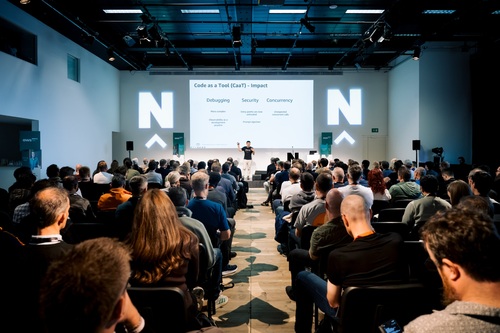
Walking into AWS Comsum Birmingham, it was clear that the conversation around AI has matured significantly over the last 12 months.
The excitement and experimentation that has dominated many technology events in recent years has not disappeared, but it has evolved. Rather than asking whether AI will change software development, architecture and customer experience, the discussion has shifted towards a more practical question around how organisations adopt it responsibly, effectively and at scale.
Across the day, speakers explored everything from AI-powered development and agentic architectures to storytelling and AI’s role in customer experience. While the topics varied, a common thread emerged throughout every session, AI may be accelerating the pace of change, but the fundamentals of good engineering, strong governance and strategic organisational design matter more than ever.
One of the most thought-provoking sessions came from David Anderson, author of ‘The Value Flywheel Effect’, who explored the emergence of the AI Development Lifecycle (AI-DLC).
Anderson argued that AI is forcing organisations to rethink how software is built. Rather than speeding up every stage of delivery, AI places greater importance on the earliest phases of development. Discovery, problem definition and understanding context become even more critical when AI is capable of generating solutions at unprecedented speed.
His message was simple but powerful, if AI generates the wrong outcome, the problem is often not the code itself but the information, process and constraints surrounding it. The focus shifts from fixing outputs to improving the "harness" that guides AI behaviour.
Many of the principles he discussed felt surprisingly familiar. Practices such as agile delivery, pair programming, continuous delivery and small batch sizes are not being replaced by AI; instead, they are becoming increasingly relevant as organisations look to introduce greater automation while maintaining quality and control.
Perhaps the most important takeaway was that humans must remain accountable for the work. AI can accelerate delivery, but the ownership, judgement calls and ultimately the responsibility still sits firmly with people.
Another standout session, from Matt Houghton, focused on the real-world adoption of AI coding assistants and development tools.
He challenged a common misconception that productivity gains come simply from deploying AI tooling. While code generation can significantly accelerate parts of the development process, organisations quickly discover that the rest of the software delivery lifecycle remains unchanged.
Planning, governance, architecture, stakeholder alignment and deployment continue to take time. Simply bolting AI onto processes that were designed entirely around human effort often creates new bottlenecks rather than just removing existing ones.
The session shared lessons from small-scale trials to large-scale experimentation both using AI development tools. These practical examples highlighted that successful adoption requires far more than access to the right technology. Teams need training, clear standards, robust governance and ongoing support. Context management, knowledge sharing and well-maintained documentation become essential foundations for success.
A particularly interesting insight was that AI often delivered the greatest benefits for less experienced engineers, helping them access patterns and approaches they may not otherwise have considered. However, those gains only materialised when organisations invested in education, coaching and clear ways of working.
The key takeaway was that AI tools amplify capability; they do not replace it.
The concept of agentic systems appeared throughout the day, but nowhere more prominently than in discussions around the future of microservices and customer experience platforms.
As organisations explore AI agents capable of autonomous decision-making, traditional architectural patterns are evolving. Several sessions examined how microservices may increasingly be exposed as tools for agents, creating new forms of interaction between applications, services and AI systems.
The opportunities are significant. Agentic architectures promise greater flexibility, composability and adaptability. However, speakers were quick to highlight the challenges that accompany them.
Scalability, governance, security, observability and cost management remain critical concerns. A service designed for predictable human traffic may suddenly experience entirely new demand patterns when consumed by autonomous agents. Likewise, agent-to-agent communication introduces fresh complexity around trust, accountability and control.
The impact of AI on customer experience was another area of focus. Speakers explored how organisations are moving from traditional customer service models towards ecosystems of specialised agents capable of supporting both customers and employees.
One of the strongest themes emerging from these discussions was the need to resist creating "super agents" that attempt to do everything. Instead, speakers advocated for specialist agents with clearly defined responsibilities that can work together as part of a broader ecosystem, acting as experts in their individual areas while allowing control over the information they access in order to respond to queries.
The discussion highlighted an important distinction. The most valuable applications of AI are not necessarily those that remove humans from the process entirely. Instead, the greatest returns often come from augmenting people, helping them make better decisions, access information faster and deliver improved customer outcomes.
Several speakers reinforced the importance of designing architectures that allow organisations to remain flexible as technology continues to evolve. The ability to plug services in and out, adapt to new tools and avoid becoming locked into a single approach may prove one of the most important strategic advantages organisations can build.
Among the more unexpected sessions of the day was a presentation on storytelling and communication.
While it may have seemed disconnected from discussions around AI, it ultimately reinforced many of the event's wider themes. Technology adoption is rarely just about technology. Success often depends on how effectively we communicate ideas, build trust and help people understand change.
The session explored why stories are more persuasive than statistics alone, highlighting the role of emotional connection in decision-making. Rather than leading with data, speakers were encouraged to start with outcomes, focus on people and make problems, and solutions, feel tangible.
It served as a useful reminder that even in an era increasingly shaped by automation and AI, human connection remains one of the most powerful tools available to us. It also echoed some of the insights from the earlier talks around AI being involved but human team members retaining responsibility.
If there was one message that connected every session, it was that governance is becoming the defining challenge of AI adoption.
Whether discussing software delivery, customer experience, agentic systems or organisational transformation, speakers consistently returned to the same conclusion, technology is rarely the hardest part. People, process, culture and governance are what ultimately determine success.
Without strong foundations, AI simply enables organisations to scale existing problems faster. With the right structures in place, however, it offers the opportunity to unlock entirely new ways of working.
AWS Comsum Birmingham provided a valuable snapshot of where the industry is today. The conversation has moved beyond experimentation and hype towards practical implementation. Organisations are no longer asking whether AI will change the way they operate; they are figuring out how to build the disciplines, structures and capabilities needed to make that change sustainable.
The technology will continue to evolve at pace. The challenge now is ensuring our organisations evolve with it.
.jpg)
Walking into AWS Comsum Birmingham, it was clear that the conversation around AI has matured significantly over the last 12 months.
The excitement and experimentation that has dominated many technology events in recent years has not disappeared, but it has evolved. Rather than asking whether AI will change software development, architecture and customer experience, the discussion has shifted towards a more practical question around how organisations adopt it responsibly, effectively and at scale.
Across the day, speakers explored everything from AI-powered development and agentic architectures to storytelling and AI’s role in customer experience. While the topics varied, a common thread emerged throughout every session, AI may be accelerating the pace of change, but the fundamentals of good engineering, strong governance and strategic organisational design matter more than ever.
One of the most thought-provoking sessions came from David Anderson, author of ‘The Value Flywheel Effect’, who explored the emergence of the AI Development Lifecycle (AI-DLC).
Anderson argued that AI is forcing organisations to rethink how software is built. Rather than speeding up every stage of delivery, AI places greater importance on the earliest phases of development. Discovery, problem definition and understanding context become even more critical when AI is capable of generating solutions at unprecedented speed.
His message was simple but powerful, if AI generates the wrong outcome, the problem is often not the code itself but the information, process and constraints surrounding it. The focus shifts from fixing outputs to improving the "harness" that guides AI behaviour.
Many of the principles he discussed felt surprisingly familiar. Practices such as agile delivery, pair programming, continuous delivery and small batch sizes are not being replaced by AI; instead, they are becoming increasingly relevant as organisations look to introduce greater automation while maintaining quality and control.
Perhaps the most important takeaway was that humans must remain accountable for the work. AI can accelerate delivery, but the ownership, judgement calls and ultimately the responsibility still sits firmly with people.
Another standout session, from Matt Houghton, focused on the real-world adoption of AI coding assistants and development tools.
He challenged a common misconception that productivity gains come simply from deploying AI tooling. While code generation can significantly accelerate parts of the development process, organisations quickly discover that the rest of the software delivery lifecycle remains unchanged.
Planning, governance, architecture, stakeholder alignment and deployment continue to take time. Simply bolting AI onto processes that were designed entirely around human effort often creates new bottlenecks rather than just removing existing ones.
The session shared lessons from small-scale trials to large-scale experimentation both using AI development tools. These practical examples highlighted that successful adoption requires far more than access to the right technology. Teams need training, clear standards, robust governance and ongoing support. Context management, knowledge sharing and well-maintained documentation become essential foundations for success.
A particularly interesting insight was that AI often delivered the greatest benefits for less experienced engineers, helping them access patterns and approaches they may not otherwise have considered. However, those gains only materialised when organisations invested in education, coaching and clear ways of working.
The key takeaway was that AI tools amplify capability; they do not replace it.
The concept of agentic systems appeared throughout the day, but nowhere more prominently than in discussions around the future of microservices and customer experience platforms.
As organisations explore AI agents capable of autonomous decision-making, traditional architectural patterns are evolving. Several sessions examined how microservices may increasingly be exposed as tools for agents, creating new forms of interaction between applications, services and AI systems.
The opportunities are significant. Agentic architectures promise greater flexibility, composability and adaptability. However, speakers were quick to highlight the challenges that accompany them.
Scalability, governance, security, observability and cost management remain critical concerns. A service designed for predictable human traffic may suddenly experience entirely new demand patterns when consumed by autonomous agents. Likewise, agent-to-agent communication introduces fresh complexity around trust, accountability and control.
The impact of AI on customer experience was another area of focus. Speakers explored how organisations are moving from traditional customer service models towards ecosystems of specialised agents capable of supporting both customers and employees.
One of the strongest themes emerging from these discussions was the need to resist creating "super agents" that attempt to do everything. Instead, speakers advocated for specialist agents with clearly defined responsibilities that can work together as part of a broader ecosystem, acting as experts in their individual areas while allowing control over the information they access in order to respond to queries.
The discussion highlighted an important distinction. The most valuable applications of AI are not necessarily those that remove humans from the process entirely. Instead, the greatest returns often come from augmenting people, helping them make better decisions, access information faster and deliver improved customer outcomes.
Several speakers reinforced the importance of designing architectures that allow organisations to remain flexible as technology continues to evolve. The ability to plug services in and out, adapt to new tools and avoid becoming locked into a single approach may prove one of the most important strategic advantages organisations can build.
Among the more unexpected sessions of the day was a presentation on storytelling and communication.
While it may have seemed disconnected from discussions around AI, it ultimately reinforced many of the event's wider themes. Technology adoption is rarely just about technology. Success often depends on how effectively we communicate ideas, build trust and help people understand change.
The session explored why stories are more persuasive than statistics alone, highlighting the role of emotional connection in decision-making. Rather than leading with data, speakers were encouraged to start with outcomes, focus on people and make problems, and solutions, feel tangible.
It served as a useful reminder that even in an era increasingly shaped by automation and AI, human connection remains one of the most powerful tools available to us. It also echoed some of the insights from the earlier talks around AI being involved but human team members retaining responsibility.
If there was one message that connected every session, it was that governance is becoming the defining challenge of AI adoption.
Whether discussing software delivery, customer experience, agentic systems or organisational transformation, speakers consistently returned to the same conclusion, technology is rarely the hardest part. People, process, culture and governance are what ultimately determine success.
Without strong foundations, AI simply enables organisations to scale existing problems faster. With the right structures in place, however, it offers the opportunity to unlock entirely new ways of working.
AWS Comsum Birmingham provided a valuable snapshot of where the industry is today. The conversation has moved beyond experimentation and hype towards practical implementation. Organisations are no longer asking whether AI will change the way they operate; they are figuring out how to build the disciplines, structures and capabilities needed to make that change sustainable.
The technology will continue to evolve at pace. The challenge now is ensuring our organisations evolve with it.
Walking into AWS Comsum Birmingham, it was clear that the conversation around AI has matured significantly over the last 12 months.
The excitement and experimentation that has dominated many technology events in recent years has not disappeared, but it has evolved. Rather than asking whether AI will change software development, architecture and customer experience, the discussion has shifted towards a more practical question around how organisations adopt it responsibly, effectively and at scale.
Across the day, speakers explored everything from AI-powered development and agentic architectures to storytelling and AI’s role in customer experience. While the topics varied, a common thread emerged throughout every session, AI may be accelerating the pace of change, but the fundamentals of good engineering, strong governance and strategic organisational design matter more than ever.
One of the most thought-provoking sessions came from David Anderson, author of ‘The Value Flywheel Effect’, who explored the emergence of the AI Development Lifecycle (AI-DLC).
Anderson argued that AI is forcing organisations to rethink how software is built. Rather than speeding up every stage of delivery, AI places greater importance on the earliest phases of development. Discovery, problem definition and understanding context become even more critical when AI is capable of generating solutions at unprecedented speed.
His message was simple but powerful, if AI generates the wrong outcome, the problem is often not the code itself but the information, process and constraints surrounding it. The focus shifts from fixing outputs to improving the "harness" that guides AI behaviour.
Many of the principles he discussed felt surprisingly familiar. Practices such as agile delivery, pair programming, continuous delivery and small batch sizes are not being replaced by AI; instead, they are becoming increasingly relevant as organisations look to introduce greater automation while maintaining quality and control.
Perhaps the most important takeaway was that humans must remain accountable for the work. AI can accelerate delivery, but the ownership, judgement calls and ultimately the responsibility still sits firmly with people.
Another standout session, from Matt Houghton, focused on the real-world adoption of AI coding assistants and development tools.
He challenged a common misconception that productivity gains come simply from deploying AI tooling. While code generation can significantly accelerate parts of the development process, organisations quickly discover that the rest of the software delivery lifecycle remains unchanged.
Planning, governance, architecture, stakeholder alignment and deployment continue to take time. Simply bolting AI onto processes that were designed entirely around human effort often creates new bottlenecks rather than just removing existing ones.
The session shared lessons from small-scale trials to large-scale experimentation both using AI development tools. These practical examples highlighted that successful adoption requires far more than access to the right technology. Teams need training, clear standards, robust governance and ongoing support. Context management, knowledge sharing and well-maintained documentation become essential foundations for success.
A particularly interesting insight was that AI often delivered the greatest benefits for less experienced engineers, helping them access patterns and approaches they may not otherwise have considered. However, those gains only materialised when organisations invested in education, coaching and clear ways of working.
The key takeaway was that AI tools amplify capability; they do not replace it.
The concept of agentic systems appeared throughout the day, but nowhere more prominently than in discussions around the future of microservices and customer experience platforms.
As organisations explore AI agents capable of autonomous decision-making, traditional architectural patterns are evolving. Several sessions examined how microservices may increasingly be exposed as tools for agents, creating new forms of interaction between applications, services and AI systems.
The opportunities are significant. Agentic architectures promise greater flexibility, composability and adaptability. However, speakers were quick to highlight the challenges that accompany them.
Scalability, governance, security, observability and cost management remain critical concerns. A service designed for predictable human traffic may suddenly experience entirely new demand patterns when consumed by autonomous agents. Likewise, agent-to-agent communication introduces fresh complexity around trust, accountability and control.
The impact of AI on customer experience was another area of focus. Speakers explored how organisations are moving from traditional customer service models towards ecosystems of specialised agents capable of supporting both customers and employees.
One of the strongest themes emerging from these discussions was the need to resist creating "super agents" that attempt to do everything. Instead, speakers advocated for specialist agents with clearly defined responsibilities that can work together as part of a broader ecosystem, acting as experts in their individual areas while allowing control over the information they access in order to respond to queries.
The discussion highlighted an important distinction. The most valuable applications of AI are not necessarily those that remove humans from the process entirely. Instead, the greatest returns often come from augmenting people, helping them make better decisions, access information faster and deliver improved customer outcomes.
Several speakers reinforced the importance of designing architectures that allow organisations to remain flexible as technology continues to evolve. The ability to plug services in and out, adapt to new tools and avoid becoming locked into a single approach may prove one of the most important strategic advantages organisations can build.
Among the more unexpected sessions of the day was a presentation on storytelling and communication.
While it may have seemed disconnected from discussions around AI, it ultimately reinforced many of the event's wider themes. Technology adoption is rarely just about technology. Success often depends on how effectively we communicate ideas, build trust and help people understand change.
The session explored why stories are more persuasive than statistics alone, highlighting the role of emotional connection in decision-making. Rather than leading with data, speakers were encouraged to start with outcomes, focus on people and make problems, and solutions, feel tangible.
It served as a useful reminder that even in an era increasingly shaped by automation and AI, human connection remains one of the most powerful tools available to us. It also echoed some of the insights from the earlier talks around AI being involved but human team members retaining responsibility.
If there was one message that connected every session, it was that governance is becoming the defining challenge of AI adoption.
Whether discussing software delivery, customer experience, agentic systems or organisational transformation, speakers consistently returned to the same conclusion, technology is rarely the hardest part. People, process, culture and governance are what ultimately determine success.
Without strong foundations, AI simply enables organisations to scale existing problems faster. With the right structures in place, however, it offers the opportunity to unlock entirely new ways of working.
AWS Comsum Birmingham provided a valuable snapshot of where the industry is today. The conversation has moved beyond experimentation and hype towards practical implementation. Organisations are no longer asking whether AI will change the way they operate; they are figuring out how to build the disciplines, structures and capabilities needed to make that change sustainable.
The technology will continue to evolve at pace. The challenge now is ensuring our organisations evolve with it.
Walking into AWS Comsum Birmingham, it was clear that the conversation around AI has matured significantly over the last 12 months.
The excitement and experimentation that has dominated many technology events in recent years has not disappeared, but it has evolved. Rather than asking whether AI will change software development, architecture and customer experience, the discussion has shifted towards a more practical question around how organisations adopt it responsibly, effectively and at scale.
Across the day, speakers explored everything from AI-powered development and agentic architectures to storytelling and AI’s role in customer experience. While the topics varied, a common thread emerged throughout every session, AI may be accelerating the pace of change, but the fundamentals of good engineering, strong governance and strategic organisational design matter more than ever.
One of the most thought-provoking sessions came from David Anderson, author of ‘The Value Flywheel Effect’, who explored the emergence of the AI Development Lifecycle (AI-DLC).
Anderson argued that AI is forcing organisations to rethink how software is built. Rather than speeding up every stage of delivery, AI places greater importance on the earliest phases of development. Discovery, problem definition and understanding context become even more critical when AI is capable of generating solutions at unprecedented speed.
His message was simple but powerful, if AI generates the wrong outcome, the problem is often not the code itself but the information, process and constraints surrounding it. The focus shifts from fixing outputs to improving the "harness" that guides AI behaviour.
Many of the principles he discussed felt surprisingly familiar. Practices such as agile delivery, pair programming, continuous delivery and small batch sizes are not being replaced by AI; instead, they are becoming increasingly relevant as organisations look to introduce greater automation while maintaining quality and control.
Perhaps the most important takeaway was that humans must remain accountable for the work. AI can accelerate delivery, but the ownership, judgement calls and ultimately the responsibility still sits firmly with people.
Another standout session, from Matt Houghton, focused on the real-world adoption of AI coding assistants and development tools.
He challenged a common misconception that productivity gains come simply from deploying AI tooling. While code generation can significantly accelerate parts of the development process, organisations quickly discover that the rest of the software delivery lifecycle remains unchanged.
Planning, governance, architecture, stakeholder alignment and deployment continue to take time. Simply bolting AI onto processes that were designed entirely around human effort often creates new bottlenecks rather than just removing existing ones.
The session shared lessons from small-scale trials to large-scale experimentation both using AI development tools. These practical examples highlighted that successful adoption requires far more than access to the right technology. Teams need training, clear standards, robust governance and ongoing support. Context management, knowledge sharing and well-maintained documentation become essential foundations for success.
A particularly interesting insight was that AI often delivered the greatest benefits for less experienced engineers, helping them access patterns and approaches they may not otherwise have considered. However, those gains only materialised when organisations invested in education, coaching and clear ways of working.
The key takeaway was that AI tools amplify capability; they do not replace it.
The concept of agentic systems appeared throughout the day, but nowhere more prominently than in discussions around the future of microservices and customer experience platforms.
As organisations explore AI agents capable of autonomous decision-making, traditional architectural patterns are evolving. Several sessions examined how microservices may increasingly be exposed as tools for agents, creating new forms of interaction between applications, services and AI systems.
The opportunities are significant. Agentic architectures promise greater flexibility, composability and adaptability. However, speakers were quick to highlight the challenges that accompany them.
Scalability, governance, security, observability and cost management remain critical concerns. A service designed for predictable human traffic may suddenly experience entirely new demand patterns when consumed by autonomous agents. Likewise, agent-to-agent communication introduces fresh complexity around trust, accountability and control.
The impact of AI on customer experience was another area of focus. Speakers explored how organisations are moving from traditional customer service models towards ecosystems of specialised agents capable of supporting both customers and employees.
One of the strongest themes emerging from these discussions was the need to resist creating "super agents" that attempt to do everything. Instead, speakers advocated for specialist agents with clearly defined responsibilities that can work together as part of a broader ecosystem, acting as experts in their individual areas while allowing control over the information they access in order to respond to queries.
The discussion highlighted an important distinction. The most valuable applications of AI are not necessarily those that remove humans from the process entirely. Instead, the greatest returns often come from augmenting people, helping them make better decisions, access information faster and deliver improved customer outcomes.
Several speakers reinforced the importance of designing architectures that allow organisations to remain flexible as technology continues to evolve. The ability to plug services in and out, adapt to new tools and avoid becoming locked into a single approach may prove one of the most important strategic advantages organisations can build.
Among the more unexpected sessions of the day was a presentation on storytelling and communication.
While it may have seemed disconnected from discussions around AI, it ultimately reinforced many of the event's wider themes. Technology adoption is rarely just about technology. Success often depends on how effectively we communicate ideas, build trust and help people understand change.
The session explored why stories are more persuasive than statistics alone, highlighting the role of emotional connection in decision-making. Rather than leading with data, speakers were encouraged to start with outcomes, focus on people and make problems, and solutions, feel tangible.
It served as a useful reminder that even in an era increasingly shaped by automation and AI, human connection remains one of the most powerful tools available to us. It also echoed some of the insights from the earlier talks around AI being involved but human team members retaining responsibility.
If there was one message that connected every session, it was that governance is becoming the defining challenge of AI adoption.
Whether discussing software delivery, customer experience, agentic systems or organisational transformation, speakers consistently returned to the same conclusion, technology is rarely the hardest part. People, process, culture and governance are what ultimately determine success.
Without strong foundations, AI simply enables organisations to scale existing problems faster. With the right structures in place, however, it offers the opportunity to unlock entirely new ways of working.
AWS Comsum Birmingham provided a valuable snapshot of where the industry is today. The conversation has moved beyond experimentation and hype towards practical implementation. Organisations are no longer asking whether AI will change the way they operate; they are figuring out how to build the disciplines, structures and capabilities needed to make that change sustainable.
The technology will continue to evolve at pace. The challenge now is ensuring our organisations evolve with it.