Colleague spotlight: Meet Chris McGreevy
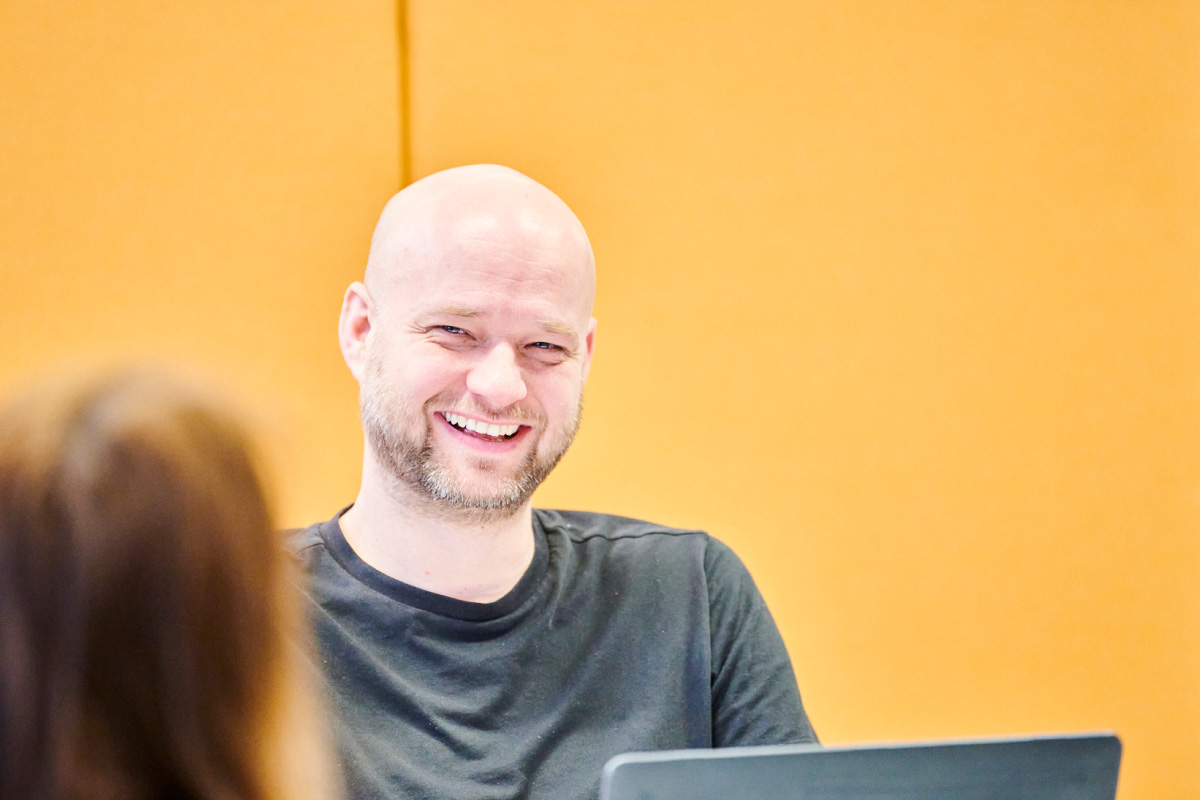


Chris McGreevy began his career as a designer but quickly grew to realise his true passion was in software development.
In February’s edition of the colleague spotlight series, we chat to Chris, learn what a day-in-the-life as a principal front-end engineer looks like, and look back at some of his career highlights.
I originally joined Leighton as a software engineer, which then evolved into a senior software engineer role for one of our long-standing customers, British Airways. Over time, as customer requirements evolved, my role shifted into a principal front-end engineer position. While the title changed, the core of what I do day-to-day has remained consistent, solving complex technical challenges, translating requirements into practical solutions, and working closely with key stakeholders to ensure we’re delivering the right outcomes.
A big part of my role is problem-solving and providing support to the wider team, helping create an environment where others can do their best work. I’m fortunate to work alongside some incredibly skilled developers, so while I’m not always coding, I still enjoy getting hands-on whenever I can.
Having worked on our British Airways account for several years, I’ve built up strong domain knowledge, so I’m often called upon for advice or guidance. Recently, our team has also been heavily involved in SEO initiatives, collaborating closely with external agencies to improve performance and visibility.
I’ve been with Leighton for seven years this June. What initially drew me in was a series of conversations with Steve Morland, our now CTO, about an exciting opportunity on the British Airways account. It came at exactly the right point in my career; I was ready for a new challenge. Having spent several years as a back-end developer, I was keen to broaden my skillset and move into front-end development, particularly working with Angular. The opportunity to step into something new, on a high-profile account, was one I didn’t want to miss.
I’d say I fell into it more than anything. I started my career as a designer and worked in that space for a couple of years. Over time I realised I was more drawn to the technical side of projects and felt more naturally suited to development. I’ve always enjoyed problem solving and figuring out how things work, even from a young age. I remember earning a programming badge in Cubs on my old Amstrad CPC 464 after writing a simple programme, which, looking back, was probably an early sign of where I was heading. I had worked with HTML and CSS at college and really enjoyed it, from there, moving into software engineering felt like the more natural progression.
One of the most important skills I’ve had to develop is strong organisation, particularly when juggling multiple workstreams across different stakeholders. As my career has progressed, stakeholder management has become increasingly important, not just delivering the work, but managing expectations and keeping communication clear and realistic. Balancing priorities, particularly when timelines shift or take longer than expected, can be challenging. It’s about combining solid organisation with honest conversations to ensure alignment and maintain trust.
Stepping into a technical lead role is probably the accomplishment I’m most proud of. It wasn’t something I had originally planned, and at the time I’d only been a senior software engineer for less than a year, so it felt like a stretch. Although the opportunity was somewhat unexpected, I embraced it, took ownership of the role and worked hard to make it my own. That challenge pushed me outside my comfort zone and helped me to grow as a leader.
More recently, I’m proud of helping to deliver the migration of the British Airways CMS to Adobe Experience Manager. It was a complex project with several technical challenges and cross-team dependencies. It took time, coordination and persistence, but seeing it successfully delivered was a huge achievement for everyone involved.
The people I get to work with. The role I’m in requires constant communication, which means I’m fortunate to work with a range of talented colleagues every day. During my time at Leighton, I’ve always been surrounded by supportive, highly skilled people who are willing to share knowledge and challenge each other in the right way.
Similarly, working across projects with British Airways, I’ve had the opportunity to collaborate with diverse teams, each bringing different perspectives and expertise. That variety keeps the work interesting, and being part of a team that solves problems together is what I find the most rewarding.
Leighton has always employed ‘good people’. Not just technically strong, but approachable, supportive and honest. There’s a sense that you can have open, straightforward conversations with colleagues at any level, which creates a culture of trust and transparency. I’ve always found Leighton a positive and rewarding place to work.
I want to eventually grow into a more senior stakeholder-facing role but still maintain a strong connection to the development side of things. I’m a developer at heart, but I do also enjoy working closely with a range of people and helping to bridge the gap between technical teams and stakeholders. Finding the right balance between leadership, communication and hands-on engineering is something I’m working towards as I continue to develop my career.
I was once in a band that was on MTV, Channel 4 and played at Reading and Leeds Festival.
I read a lot of books in my free time; I’m into fantasy and sci-fi and have recently just bought a 3D printer which I’m enjoying experimenting with at the moment.
The level of stakeholder management involved. From the outside, people might assume that I spend most of my time writing code, but that couldn’t be further from the truth. In reality, only a small portion of my time is spent coding. Much of my day is taken up with calls and meetings, working through challenges, aligning priorities and translating technical detail into clear, practical solutions for different people. A big part of the role is bridging the gap between business requirements and technical delivery, making sure expectations stay realistic, risks are understood and everyone is moving in the same direction.
Stay as flexible as possible. What I mean by that is don’t silo yourself into one thing. Staying adaptable not only strengthens your skillset, but it also opens doors you might not have expected.
There’s obviously a lot of conversation (and some concern) around how quickly AI is evolving in our industry. My advice would be not to rely on it entirely. AI can be a powerful tool, but it’s only as effective as the person using it. It can support you, speed things up and help you to learn, but it shouldn’t replace developing your own understanding and problem-solving skills.
Chris McGreevy began his career as a designer but quickly grew to realise his true passion was in software development.
In February’s edition of the colleague spotlight series, we chat to Chris, learn what a day-in-the-life as a principal front-end engineer looks like, and look back at some of his career highlights.
I originally joined Leighton as a software engineer, which then evolved into a senior software engineer role for one of our long-standing customers, British Airways. Over time, as customer requirements evolved, my role shifted into a principal front-end engineer position. While the title changed, the core of what I do day-to-day has remained consistent, solving complex technical challenges, translating requirements into practical solutions, and working closely with key stakeholders to ensure we’re delivering the right outcomes.
A big part of my role is problem-solving and providing support to the wider team, helping create an environment where others can do their best work. I’m fortunate to work alongside some incredibly skilled developers, so while I’m not always coding, I still enjoy getting hands-on whenever I can.
Having worked on our British Airways account for several years, I’ve built up strong domain knowledge, so I’m often called upon for advice or guidance. Recently, our team has also been heavily involved in SEO initiatives, collaborating closely with external agencies to improve performance and visibility.
I’ve been with Leighton for seven years this June. What initially drew me in was a series of conversations with Steve Morland, our now CTO, about an exciting opportunity on the British Airways account. It came at exactly the right point in my career; I was ready for a new challenge. Having spent several years as a back-end developer, I was keen to broaden my skillset and move into front-end development, particularly working with Angular. The opportunity to step into something new, on a high-profile account, was one I didn’t want to miss.
I’d say I fell into it more than anything. I started my career as a designer and worked in that space for a couple of years. Over time I realised I was more drawn to the technical side of projects and felt more naturally suited to development. I’ve always enjoyed problem solving and figuring out how things work, even from a young age. I remember earning a programming badge in Cubs on my old Amstrad CPC 464 after writing a simple programme, which, looking back, was probably an early sign of where I was heading. I had worked with HTML and CSS at college and really enjoyed it, from there, moving into software engineering felt like the more natural progression.
One of the most important skills I’ve had to develop is strong organisation, particularly when juggling multiple workstreams across different stakeholders. As my career has progressed, stakeholder management has become increasingly important, not just delivering the work, but managing expectations and keeping communication clear and realistic. Balancing priorities, particularly when timelines shift or take longer than expected, can be challenging. It’s about combining solid organisation with honest conversations to ensure alignment and maintain trust.
Stepping into a technical lead role is probably the accomplishment I’m most proud of. It wasn’t something I had originally planned, and at the time I’d only been a senior software engineer for less than a year, so it felt like a stretch. Although the opportunity was somewhat unexpected, I embraced it, took ownership of the role and worked hard to make it my own. That challenge pushed me outside my comfort zone and helped me to grow as a leader.
More recently, I’m proud of helping to deliver the migration of the British Airways CMS to Adobe Experience Manager. It was a complex project with several technical challenges and cross-team dependencies. It took time, coordination and persistence, but seeing it successfully delivered was a huge achievement for everyone involved.
The people I get to work with. The role I’m in requires constant communication, which means I’m fortunate to work with a range of talented colleagues every day. During my time at Leighton, I’ve always been surrounded by supportive, highly skilled people who are willing to share knowledge and challenge each other in the right way.
Similarly, working across projects with British Airways, I’ve had the opportunity to collaborate with diverse teams, each bringing different perspectives and expertise. That variety keeps the work interesting, and being part of a team that solves problems together is what I find the most rewarding.
Leighton has always employed ‘good people’. Not just technically strong, but approachable, supportive and honest. There’s a sense that you can have open, straightforward conversations with colleagues at any level, which creates a culture of trust and transparency. I’ve always found Leighton a positive and rewarding place to work.
I want to eventually grow into a more senior stakeholder-facing role but still maintain a strong connection to the development side of things. I’m a developer at heart, but I do also enjoy working closely with a range of people and helping to bridge the gap between technical teams and stakeholders. Finding the right balance between leadership, communication and hands-on engineering is something I’m working towards as I continue to develop my career.
I was once in a band that was on MTV, Channel 4 and played at Reading and Leeds Festival.
I read a lot of books in my free time; I’m into fantasy and sci-fi and have recently just bought a 3D printer which I’m enjoying experimenting with at the moment.
The level of stakeholder management involved. From the outside, people might assume that I spend most of my time writing code, but that couldn’t be further from the truth. In reality, only a small portion of my time is spent coding. Much of my day is taken up with calls and meetings, working through challenges, aligning priorities and translating technical detail into clear, practical solutions for different people. A big part of the role is bridging the gap between business requirements and technical delivery, making sure expectations stay realistic, risks are understood and everyone is moving in the same direction.
Stay as flexible as possible. What I mean by that is don’t silo yourself into one thing. Staying adaptable not only strengthens your skillset, but it also opens doors you might not have expected.
There’s obviously a lot of conversation (and some concern) around how quickly AI is evolving in our industry. My advice would be not to rely on it entirely. AI can be a powerful tool, but it’s only as effective as the person using it. It can support you, speed things up and help you to learn, but it shouldn’t replace developing your own understanding and problem-solving skills.
Chris McGreevy began his career as a designer but quickly grew to realise his true passion was in software development.
In February’s edition of the colleague spotlight series, we chat to Chris, learn what a day-in-the-life as a principal front-end engineer looks like, and look back at some of his career highlights.
I originally joined Leighton as a software engineer, which then evolved into a senior software engineer role for one of our long-standing customers, British Airways. Over time, as customer requirements evolved, my role shifted into a principal front-end engineer position. While the title changed, the core of what I do day-to-day has remained consistent, solving complex technical challenges, translating requirements into practical solutions, and working closely with key stakeholders to ensure we’re delivering the right outcomes.
A big part of my role is problem-solving and providing support to the wider team, helping create an environment where others can do their best work. I’m fortunate to work alongside some incredibly skilled developers, so while I’m not always coding, I still enjoy getting hands-on whenever I can.
Having worked on our British Airways account for several years, I’ve built up strong domain knowledge, so I’m often called upon for advice or guidance. Recently, our team has also been heavily involved in SEO initiatives, collaborating closely with external agencies to improve performance and visibility.
I’ve been with Leighton for seven years this June. What initially drew me in was a series of conversations with Steve Morland, our now CTO, about an exciting opportunity on the British Airways account. It came at exactly the right point in my career; I was ready for a new challenge. Having spent several years as a back-end developer, I was keen to broaden my skillset and move into front-end development, particularly working with Angular. The opportunity to step into something new, on a high-profile account, was one I didn’t want to miss.
I’d say I fell into it more than anything. I started my career as a designer and worked in that space for a couple of years. Over time I realised I was more drawn to the technical side of projects and felt more naturally suited to development. I’ve always enjoyed problem solving and figuring out how things work, even from a young age. I remember earning a programming badge in Cubs on my old Amstrad CPC 464 after writing a simple programme, which, looking back, was probably an early sign of where I was heading. I had worked with HTML and CSS at college and really enjoyed it, from there, moving into software engineering felt like the more natural progression.
One of the most important skills I’ve had to develop is strong organisation, particularly when juggling multiple workstreams across different stakeholders. As my career has progressed, stakeholder management has become increasingly important, not just delivering the work, but managing expectations and keeping communication clear and realistic. Balancing priorities, particularly when timelines shift or take longer than expected, can be challenging. It’s about combining solid organisation with honest conversations to ensure alignment and maintain trust.
Stepping into a technical lead role is probably the accomplishment I’m most proud of. It wasn’t something I had originally planned, and at the time I’d only been a senior software engineer for less than a year, so it felt like a stretch. Although the opportunity was somewhat unexpected, I embraced it, took ownership of the role and worked hard to make it my own. That challenge pushed me outside my comfort zone and helped me to grow as a leader.
More recently, I’m proud of helping to deliver the migration of the British Airways CMS to Adobe Experience Manager. It was a complex project with several technical challenges and cross-team dependencies. It took time, coordination and persistence, but seeing it successfully delivered was a huge achievement for everyone involved.
The people I get to work with. The role I’m in requires constant communication, which means I’m fortunate to work with a range of talented colleagues every day. During my time at Leighton, I’ve always been surrounded by supportive, highly skilled people who are willing to share knowledge and challenge each other in the right way.
Similarly, working across projects with British Airways, I’ve had the opportunity to collaborate with diverse teams, each bringing different perspectives and expertise. That variety keeps the work interesting, and being part of a team that solves problems together is what I find the most rewarding.
Leighton has always employed ‘good people’. Not just technically strong, but approachable, supportive and honest. There’s a sense that you can have open, straightforward conversations with colleagues at any level, which creates a culture of trust and transparency. I’ve always found Leighton a positive and rewarding place to work.
I want to eventually grow into a more senior stakeholder-facing role but still maintain a strong connection to the development side of things. I’m a developer at heart, but I do also enjoy working closely with a range of people and helping to bridge the gap between technical teams and stakeholders. Finding the right balance between leadership, communication and hands-on engineering is something I’m working towards as I continue to develop my career.
I was once in a band that was on MTV, Channel 4 and played at Reading and Leeds Festival.
I read a lot of books in my free time; I’m into fantasy and sci-fi and have recently just bought a 3D printer which I’m enjoying experimenting with at the moment.
The level of stakeholder management involved. From the outside, people might assume that I spend most of my time writing code, but that couldn’t be further from the truth. In reality, only a small portion of my time is spent coding. Much of my day is taken up with calls and meetings, working through challenges, aligning priorities and translating technical detail into clear, practical solutions for different people. A big part of the role is bridging the gap between business requirements and technical delivery, making sure expectations stay realistic, risks are understood and everyone is moving in the same direction.
Stay as flexible as possible. What I mean by that is don’t silo yourself into one thing. Staying adaptable not only strengthens your skillset, but it also opens doors you might not have expected.
There’s obviously a lot of conversation (and some concern) around how quickly AI is evolving in our industry. My advice would be not to rely on it entirely. AI can be a powerful tool, but it’s only as effective as the person using it. It can support you, speed things up and help you to learn, but it shouldn’t replace developing your own understanding and problem-solving skills.
Chris McGreevy began his career as a designer but quickly grew to realise his true passion was in software development.
In February’s edition of the colleague spotlight series, we chat to Chris, learn what a day-in-the-life as a principal front-end engineer looks like, and look back at some of his career highlights.
I originally joined Leighton as a software engineer, which then evolved into a senior software engineer role for one of our long-standing customers, British Airways. Over time, as customer requirements evolved, my role shifted into a principal front-end engineer position. While the title changed, the core of what I do day-to-day has remained consistent, solving complex technical challenges, translating requirements into practical solutions, and working closely with key stakeholders to ensure we’re delivering the right outcomes.
A big part of my role is problem-solving and providing support to the wider team, helping create an environment where others can do their best work. I’m fortunate to work alongside some incredibly skilled developers, so while I’m not always coding, I still enjoy getting hands-on whenever I can.
Having worked on our British Airways account for several years, I’ve built up strong domain knowledge, so I’m often called upon for advice or guidance. Recently, our team has also been heavily involved in SEO initiatives, collaborating closely with external agencies to improve performance and visibility.
I’ve been with Leighton for seven years this June. What initially drew me in was a series of conversations with Steve Morland, our now CTO, about an exciting opportunity on the British Airways account. It came at exactly the right point in my career; I was ready for a new challenge. Having spent several years as a back-end developer, I was keen to broaden my skillset and move into front-end development, particularly working with Angular. The opportunity to step into something new, on a high-profile account, was one I didn’t want to miss.
I’d say I fell into it more than anything. I started my career as a designer and worked in that space for a couple of years. Over time I realised I was more drawn to the technical side of projects and felt more naturally suited to development. I’ve always enjoyed problem solving and figuring out how things work, even from a young age. I remember earning a programming badge in Cubs on my old Amstrad CPC 464 after writing a simple programme, which, looking back, was probably an early sign of where I was heading. I had worked with HTML and CSS at college and really enjoyed it, from there, moving into software engineering felt like the more natural progression.
One of the most important skills I’ve had to develop is strong organisation, particularly when juggling multiple workstreams across different stakeholders. As my career has progressed, stakeholder management has become increasingly important, not just delivering the work, but managing expectations and keeping communication clear and realistic. Balancing priorities, particularly when timelines shift or take longer than expected, can be challenging. It’s about combining solid organisation with honest conversations to ensure alignment and maintain trust.
Stepping into a technical lead role is probably the accomplishment I’m most proud of. It wasn’t something I had originally planned, and at the time I’d only been a senior software engineer for less than a year, so it felt like a stretch. Although the opportunity was somewhat unexpected, I embraced it, took ownership of the role and worked hard to make it my own. That challenge pushed me outside my comfort zone and helped me to grow as a leader.
More recently, I’m proud of helping to deliver the migration of the British Airways CMS to Adobe Experience Manager. It was a complex project with several technical challenges and cross-team dependencies. It took time, coordination and persistence, but seeing it successfully delivered was a huge achievement for everyone involved.
The people I get to work with. The role I’m in requires constant communication, which means I’m fortunate to work with a range of talented colleagues every day. During my time at Leighton, I’ve always been surrounded by supportive, highly skilled people who are willing to share knowledge and challenge each other in the right way.
Similarly, working across projects with British Airways, I’ve had the opportunity to collaborate with diverse teams, each bringing different perspectives and expertise. That variety keeps the work interesting, and being part of a team that solves problems together is what I find the most rewarding.
Leighton has always employed ‘good people’. Not just technically strong, but approachable, supportive and honest. There’s a sense that you can have open, straightforward conversations with colleagues at any level, which creates a culture of trust and transparency. I’ve always found Leighton a positive and rewarding place to work.
I want to eventually grow into a more senior stakeholder-facing role but still maintain a strong connection to the development side of things. I’m a developer at heart, but I do also enjoy working closely with a range of people and helping to bridge the gap between technical teams and stakeholders. Finding the right balance between leadership, communication and hands-on engineering is something I’m working towards as I continue to develop my career.
I was once in a band that was on MTV, Channel 4 and played at Reading and Leeds Festival.
I read a lot of books in my free time; I’m into fantasy and sci-fi and have recently just bought a 3D printer which I’m enjoying experimenting with at the moment.
The level of stakeholder management involved. From the outside, people might assume that I spend most of my time writing code, but that couldn’t be further from the truth. In reality, only a small portion of my time is spent coding. Much of my day is taken up with calls and meetings, working through challenges, aligning priorities and translating technical detail into clear, practical solutions for different people. A big part of the role is bridging the gap between business requirements and technical delivery, making sure expectations stay realistic, risks are understood and everyone is moving in the same direction.
Stay as flexible as possible. What I mean by that is don’t silo yourself into one thing. Staying adaptable not only strengthens your skillset, but it also opens doors you might not have expected.
There’s obviously a lot of conversation (and some concern) around how quickly AI is evolving in our industry. My advice would be not to rely on it entirely. AI can be a powerful tool, but it’s only as effective as the person using it. It can support you, speed things up and help you to learn, but it shouldn’t replace developing your own understanding and problem-solving skills.