Curiosity isn't traction: Lessons on product-market fit from GRAFT Manchester



Despite years of startup playbooks, accelerator frameworks and product thinking, product-market fit (PMF) is still one of the most misunderstood stages when it comes to genuinely moving the needle in technology.
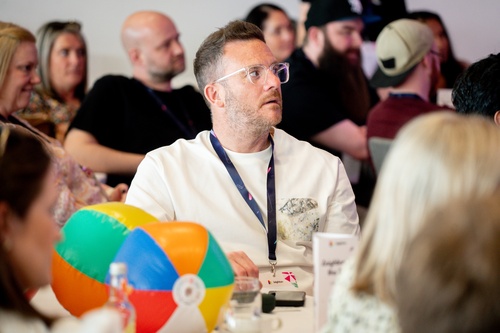
This week, Craig Jones, Product Consultant at Leighton, joined founders, investors and product leaders at GRAFT in Manchester to discuss one of the sector’s most fundamental challenges – what product-market fit actually looks like in practice.
The conversations were candid and revealed a surprising reality – many teams are still building products before validating whether anyone will actually pay for them. In 2026, that should arguably be a solved problem. Yet it clearly isn’t.
In this blog Craig shares some of his key takeaways from the event.
“One of the themes that kept coming up, was how often teams mistake interest for demand. A waitlist doesn’t mean you’ve solved a problem, it just means people are curious.”
Craig Jones, Product Consultant
One of the most insightful discussions centred on how misleading early traction signals can be when itcomes to establishing a PMF. Founders often highlight metrics such as waitlists, email sign-ups, social media engagement, website traffic and press coverage.
These indicators can be encouraging, but they don’t prove product-market fit, they prove curiosity.
Curiosity tells you people are interested in an idea. It doesn’t tell you whether the problem is important enough for customers to change behaviour, adopt a new product or pay for it.
In reality, the signals that actually matter are far simpler- customers returning, customers renewing and customers paying. When those things happen consistently, you know you’re solving a real problem.
Another recurring theme was the widespread use of extended free access to build early user bases. The logic is understandable; it removesfriction and helps grow adoption all with a view to monetising later.
However, there’s a hidden risk. If customers won’t pay during the stage when validation matters most, the commercial opportunityhasn’t truly been tested. Across the discussions during GRAFT, the consensuswas that usage shows interest, payment or conversion shows value.
Several companies described the same challenge when identifying the right ideal customer profile (ICP). Early in a product’sjourney, the opportunity space can appear broad as teams explore use cases, and personas to understand where real value exists. This exploration matters asnarrowing too early can mean missing meaningful opportunities.
The challenge comes when products try to serve too many needs at once. Even within one industry, multiple use cases and personas can dilute focus, often resulting in a product that is useful to many but essential to none.
Founders who find traction usually take a different path. They use early discovery to identify the ICP with the most acute and commercially compelling problem, then narrow their focus to solve it deeply. From there, expansion becomes possible.
The word “pivot” still carries negative connotations in many organisations. However, product development is inherently iterative. Changing direction is often part of the process of discovering what the market actually needs.
What really matters is how those decisions are made. Healthy pivots are grounded in evidence: customer interviews, usage patterns, revenue signals and validated hypotheses. When teams frame discarded work as researchand learning rather than wasted effort, they maintain both momentum and morale through periods of change.
Another misconception discussed at the event is the idea that product-market fit is something companies “reach”, in reality, it evolves consistently. Markets shift, customer expectations change and competitors appear.
Organisations that scale successfully or see high value commercial traction treat product-market fit as something that requires continuous validation, not a milestone that sits permanently in the past.Companies that prioritise really understanding the space they’re in and their target market are the ones who will move the needle, especially in terms of commercial performance. Focus on:
The biggest lesson from the day was simple. Before focusing on features, technology or growth metrics, teams need to answer one fundamental question:
Is the problem we’re solving significant enough that customers urgently need it solved?
If the answer is yes, traction will follow. If the answer is unclear, the search for product-market fit is still underway.
How Leighton helps
Many of the challenges discussed at GRAFT are exactly the problems we see teams facing when building new digital products: investing heavily in build before validating demand, pursuing broad markets instead of a clear ICP or relying on engagement signals rather than real commercial traction.
At Leighton, we work with product leaders and technology teams to reduce that uncertainty. Through structured product discovery, strategy and iterative delivery we help organisations:
· Validate whether a problem is commercially meaningful before committing to large-scale build
· Identify and define a clear ideal customer profile
· Test assumptions with real users and paying customers early
· Use evidence to guide pivots and product direction
· Continuously reassess product-market fit as markets evolve
Whether you're searching for product-market fit or scaling an existing platform, we help teams build products that are grounded in real customer needs and viable market opportunities.

Despite years of startup playbooks, accelerator frameworks and product thinking, product-market fit (PMF) is still one of the most misunderstood stages when it comes to genuinely moving the needle in technology.
This week, Craig Jones, Product Consultant at Leighton, joined founders, investors and product leaders at GRAFT in Manchester to discuss one of the sector’s most fundamental challenges – what product-market fit actually looks like in practice.
The conversations were candid and revealed a surprising reality – many teams are still building products before validating whether anyone will actually pay for them. In 2026, that should arguably be a solved problem. Yet it clearly isn’t.
In this blog Craig shares some of his key takeaways from the event.
“One of the themes that kept coming up, was how often teams mistake interest for demand. A waitlist doesn’t mean you’ve solved a problem, it just means people are curious.”
Craig Jones, Product Consultant
One of the most insightful discussions centred on how misleading early traction signals can be when itcomes to establishing a PMF. Founders often highlight metrics such as waitlists, email sign-ups, social media engagement, website traffic and press coverage.
These indicators can be encouraging, but they don’t prove product-market fit, they prove curiosity.
Curiosity tells you people are interested in an idea. It doesn’t tell you whether the problem is important enough for customers to change behaviour, adopt a new product or pay for it.
In reality, the signals that actually matter are far simpler- customers returning, customers renewing and customers paying. When those things happen consistently, you know you’re solving a real problem.
Another recurring theme was the widespread use of extended free access to build early user bases. The logic is understandable; it removesfriction and helps grow adoption all with a view to monetising later.
However, there’s a hidden risk. If customers won’t pay during the stage when validation matters most, the commercial opportunityhasn’t truly been tested. Across the discussions during GRAFT, the consensuswas that usage shows interest, payment or conversion shows value.
Several companies described the same challenge when identifying the right ideal customer profile (ICP). Early in a product’sjourney, the opportunity space can appear broad as teams explore use cases, and personas to understand where real value exists. This exploration matters asnarrowing too early can mean missing meaningful opportunities.
The challenge comes when products try to serve too many needs at once. Even within one industry, multiple use cases and personas can dilute focus, often resulting in a product that is useful to many but essential to none.
Founders who find traction usually take a different path. They use early discovery to identify the ICP with the most acute and commercially compelling problem, then narrow their focus to solve it deeply. From there, expansion becomes possible.
The word “pivot” still carries negative connotations in many organisations. However, product development is inherently iterative. Changing direction is often part of the process of discovering what the market actually needs.
What really matters is how those decisions are made. Healthy pivots are grounded in evidence: customer interviews, usage patterns, revenue signals and validated hypotheses. When teams frame discarded work as researchand learning rather than wasted effort, they maintain both momentum and morale through periods of change.
Another misconception discussed at the event is the idea that product-market fit is something companies “reach”, in reality, it evolves consistently. Markets shift, customer expectations change and competitors appear.
Organisations that scale successfully or see high value commercial traction treat product-market fit as something that requires continuous validation, not a milestone that sits permanently in the past.Companies that prioritise really understanding the space they’re in and their target market are the ones who will move the needle, especially in terms of commercial performance. Focus on:
The biggest lesson from the day was simple. Before focusing on features, technology or growth metrics, teams need to answer one fundamental question:
Is the problem we’re solving significant enough that customers urgently need it solved?
If the answer is yes, traction will follow. If the answer is unclear, the search for product-market fit is still underway.
How Leighton helps
Many of the challenges discussed at GRAFT are exactly the problems we see teams facing when building new digital products: investing heavily in build before validating demand, pursuing broad markets instead of a clear ICP or relying on engagement signals rather than real commercial traction.
At Leighton, we work with product leaders and technology teams to reduce that uncertainty. Through structured product discovery, strategy and iterative delivery we help organisations:
· Validate whether a problem is commercially meaningful before committing to large-scale build
· Identify and define a clear ideal customer profile
· Test assumptions with real users and paying customers early
· Use evidence to guide pivots and product direction
· Continuously reassess product-market fit as markets evolve
Whether you're searching for product-market fit or scaling an existing platform, we help teams build products that are grounded in real customer needs and viable market opportunities.
Despite years of startup playbooks, accelerator frameworks and product thinking, product-market fit (PMF) is still one of the most misunderstood stages when it comes to genuinely moving the needle in technology.
This week, Craig Jones, Product Consultant at Leighton, joined founders, investors and product leaders at GRAFT in Manchester to discuss one of the sector’s most fundamental challenges – what product-market fit actually looks like in practice.
The conversations were candid and revealed a surprising reality – many teams are still building products before validating whether anyone will actually pay for them. In 2026, that should arguably be a solved problem. Yet it clearly isn’t.
In this blog Craig shares some of his key takeaways from the event.
“One of the themes that kept coming up, was how often teams mistake interest for demand. A waitlist doesn’t mean you’ve solved a problem, it just means people are curious.”
Craig Jones, Product Consultant
One of the most insightful discussions centred on how misleading early traction signals can be when itcomes to establishing a PMF. Founders often highlight metrics such as waitlists, email sign-ups, social media engagement, website traffic and press coverage.
These indicators can be encouraging, but they don’t prove product-market fit, they prove curiosity.
Curiosity tells you people are interested in an idea. It doesn’t tell you whether the problem is important enough for customers to change behaviour, adopt a new product or pay for it.
In reality, the signals that actually matter are far simpler- customers returning, customers renewing and customers paying. When those things happen consistently, you know you’re solving a real problem.
Another recurring theme was the widespread use of extended free access to build early user bases. The logic is understandable; it removesfriction and helps grow adoption all with a view to monetising later.
However, there’s a hidden risk. If customers won’t pay during the stage when validation matters most, the commercial opportunityhasn’t truly been tested. Across the discussions during GRAFT, the consensuswas that usage shows interest, payment or conversion shows value.
Several companies described the same challenge when identifying the right ideal customer profile (ICP). Early in a product’sjourney, the opportunity space can appear broad as teams explore use cases, and personas to understand where real value exists. This exploration matters asnarrowing too early can mean missing meaningful opportunities.
The challenge comes when products try to serve too many needs at once. Even within one industry, multiple use cases and personas can dilute focus, often resulting in a product that is useful to many but essential to none.
Founders who find traction usually take a different path. They use early discovery to identify the ICP with the most acute and commercially compelling problem, then narrow their focus to solve it deeply. From there, expansion becomes possible.
The word “pivot” still carries negative connotations in many organisations. However, product development is inherently iterative. Changing direction is often part of the process of discovering what the market actually needs.
What really matters is how those decisions are made. Healthy pivots are grounded in evidence: customer interviews, usage patterns, revenue signals and validated hypotheses. When teams frame discarded work as researchand learning rather than wasted effort, they maintain both momentum and morale through periods of change.
Another misconception discussed at the event is the idea that product-market fit is something companies “reach”, in reality, it evolves consistently. Markets shift, customer expectations change and competitors appear.
Organisations that scale successfully or see high value commercial traction treat product-market fit as something that requires continuous validation, not a milestone that sits permanently in the past.Companies that prioritise really understanding the space they’re in and their target market are the ones who will move the needle, especially in terms of commercial performance. Focus on:
The biggest lesson from the day was simple. Before focusing on features, technology or growth metrics, teams need to answer one fundamental question:
Is the problem we’re solving significant enough that customers urgently need it solved?
If the answer is yes, traction will follow. If the answer is unclear, the search for product-market fit is still underway.
How Leighton helps
Many of the challenges discussed at GRAFT are exactly the problems we see teams facing when building new digital products: investing heavily in build before validating demand, pursuing broad markets instead of a clear ICP or relying on engagement signals rather than real commercial traction.
At Leighton, we work with product leaders and technology teams to reduce that uncertainty. Through structured product discovery, strategy and iterative delivery we help organisations:
· Validate whether a problem is commercially meaningful before committing to large-scale build
· Identify and define a clear ideal customer profile
· Test assumptions with real users and paying customers early
· Use evidence to guide pivots and product direction
· Continuously reassess product-market fit as markets evolve
Whether you're searching for product-market fit or scaling an existing platform, we help teams build products that are grounded in real customer needs and viable market opportunities.
Despite years of startup playbooks, accelerator frameworks and product thinking, product-market fit (PMF) is still one of the most misunderstood stages when it comes to genuinely moving the needle in technology.
This week, Craig Jones, Product Consultant at Leighton, joined founders, investors and product leaders at GRAFT in Manchester to discuss one of the sector’s most fundamental challenges – what product-market fit actually looks like in practice.
The conversations were candid and revealed a surprising reality – many teams are still building products before validating whether anyone will actually pay for them. In 2026, that should arguably be a solved problem. Yet it clearly isn’t.
In this blog Craig shares some of his key takeaways from the event.
“One of the themes that kept coming up, was how often teams mistake interest for demand. A waitlist doesn’t mean you’ve solved a problem, it just means people are curious.”
Craig Jones, Product Consultant
One of the most insightful discussions centred on how misleading early traction signals can be when itcomes to establishing a PMF. Founders often highlight metrics such as waitlists, email sign-ups, social media engagement, website traffic and press coverage.
These indicators can be encouraging, but they don’t prove product-market fit, they prove curiosity.
Curiosity tells you people are interested in an idea. It doesn’t tell you whether the problem is important enough for customers to change behaviour, adopt a new product or pay for it.
In reality, the signals that actually matter are far simpler- customers returning, customers renewing and customers paying. When those things happen consistently, you know you’re solving a real problem.
Another recurring theme was the widespread use of extended free access to build early user bases. The logic is understandable; it removesfriction and helps grow adoption all with a view to monetising later.
However, there’s a hidden risk. If customers won’t pay during the stage when validation matters most, the commercial opportunityhasn’t truly been tested. Across the discussions during GRAFT, the consensuswas that usage shows interest, payment or conversion shows value.
Several companies described the same challenge when identifying the right ideal customer profile (ICP). Early in a product’sjourney, the opportunity space can appear broad as teams explore use cases, and personas to understand where real value exists. This exploration matters asnarrowing too early can mean missing meaningful opportunities.
The challenge comes when products try to serve too many needs at once. Even within one industry, multiple use cases and personas can dilute focus, often resulting in a product that is useful to many but essential to none.
Founders who find traction usually take a different path. They use early discovery to identify the ICP with the most acute and commercially compelling problem, then narrow their focus to solve it deeply. From there, expansion becomes possible.
The word “pivot” still carries negative connotations in many organisations. However, product development is inherently iterative. Changing direction is often part of the process of discovering what the market actually needs.
What really matters is how those decisions are made. Healthy pivots are grounded in evidence: customer interviews, usage patterns, revenue signals and validated hypotheses. When teams frame discarded work as researchand learning rather than wasted effort, they maintain both momentum and morale through periods of change.
Another misconception discussed at the event is the idea that product-market fit is something companies “reach”, in reality, it evolves consistently. Markets shift, customer expectations change and competitors appear.
Organisations that scale successfully or see high value commercial traction treat product-market fit as something that requires continuous validation, not a milestone that sits permanently in the past.Companies that prioritise really understanding the space they’re in and their target market are the ones who will move the needle, especially in terms of commercial performance. Focus on:
The biggest lesson from the day was simple. Before focusing on features, technology or growth metrics, teams need to answer one fundamental question:
Is the problem we’re solving significant enough that customers urgently need it solved?
If the answer is yes, traction will follow. If the answer is unclear, the search for product-market fit is still underway.
How Leighton helps
Many of the challenges discussed at GRAFT are exactly the problems we see teams facing when building new digital products: investing heavily in build before validating demand, pursuing broad markets instead of a clear ICP or relying on engagement signals rather than real commercial traction.
At Leighton, we work with product leaders and technology teams to reduce that uncertainty. Through structured product discovery, strategy and iterative delivery we help organisations:
· Validate whether a problem is commercially meaningful before committing to large-scale build
· Identify and define a clear ideal customer profile
· Test assumptions with real users and paying customers early
· Use evidence to guide pivots and product direction
· Continuously reassess product-market fit as markets evolve
Whether you're searching for product-market fit or scaling an existing platform, we help teams build products that are grounded in real customer needs and viable market opportunities.