From fulfilment to foundations: Roundtable learnings on closing the retail fulfilment gap




What happens when a customer knows their order is going wrong before the retailer does? It sounds like a fulfilment problem, but the answer may sit in the quality of a retailer’s data, the way its systems communicate, the design of its customer service operation and even the decisions it is making about technology investment.
Leighton’s recent roundtable brought together technology leaders from retail, consumer goods, recruitment, professional services and transport to explore the findings of our new report, “The fulfilment gap: Why retailers are losing the sale after they’ve already won it”. Based on research with 1,000 UK consumers who had shopped online in the past 12 months, it found that 79% had experienced at least one fulfilment issue during that period.
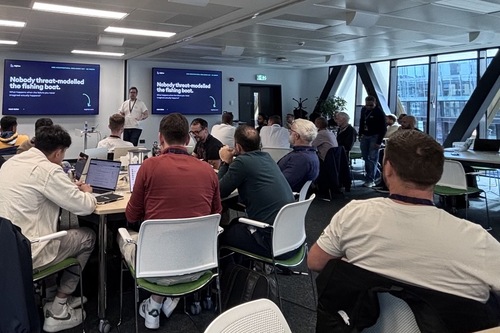
The roundtable, held at NoMad in London, featured Sarah O'Toole from Coca-Cola Europacific Partners, Richard Barker from South Western Railway, James Lewis from PwC, Adrian Foster from Hays and Rick Houghton from AWS, alongside the Leighton team.
Throughout the evening, the discussion moved quickly from the report itself to the practical realities behind it. How do retailers keep customers informed when operations are unpredictable? Where could AI genuinely improve the experience? And what is the right choice when it comes to building new capability or fixing the systems already in place? The strongest theme was that the challenge is rarely a lack of ambition or technology. It is making sure the systems, data, processes and people behind the customer experience work together.
The first question around the table was why customer expectations keep rising when fulfilment is so complicated. The answer was that customers do not benchmark retailers only against their competitors, although Amazon and ASOS were cited as having helped set the bar. Increasingly customers also compare organisations against those from other sectors – for example Delay Repay in transport was cited as something that could influence expectations around refunds in retail. This means that examples of best practice across industries have contributed to what customers consider normal.
However, behind a simple promise like “your order will arrive on Friday” sits a long chain that includes stock spread across locations, warehouse systems aligned with order management and carriers supplying timely information. In practice that information is often held in different systems, is updated at different times and can be hard to access when needed.
“There are so many fault lines in the process that making a delivery promise and then consistently delivering it is genuinely complicated, particularly for those retailers who are not digital-native.”
However, attendees also agreed that the customer sees one retailer, one order and one promise, not the complexity behind it. Visibility should be the primary focus. Retailers should strive to know something has gone wrong early enough to act, ideally before the customer finds out themselves. The group also took the time to acknowledge that established retailers with estates built up over decades face the hardest task in meeting standards that are increasingly created by digital-native brands.
The report found that 49% of consumers say poor or non-existent communication was the most frustrating part of a delivery problem, against 21% who named repeated delays. This prompted a wider conversation about what retailers are actually trying to optimise. The instinct is to make everything faster, but the group questioned whether speed is always the right answer.
One participant offered a cross-sector view from travel, where disruption is sometimes unavoidable: “What matters most is how quickly passengers receive accurate information, whether it helps them decide what to do next and whether they know they can claim a refund after prolonged disruption. Passengers’ perception of the same delay can change dramatically depending on what they are told.”
Likewise, retailers cannot prevent every delay, but they can get better at spotting problems, understanding the consequences and communicating clearly. If a delivery will be late, explaining what has happened and what comes next can be the most valuable thing a retailer does.
Better communication sounds simple until a business tries to do it consistently. The group explored the gap between having data somewhere in the organisation and having the right information in front of the person or system that needs it. An order status may be visible in one platform but not another, stock records may not reflect the physical warehouse, and a customer service advisor may have to piece together the history of an issue from several sources.
The result is a damaging situation in which a customer asks a simple question and the business does not have a simple answer. More notifications, a chatbot or promises of proactive updates can make the experience worse if the information behind them is inaccurate or out of date.
Attendees discussed that data quality, and visibility should come before more sophisticated predictive analytics, with one participant describing the impact of a business-wide data transformation project and the opportunities that new connectivity now offers.
The value is not in collecting more information but in making it reliable, consistent and useful across the business, however, different parts of the organisation often define the same data differently, which makes a single answer harder.
The discussion around AI was notably pragmatic, with little appetite for AI for the sake of it. The group focused on the everyday queries that consume customer service time and frustrate customers when answers are hard to find.
The report found that 49% of consumers would be comfortable with an AI support assistant that could securely access their order information, which prompted a deeper discussion of what that means. Customers do not necessarily want a conversation with an impressive model. They want an answer relevant to their situation, and that is a much harder technology problem.
“I think customers don’t really mind how their issue is handled as long as it is fixed. Removing humans from the loop can often exacerbate frustration when they cannot easily solve the problem in front of them.”
An assistant that cannot see the order can only offer generic reassurance and leave the underlying problem untouched. One connected to accurate fulfilment information can potentially resolve the enquiry there and then. If it can see the order, understand the context and fix the issue, the customer may not care whether the response came from a person or a machine.
The group also spent time challenging the assumption that more automation means less human involvement. The right answer depends on the nature of the interaction. A delivery update can often be automated. A missing order, a delayed refund or a failed earlier attempt at resolution calls for empathy, judgement and someone who can take ownership.
Participants noted that some businesses had gone too far in automating customer service, only to have to reverse and put human support back into the journey. Poorly implemented automation can make it harder to see just how dissatisfied a customer has become.
Attendees agreed that the question is not AI or humans, but the right combination that makes the customer feel recognised and understood. Automating a poor process does not fix it, the aim should be to remove unnecessary effort while making it easy for people to step in when needed.
As the evening progressed the conversation shifted from “where can we put AI?” to“ where is the existing process causing friction?” Several of the most valuable applications discussed would be invisible to customers with one participant observing: “realistically perhaps the more tangible opportunities lie behind the scenes.”
Some of the key examples raised included; better stock allocation and more accurate fulfilment predictions, automated order intake, earlier identification of potential delivery problems, faster processing of returns and helping advisors to better understand a customer’s situation before they pick up the conversation.
This also changes the business case. Measured only as a way of reducing headcount or handling more interactions, automation’s value is narrowly defined. If it prevents failures, improves availability, reduces avoidable contact, and gives employees better information, it becomes part of a broader customer and operational improvement programme.
Returns show how a simple customer expectation quickly becomes a complicated operational process. For the retailer one return can involve transport, warehouse receipt, inspection, stock reconciliation, fraud checks, finance and customer service engagement, with different teams and systems responsible for each stage. A delay in one area impacts the whole process and leaves the customer wondering what has happened.
The group recognised that returns remain difficult even for businesses that have invested heavily in automation elsewhere, including highly automated warehouses. Quality checks, condition assessment and resale decisions still add complexity and sometimes need human judgement. That raised the question of where agentic AI might eventually help; assessing returned products, deciding what happens next and speeding up the process without increasing fraud or removing necessary oversight.
Returns were seen by the group as a useful test of operational maturity, because they cut across so many parts of the organisation. As such, they should be viewed as part of the overall customer relationship rather than an isolated back-office process, since how a retailer recovers from a problem can influence whether customers buy again.
The discussion widened from individual use cases to the conditions needed to make AI work at scale. Many large organisations have accumulated systems over years, with data definitions, processes and responsibilities that do not align neatly, and retailers often have multiple sources of truth.
AI does not remove those complications and can actually expose them faster. If the underlying information is wrong, it can simply produce, in the group’s words, “a more convincing version of the wrong answer.” A prototype that works in a controlled environment is not necessarily production-ready, scaling safely needs integration, reliable data, clear ownership, security controls and a way to monitor what the system is doing.
The evening also explored the tension between experimentation and governance. Business teams are under pressure to find uses for AI that can show value quickly, while technology and security teams must consider architecture, protection of sensitive information and whether a solution can be supported at scale. Move too slowly and momentum is lost; move too quickly and the result is fragmented tools and duplicated effort.
The challenge is not simply to prevent unauthorised experimentation, but to give people a way to explore what is possible. Successful ideas then need a route to being governed, integrated and scaled, which takes collaboration between business and technology teams. Ultimately attendees agreed that the question isn't whether retailers should invest in AI. It's whether they are fixing the things that will allow that investment to work.
The final part of the evening turned to where retailers should put their money. Agentic commerce - where AI agents help customers discover products, compare options and buy, is on many agendas, with questions about brand experience and how retailers stay visible as new interfaces emerge. But a more immediate test was posed, if an AI agent asked whether a product was in stock, what it costs and whether it could arrive by Friday, could the retailer answer accurately?
That depends on reliable product, pricing, stock and fulfilment data that is accessible to the systems that need it. The group debated whether retailers should build their own agents or prioritise the operational foundations that let them work effectively with agents built by others, particularly when budgets are constrained and AI costs can be hard to predict as usage grows.
There was healthy debate on the pace and scale of modernisation. Some organisations will be best served by targeted, incremental improvements that remove the biggest barriers first. Others may need to consolidate major parts of their estate to tackle complexity at source. One participant described experiencing a major core-system consolidation programme with wide-spread success. No single strategy suits every retailer but investing in new intelligence while leaving fundamental operational problems unresolved is increasingly hard to justify.
Across the evening, issues often treated separately kept connecting. A delivery problem can become a communication failure, a service problem can reveal a data gap, a return can expose disconnected processes, and an AI experiment can highlight architectural weaknesses that have been present for years.
That does not mean waiting until every legacy system is replaced. It means being deliberate about where to start, what problem is being solved and what it will take to make a solution work beyond a pilot. The most useful question to takeaway was not “Where can we use AI?” but “What is getting in the way of delivering the experience we have promised – and what needs to change to fix it?”
The best technology experience may ultimately be the one the customer never notices. They simply get the right answer, at the right time, from the right place.
Read the full report: The fulfilment gap: Why retailers are losing the sale after they’ve already won it
At Leighton, we help organisations modernise complex technology estates, connect critical systems and identify practical opportunities for AI and intelligent automation. If you are looking to improve fulfilment, customer service or operational performance, get in touch with our team.

What happens when a customer knows their order is going wrong before the retailer does? It sounds like a fulfilment problem, but the answer may sit in the quality of a retailer’s data, the way its systems communicate, the design of its customer service operation and even the decisions it is making about technology investment.
Leighton’s recent roundtable brought together technology leaders from retail, consumer goods, recruitment, professional services and transport to explore the findings of our new report, “The fulfilment gap: Why retailers are losing the sale after they’ve already won it”. Based on research with 1,000 UK consumers who had shopped online in the past 12 months, it found that 79% had experienced at least one fulfilment issue during that period.
The roundtable, held at NoMad in London, featured Sarah O'Toole from Coca-Cola Europacific Partners, Richard Barker from South Western Railway, James Lewis from PwC, Adrian Foster from Hays and Rick Houghton from AWS, alongside the Leighton team.
Throughout the evening, the discussion moved quickly from the report itself to the practical realities behind it. How do retailers keep customers informed when operations are unpredictable? Where could AI genuinely improve the experience? And what is the right choice when it comes to building new capability or fixing the systems already in place? The strongest theme was that the challenge is rarely a lack of ambition or technology. It is making sure the systems, data, processes and people behind the customer experience work together.
The first question around the table was why customer expectations keep rising when fulfilment is so complicated. The answer was that customers do not benchmark retailers only against their competitors, although Amazon and ASOS were cited as having helped set the bar. Increasingly customers also compare organisations against those from other sectors – for example Delay Repay in transport was cited as something that could influence expectations around refunds in retail. This means that examples of best practice across industries have contributed to what customers consider normal.
However, behind a simple promise like “your order will arrive on Friday” sits a long chain that includes stock spread across locations, warehouse systems aligned with order management and carriers supplying timely information. In practice that information is often held in different systems, is updated at different times and can be hard to access when needed.
“There are so many fault lines in the process that making a delivery promise and then consistently delivering it is genuinely complicated, particularly for those retailers who are not digital-native.”
However, attendees also agreed that the customer sees one retailer, one order and one promise, not the complexity behind it. Visibility should be the primary focus. Retailers should strive to know something has gone wrong early enough to act, ideally before the customer finds out themselves. The group also took the time to acknowledge that established retailers with estates built up over decades face the hardest task in meeting standards that are increasingly created by digital-native brands.
The report found that 49% of consumers say poor or non-existent communication was the most frustrating part of a delivery problem, against 21% who named repeated delays. This prompted a wider conversation about what retailers are actually trying to optimise. The instinct is to make everything faster, but the group questioned whether speed is always the right answer.
One participant offered a cross-sector view from travel, where disruption is sometimes unavoidable: “What matters most is how quickly passengers receive accurate information, whether it helps them decide what to do next and whether they know they can claim a refund after prolonged disruption. Passengers’ perception of the same delay can change dramatically depending on what they are told.”
Likewise, retailers cannot prevent every delay, but they can get better at spotting problems, understanding the consequences and communicating clearly. If a delivery will be late, explaining what has happened and what comes next can be the most valuable thing a retailer does.
Better communication sounds simple until a business tries to do it consistently. The group explored the gap between having data somewhere in the organisation and having the right information in front of the person or system that needs it. An order status may be visible in one platform but not another, stock records may not reflect the physical warehouse, and a customer service advisor may have to piece together the history of an issue from several sources.
The result is a damaging situation in which a customer asks a simple question and the business does not have a simple answer. More notifications, a chatbot or promises of proactive updates can make the experience worse if the information behind them is inaccurate or out of date.
Attendees discussed that data quality, and visibility should come before more sophisticated predictive analytics, with one participant describing the impact of a business-wide data transformation project and the opportunities that new connectivity now offers.
The value is not in collecting more information but in making it reliable, consistent and useful across the business, however, different parts of the organisation often define the same data differently, which makes a single answer harder.
The discussion around AI was notably pragmatic, with little appetite for AI for the sake of it. The group focused on the everyday queries that consume customer service time and frustrate customers when answers are hard to find.
The report found that 49% of consumers would be comfortable with an AI support assistant that could securely access their order information, which prompted a deeper discussion of what that means. Customers do not necessarily want a conversation with an impressive model. They want an answer relevant to their situation, and that is a much harder technology problem.
“I think customers don’t really mind how their issue is handled as long as it is fixed. Removing humans from the loop can often exacerbate frustration when they cannot easily solve the problem in front of them.”
An assistant that cannot see the order can only offer generic reassurance and leave the underlying problem untouched. One connected to accurate fulfilment information can potentially resolve the enquiry there and then. If it can see the order, understand the context and fix the issue, the customer may not care whether the response came from a person or a machine.
The group also spent time challenging the assumption that more automation means less human involvement. The right answer depends on the nature of the interaction. A delivery update can often be automated. A missing order, a delayed refund or a failed earlier attempt at resolution calls for empathy, judgement and someone who can take ownership.
Participants noted that some businesses had gone too far in automating customer service, only to have to reverse and put human support back into the journey. Poorly implemented automation can make it harder to see just how dissatisfied a customer has become.
Attendees agreed that the question is not AI or humans, but the right combination that makes the customer feel recognised and understood. Automating a poor process does not fix it, the aim should be to remove unnecessary effort while making it easy for people to step in when needed.
As the evening progressed the conversation shifted from “where can we put AI?” to“ where is the existing process causing friction?” Several of the most valuable applications discussed would be invisible to customers with one participant observing: “realistically perhaps the more tangible opportunities lie behind the scenes.”
Some of the key examples raised included; better stock allocation and more accurate fulfilment predictions, automated order intake, earlier identification of potential delivery problems, faster processing of returns and helping advisors to better understand a customer’s situation before they pick up the conversation.
This also changes the business case. Measured only as a way of reducing headcount or handling more interactions, automation’s value is narrowly defined. If it prevents failures, improves availability, reduces avoidable contact, and gives employees better information, it becomes part of a broader customer and operational improvement programme.
Returns show how a simple customer expectation quickly becomes a complicated operational process. For the retailer one return can involve transport, warehouse receipt, inspection, stock reconciliation, fraud checks, finance and customer service engagement, with different teams and systems responsible for each stage. A delay in one area impacts the whole process and leaves the customer wondering what has happened.
The group recognised that returns remain difficult even for businesses that have invested heavily in automation elsewhere, including highly automated warehouses. Quality checks, condition assessment and resale decisions still add complexity and sometimes need human judgement. That raised the question of where agentic AI might eventually help; assessing returned products, deciding what happens next and speeding up the process without increasing fraud or removing necessary oversight.
Returns were seen by the group as a useful test of operational maturity, because they cut across so many parts of the organisation. As such, they should be viewed as part of the overall customer relationship rather than an isolated back-office process, since how a retailer recovers from a problem can influence whether customers buy again.
The discussion widened from individual use cases to the conditions needed to make AI work at scale. Many large organisations have accumulated systems over years, with data definitions, processes and responsibilities that do not align neatly, and retailers often have multiple sources of truth.
AI does not remove those complications and can actually expose them faster. If the underlying information is wrong, it can simply produce, in the group’s words, “a more convincing version of the wrong answer.” A prototype that works in a controlled environment is not necessarily production-ready, scaling safely needs integration, reliable data, clear ownership, security controls and a way to monitor what the system is doing.
The evening also explored the tension between experimentation and governance. Business teams are under pressure to find uses for AI that can show value quickly, while technology and security teams must consider architecture, protection of sensitive information and whether a solution can be supported at scale. Move too slowly and momentum is lost; move too quickly and the result is fragmented tools and duplicated effort.
The challenge is not simply to prevent unauthorised experimentation, but to give people a way to explore what is possible. Successful ideas then need a route to being governed, integrated and scaled, which takes collaboration between business and technology teams. Ultimately attendees agreed that the question isn't whether retailers should invest in AI. It's whether they are fixing the things that will allow that investment to work.
The final part of the evening turned to where retailers should put their money. Agentic commerce - where AI agents help customers discover products, compare options and buy, is on many agendas, with questions about brand experience and how retailers stay visible as new interfaces emerge. But a more immediate test was posed, if an AI agent asked whether a product was in stock, what it costs and whether it could arrive by Friday, could the retailer answer accurately?
That depends on reliable product, pricing, stock and fulfilment data that is accessible to the systems that need it. The group debated whether retailers should build their own agents or prioritise the operational foundations that let them work effectively with agents built by others, particularly when budgets are constrained and AI costs can be hard to predict as usage grows.
There was healthy debate on the pace and scale of modernisation. Some organisations will be best served by targeted, incremental improvements that remove the biggest barriers first. Others may need to consolidate major parts of their estate to tackle complexity at source. One participant described experiencing a major core-system consolidation programme with wide-spread success. No single strategy suits every retailer but investing in new intelligence while leaving fundamental operational problems unresolved is increasingly hard to justify.
Across the evening, issues often treated separately kept connecting. A delivery problem can become a communication failure, a service problem can reveal a data gap, a return can expose disconnected processes, and an AI experiment can highlight architectural weaknesses that have been present for years.
That does not mean waiting until every legacy system is replaced. It means being deliberate about where to start, what problem is being solved and what it will take to make a solution work beyond a pilot. The most useful question to takeaway was not “Where can we use AI?” but “What is getting in the way of delivering the experience we have promised – and what needs to change to fix it?”
The best technology experience may ultimately be the one the customer never notices. They simply get the right answer, at the right time, from the right place.
Read the full report: The fulfilment gap: Why retailers are losing the sale after they’ve already won it
At Leighton, we help organisations modernise complex technology estates, connect critical systems and identify practical opportunities for AI and intelligent automation. If you are looking to improve fulfilment, customer service or operational performance, get in touch with our team.
What happens when a customer knows their order is going wrong before the retailer does? It sounds like a fulfilment problem, but the answer may sit in the quality of a retailer’s data, the way its systems communicate, the design of its customer service operation and even the decisions it is making about technology investment.
Leighton’s recent roundtable brought together technology leaders from retail, consumer goods, recruitment, professional services and transport to explore the findings of our new report, “The fulfilment gap: Why retailers are losing the sale after they’ve already won it”. Based on research with 1,000 UK consumers who had shopped online in the past 12 months, it found that 79% had experienced at least one fulfilment issue during that period.
The roundtable, held at NoMad in London, featured Sarah O'Toole from Coca-Cola Europacific Partners, Richard Barker from South Western Railway, James Lewis from PwC, Adrian Foster from Hays and Rick Houghton from AWS, alongside the Leighton team.
Throughout the evening, the discussion moved quickly from the report itself to the practical realities behind it. How do retailers keep customers informed when operations are unpredictable? Where could AI genuinely improve the experience? And what is the right choice when it comes to building new capability or fixing the systems already in place? The strongest theme was that the challenge is rarely a lack of ambition or technology. It is making sure the systems, data, processes and people behind the customer experience work together.
The first question around the table was why customer expectations keep rising when fulfilment is so complicated. The answer was that customers do not benchmark retailers only against their competitors, although Amazon and ASOS were cited as having helped set the bar. Increasingly customers also compare organisations against those from other sectors – for example Delay Repay in transport was cited as something that could influence expectations around refunds in retail. This means that examples of best practice across industries have contributed to what customers consider normal.
However, behind a simple promise like “your order will arrive on Friday” sits a long chain that includes stock spread across locations, warehouse systems aligned with order management and carriers supplying timely information. In practice that information is often held in different systems, is updated at different times and can be hard to access when needed.
“There are so many fault lines in the process that making a delivery promise and then consistently delivering it is genuinely complicated, particularly for those retailers who are not digital-native.”
However, attendees also agreed that the customer sees one retailer, one order and one promise, not the complexity behind it. Visibility should be the primary focus. Retailers should strive to know something has gone wrong early enough to act, ideally before the customer finds out themselves. The group also took the time to acknowledge that established retailers with estates built up over decades face the hardest task in meeting standards that are increasingly created by digital-native brands.
The report found that 49% of consumers say poor or non-existent communication was the most frustrating part of a delivery problem, against 21% who named repeated delays. This prompted a wider conversation about what retailers are actually trying to optimise. The instinct is to make everything faster, but the group questioned whether speed is always the right answer.
One participant offered a cross-sector view from travel, where disruption is sometimes unavoidable: “What matters most is how quickly passengers receive accurate information, whether it helps them decide what to do next and whether they know they can claim a refund after prolonged disruption. Passengers’ perception of the same delay can change dramatically depending on what they are told.”
Likewise, retailers cannot prevent every delay, but they can get better at spotting problems, understanding the consequences and communicating clearly. If a delivery will be late, explaining what has happened and what comes next can be the most valuable thing a retailer does.
Better communication sounds simple until a business tries to do it consistently. The group explored the gap between having data somewhere in the organisation and having the right information in front of the person or system that needs it. An order status may be visible in one platform but not another, stock records may not reflect the physical warehouse, and a customer service advisor may have to piece together the history of an issue from several sources.
The result is a damaging situation in which a customer asks a simple question and the business does not have a simple answer. More notifications, a chatbot or promises of proactive updates can make the experience worse if the information behind them is inaccurate or out of date.
Attendees discussed that data quality, and visibility should come before more sophisticated predictive analytics, with one participant describing the impact of a business-wide data transformation project and the opportunities that new connectivity now offers.
The value is not in collecting more information but in making it reliable, consistent and useful across the business, however, different parts of the organisation often define the same data differently, which makes a single answer harder.
The discussion around AI was notably pragmatic, with little appetite for AI for the sake of it. The group focused on the everyday queries that consume customer service time and frustrate customers when answers are hard to find.
The report found that 49% of consumers would be comfortable with an AI support assistant that could securely access their order information, which prompted a deeper discussion of what that means. Customers do not necessarily want a conversation with an impressive model. They want an answer relevant to their situation, and that is a much harder technology problem.
“I think customers don’t really mind how their issue is handled as long as it is fixed. Removing humans from the loop can often exacerbate frustration when they cannot easily solve the problem in front of them.”
An assistant that cannot see the order can only offer generic reassurance and leave the underlying problem untouched. One connected to accurate fulfilment information can potentially resolve the enquiry there and then. If it can see the order, understand the context and fix the issue, the customer may not care whether the response came from a person or a machine.
The group also spent time challenging the assumption that more automation means less human involvement. The right answer depends on the nature of the interaction. A delivery update can often be automated. A missing order, a delayed refund or a failed earlier attempt at resolution calls for empathy, judgement and someone who can take ownership.
Participants noted that some businesses had gone too far in automating customer service, only to have to reverse and put human support back into the journey. Poorly implemented automation can make it harder to see just how dissatisfied a customer has become.
Attendees agreed that the question is not AI or humans, but the right combination that makes the customer feel recognised and understood. Automating a poor process does not fix it, the aim should be to remove unnecessary effort while making it easy for people to step in when needed.
As the evening progressed the conversation shifted from “where can we put AI?” to“ where is the existing process causing friction?” Several of the most valuable applications discussed would be invisible to customers with one participant observing: “realistically perhaps the more tangible opportunities lie behind the scenes.”
Some of the key examples raised included; better stock allocation and more accurate fulfilment predictions, automated order intake, earlier identification of potential delivery problems, faster processing of returns and helping advisors to better understand a customer’s situation before they pick up the conversation.
This also changes the business case. Measured only as a way of reducing headcount or handling more interactions, automation’s value is narrowly defined. If it prevents failures, improves availability, reduces avoidable contact, and gives employees better information, it becomes part of a broader customer and operational improvement programme.
Returns show how a simple customer expectation quickly becomes a complicated operational process. For the retailer one return can involve transport, warehouse receipt, inspection, stock reconciliation, fraud checks, finance and customer service engagement, with different teams and systems responsible for each stage. A delay in one area impacts the whole process and leaves the customer wondering what has happened.
The group recognised that returns remain difficult even for businesses that have invested heavily in automation elsewhere, including highly automated warehouses. Quality checks, condition assessment and resale decisions still add complexity and sometimes need human judgement. That raised the question of where agentic AI might eventually help; assessing returned products, deciding what happens next and speeding up the process without increasing fraud or removing necessary oversight.
Returns were seen by the group as a useful test of operational maturity, because they cut across so many parts of the organisation. As such, they should be viewed as part of the overall customer relationship rather than an isolated back-office process, since how a retailer recovers from a problem can influence whether customers buy again.
The discussion widened from individual use cases to the conditions needed to make AI work at scale. Many large organisations have accumulated systems over years, with data definitions, processes and responsibilities that do not align neatly, and retailers often have multiple sources of truth.
AI does not remove those complications and can actually expose them faster. If the underlying information is wrong, it can simply produce, in the group’s words, “a more convincing version of the wrong answer.” A prototype that works in a controlled environment is not necessarily production-ready, scaling safely needs integration, reliable data, clear ownership, security controls and a way to monitor what the system is doing.
The evening also explored the tension between experimentation and governance. Business teams are under pressure to find uses for AI that can show value quickly, while technology and security teams must consider architecture, protection of sensitive information and whether a solution can be supported at scale. Move too slowly and momentum is lost; move too quickly and the result is fragmented tools and duplicated effort.
The challenge is not simply to prevent unauthorised experimentation, but to give people a way to explore what is possible. Successful ideas then need a route to being governed, integrated and scaled, which takes collaboration between business and technology teams. Ultimately attendees agreed that the question isn't whether retailers should invest in AI. It's whether they are fixing the things that will allow that investment to work.
The final part of the evening turned to where retailers should put their money. Agentic commerce - where AI agents help customers discover products, compare options and buy, is on many agendas, with questions about brand experience and how retailers stay visible as new interfaces emerge. But a more immediate test was posed, if an AI agent asked whether a product was in stock, what it costs and whether it could arrive by Friday, could the retailer answer accurately?
That depends on reliable product, pricing, stock and fulfilment data that is accessible to the systems that need it. The group debated whether retailers should build their own agents or prioritise the operational foundations that let them work effectively with agents built by others, particularly when budgets are constrained and AI costs can be hard to predict as usage grows.
There was healthy debate on the pace and scale of modernisation. Some organisations will be best served by targeted, incremental improvements that remove the biggest barriers first. Others may need to consolidate major parts of their estate to tackle complexity at source. One participant described experiencing a major core-system consolidation programme with wide-spread success. No single strategy suits every retailer but investing in new intelligence while leaving fundamental operational problems unresolved is increasingly hard to justify.
Across the evening, issues often treated separately kept connecting. A delivery problem can become a communication failure, a service problem can reveal a data gap, a return can expose disconnected processes, and an AI experiment can highlight architectural weaknesses that have been present for years.
That does not mean waiting until every legacy system is replaced. It means being deliberate about where to start, what problem is being solved and what it will take to make a solution work beyond a pilot. The most useful question to takeaway was not “Where can we use AI?” but “What is getting in the way of delivering the experience we have promised – and what needs to change to fix it?”
The best technology experience may ultimately be the one the customer never notices. They simply get the right answer, at the right time, from the right place.
Read the full report: The fulfilment gap: Why retailers are losing the sale after they’ve already won it
At Leighton, we help organisations modernise complex technology estates, connect critical systems and identify practical opportunities for AI and intelligent automation. If you are looking to improve fulfilment, customer service or operational performance, get in touch with our team.
What happens when a customer knows their order is going wrong before the retailer does? It sounds like a fulfilment problem, but the answer may sit in the quality of a retailer’s data, the way its systems communicate, the design of its customer service operation and even the decisions it is making about technology investment.
Leighton’s recent roundtable brought together technology leaders from retail, consumer goods, recruitment, professional services and transport to explore the findings of our new report, “The fulfilment gap: Why retailers are losing the sale after they’ve already won it”. Based on research with 1,000 UK consumers who had shopped online in the past 12 months, it found that 79% had experienced at least one fulfilment issue during that period.
The roundtable, held at NoMad in London, featured Sarah O'Toole from Coca-Cola Europacific Partners, Richard Barker from South Western Railway, James Lewis from PwC, Adrian Foster from Hays and Rick Houghton from AWS, alongside the Leighton team.
Throughout the evening, the discussion moved quickly from the report itself to the practical realities behind it. How do retailers keep customers informed when operations are unpredictable? Where could AI genuinely improve the experience? And what is the right choice when it comes to building new capability or fixing the systems already in place? The strongest theme was that the challenge is rarely a lack of ambition or technology. It is making sure the systems, data, processes and people behind the customer experience work together.
The first question around the table was why customer expectations keep rising when fulfilment is so complicated. The answer was that customers do not benchmark retailers only against their competitors, although Amazon and ASOS were cited as having helped set the bar. Increasingly customers also compare organisations against those from other sectors – for example Delay Repay in transport was cited as something that could influence expectations around refunds in retail. This means that examples of best practice across industries have contributed to what customers consider normal.
However, behind a simple promise like “your order will arrive on Friday” sits a long chain that includes stock spread across locations, warehouse systems aligned with order management and carriers supplying timely information. In practice that information is often held in different systems, is updated at different times and can be hard to access when needed.
“There are so many fault lines in the process that making a delivery promise and then consistently delivering it is genuinely complicated, particularly for those retailers who are not digital-native.”
However, attendees also agreed that the customer sees one retailer, one order and one promise, not the complexity behind it. Visibility should be the primary focus. Retailers should strive to know something has gone wrong early enough to act, ideally before the customer finds out themselves. The group also took the time to acknowledge that established retailers with estates built up over decades face the hardest task in meeting standards that are increasingly created by digital-native brands.
The report found that 49% of consumers say poor or non-existent communication was the most frustrating part of a delivery problem, against 21% who named repeated delays. This prompted a wider conversation about what retailers are actually trying to optimise. The instinct is to make everything faster, but the group questioned whether speed is always the right answer.
One participant offered a cross-sector view from travel, where disruption is sometimes unavoidable: “What matters most is how quickly passengers receive accurate information, whether it helps them decide what to do next and whether they know they can claim a refund after prolonged disruption. Passengers’ perception of the same delay can change dramatically depending on what they are told.”
Likewise, retailers cannot prevent every delay, but they can get better at spotting problems, understanding the consequences and communicating clearly. If a delivery will be late, explaining what has happened and what comes next can be the most valuable thing a retailer does.
Better communication sounds simple until a business tries to do it consistently. The group explored the gap between having data somewhere in the organisation and having the right information in front of the person or system that needs it. An order status may be visible in one platform but not another, stock records may not reflect the physical warehouse, and a customer service advisor may have to piece together the history of an issue from several sources.
The result is a damaging situation in which a customer asks a simple question and the business does not have a simple answer. More notifications, a chatbot or promises of proactive updates can make the experience worse if the information behind them is inaccurate or out of date.
Attendees discussed that data quality, and visibility should come before more sophisticated predictive analytics, with one participant describing the impact of a business-wide data transformation project and the opportunities that new connectivity now offers.
The value is not in collecting more information but in making it reliable, consistent and useful across the business, however, different parts of the organisation often define the same data differently, which makes a single answer harder.
The discussion around AI was notably pragmatic, with little appetite for AI for the sake of it. The group focused on the everyday queries that consume customer service time and frustrate customers when answers are hard to find.
The report found that 49% of consumers would be comfortable with an AI support assistant that could securely access their order information, which prompted a deeper discussion of what that means. Customers do not necessarily want a conversation with an impressive model. They want an answer relevant to their situation, and that is a much harder technology problem.
“I think customers don’t really mind how their issue is handled as long as it is fixed. Removing humans from the loop can often exacerbate frustration when they cannot easily solve the problem in front of them.”
An assistant that cannot see the order can only offer generic reassurance and leave the underlying problem untouched. One connected to accurate fulfilment information can potentially resolve the enquiry there and then. If it can see the order, understand the context and fix the issue, the customer may not care whether the response came from a person or a machine.
The group also spent time challenging the assumption that more automation means less human involvement. The right answer depends on the nature of the interaction. A delivery update can often be automated. A missing order, a delayed refund or a failed earlier attempt at resolution calls for empathy, judgement and someone who can take ownership.
Participants noted that some businesses had gone too far in automating customer service, only to have to reverse and put human support back into the journey. Poorly implemented automation can make it harder to see just how dissatisfied a customer has become.
Attendees agreed that the question is not AI or humans, but the right combination that makes the customer feel recognised and understood. Automating a poor process does not fix it, the aim should be to remove unnecessary effort while making it easy for people to step in when needed.
As the evening progressed the conversation shifted from “where can we put AI?” to“ where is the existing process causing friction?” Several of the most valuable applications discussed would be invisible to customers with one participant observing: “realistically perhaps the more tangible opportunities lie behind the scenes.”
Some of the key examples raised included; better stock allocation and more accurate fulfilment predictions, automated order intake, earlier identification of potential delivery problems, faster processing of returns and helping advisors to better understand a customer’s situation before they pick up the conversation.
This also changes the business case. Measured only as a way of reducing headcount or handling more interactions, automation’s value is narrowly defined. If it prevents failures, improves availability, reduces avoidable contact, and gives employees better information, it becomes part of a broader customer and operational improvement programme.
Returns show how a simple customer expectation quickly becomes a complicated operational process. For the retailer one return can involve transport, warehouse receipt, inspection, stock reconciliation, fraud checks, finance and customer service engagement, with different teams and systems responsible for each stage. A delay in one area impacts the whole process and leaves the customer wondering what has happened.
The group recognised that returns remain difficult even for businesses that have invested heavily in automation elsewhere, including highly automated warehouses. Quality checks, condition assessment and resale decisions still add complexity and sometimes need human judgement. That raised the question of where agentic AI might eventually help; assessing returned products, deciding what happens next and speeding up the process without increasing fraud or removing necessary oversight.
Returns were seen by the group as a useful test of operational maturity, because they cut across so many parts of the organisation. As such, they should be viewed as part of the overall customer relationship rather than an isolated back-office process, since how a retailer recovers from a problem can influence whether customers buy again.
The discussion widened from individual use cases to the conditions needed to make AI work at scale. Many large organisations have accumulated systems over years, with data definitions, processes and responsibilities that do not align neatly, and retailers often have multiple sources of truth.
AI does not remove those complications and can actually expose them faster. If the underlying information is wrong, it can simply produce, in the group’s words, “a more convincing version of the wrong answer.” A prototype that works in a controlled environment is not necessarily production-ready, scaling safely needs integration, reliable data, clear ownership, security controls and a way to monitor what the system is doing.
The evening also explored the tension between experimentation and governance. Business teams are under pressure to find uses for AI that can show value quickly, while technology and security teams must consider architecture, protection of sensitive information and whether a solution can be supported at scale. Move too slowly and momentum is lost; move too quickly and the result is fragmented tools and duplicated effort.
The challenge is not simply to prevent unauthorised experimentation, but to give people a way to explore what is possible. Successful ideas then need a route to being governed, integrated and scaled, which takes collaboration between business and technology teams. Ultimately attendees agreed that the question isn't whether retailers should invest in AI. It's whether they are fixing the things that will allow that investment to work.
The final part of the evening turned to where retailers should put their money. Agentic commerce - where AI agents help customers discover products, compare options and buy, is on many agendas, with questions about brand experience and how retailers stay visible as new interfaces emerge. But a more immediate test was posed, if an AI agent asked whether a product was in stock, what it costs and whether it could arrive by Friday, could the retailer answer accurately?
That depends on reliable product, pricing, stock and fulfilment data that is accessible to the systems that need it. The group debated whether retailers should build their own agents or prioritise the operational foundations that let them work effectively with agents built by others, particularly when budgets are constrained and AI costs can be hard to predict as usage grows.
There was healthy debate on the pace and scale of modernisation. Some organisations will be best served by targeted, incremental improvements that remove the biggest barriers first. Others may need to consolidate major parts of their estate to tackle complexity at source. One participant described experiencing a major core-system consolidation programme with wide-spread success. No single strategy suits every retailer but investing in new intelligence while leaving fundamental operational problems unresolved is increasingly hard to justify.
Across the evening, issues often treated separately kept connecting. A delivery problem can become a communication failure, a service problem can reveal a data gap, a return can expose disconnected processes, and an AI experiment can highlight architectural weaknesses that have been present for years.
That does not mean waiting until every legacy system is replaced. It means being deliberate about where to start, what problem is being solved and what it will take to make a solution work beyond a pilot. The most useful question to takeaway was not “Where can we use AI?” but “What is getting in the way of delivering the experience we have promised – and what needs to change to fix it?”
The best technology experience may ultimately be the one the customer never notices. They simply get the right answer, at the right time, from the right place.
Read the full report: The fulfilment gap: Why retailers are losing the sale after they’ve already won it
At Leighton, we help organisations modernise complex technology estates, connect critical systems and identify practical opportunities for AI and intelligent automation. If you are looking to improve fulfilment, customer service or operational performance, get in touch with our team.