Insights from Leighton's on:tech roundtable: Engineering loyalty



-2.jpg)
Loyalty is evolving fast. What once centred on points, promotions, and repeat transactions is now shaped by experience, personal relevance, and technology that feels human.
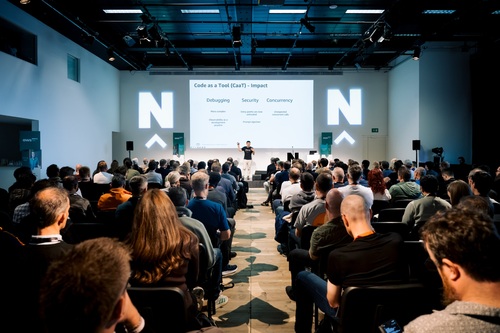
This was the core focus of our most recent on:tech event. The roundtable 'Engineering Loyalty: Building Connection Through Technology', held at SIX at the Baltic in Gateshead, brought together technology leaders and innovators from Hays Travel, Greggs, END, Atom Bank, Partnerize, Serios Group, SaleCycle and Leighton.
Bringing together cross-sector expertise across product, data, engineering and digital experience, the event provided the opportunity to explore how technology and engineering are shaping the next era of customer loyalty.
In this blog we cover some of the insightful conversation from the evening and outline the key themes that were discussed.
One of the defining conversations of the evening centred around what drives customer loyalty. What was once about points and discounts alone is now defined by experience, value-alignment and building genuine connections between your brand and your customers.
While points and rewards systems may still have a role to play in loyalty ecosystems the room unanimously agreed that loyalty is being driven less by transactional value and more by the customer’s experience. From convenient ordering and seamless payments to personalised journeys and helpful recommendations, loyalty is increasingly built through convenience, consistence and connection.
One participant stated: “Loyalty happens when the experience just works, and keeps working” this was echoed by others in the room who agreed that emotional and purpose-driven loyalty is becoming much more powerful and longer-lasting than simple incentive-driven purchases, which may drive conversion but ultimately not repeat buying, or that, in the worst case, could create a culture of customers only converting when discount-driven.
This evolution means technology, digital ordering and data insight are now central to how customers engage with brands and we need platforms that are capable of providing the right level of personalisation and nurturing those relationships with individual customers.
Knowing your customer is the foundation of any loyalty strategy, but as several of the attendees noted, this is where organisations face some of their toughest challenges.
A lot of businesses are sitting on huge volumes of data. Yet without strong governance, strategic data capture and management processes and clear ownership, that data is often; fragmented or collected across disparate channels, inconsistent or incomplete and poorly understood which ultimately makes it very challenging for companies to draw meaningful insight from.
Understanding legacy data sets, and the lineage behind them, can be especially difficult. As one participant noted, “we collect everything, but we don’t always know what we need. Equally we have data we don’t understand, where it came from and how it fits into the bigger picture.” Without structure, hygiene and context, organisations struggle to unlock the insight required for personalisation, decision-making or innovation.
The group agreed that building loyalty starts with building data clarity. Clean, connected, governed data is what enables accurate profiling, relevant offers and smarter decision-making. Done correctly data strategies can drive insight that informs structured loyalty programmes and offers companies the opportunity to personalise customer journeys.
A strong message from the evening was that trust is the most important loyalty currency. Trust guides not only what customers are willing to give you in terms of information but also influences repeat purchase choices. This means governance, security and ethical data usage should be paramount when it comes to getting the right foundations in place for your loyalty programmes.
Data governance, security and compliance should not act as blockers but as enablers and should be the guardrails that make responsible innovation possible. Good governance can ensure clean, reliable data, transparent customer value exchange, effective risk management and even guide safe and effective AI and automation.
The group also discussed the importance of ethical decision-making. Just because personalisation or inference is possible, it doesn’t always mean it’s appropriate. Retailers must consider customer expectations, fairness and transparency in every decision.
Personalisation has become a baseline expectation, but discussions during the evening also highlighted a nuanced, often overlooked tension: Do customers always want personalisation? And when does it cross the line?
Participants shared real-world examples of personalisation done well, but also scenarios where personalisation moved beyond making content relevant and bordered into being intrusive. The table agreed that customers value recommendations that save time or reflect genuine preferences, but they quickly lose trust when personalisation feels overly predictive, intrusive, insensitive or restrictive – removing their ability to browse and search a companies full offering.
So, when does it go too far? The consensus was that personalisation must be helpful, but not invasive. It should feel like it’s relevant but not prohibit customers from browsing your full offering. This means using data ethically, keeping customers in control and ensuring AI-driven decisioning remains transparent and explainable. The best personalisation feels like support, not surveillance.
Another key focus of the discussion was how outdated architectures can limit progress with loyalty programmes and personalisation. Modern loyalty ambitions are high but many organisations are limited by ageing, monolithic platforms that weren’t designed for real-time data, composable journeys or multi-partner ecosystems.
Leaders across the table agreed that “foundations before features” must be the rule. Without modern, scalable architecture, even the best loyalty ideas cannot be delivered effectively.
Key pain points included:
Migrating away from these legacy systems is challenging, but essential. Modern loyalty needs cloud-native, event-driven, API-first architectures that support rapid experimentation, real-time updates and the flexibility to evolve alongside customer expectations.
Feature flagging, shadow environments and safe, controlled rollouts were all cited as tools that help organisations modernise safely, without disrupting the experience for millions of active customers.
Another key theme was the importance of moving away from big-bang releases and towards a culture of rapid experimentation.
High-performing teams are those that test early and often, use hypothesis-driven development, validate with real customers accept – and learn from – failure, iterate quickly and work cross-functionally.
This mindset is essential for loyalty programmes, where customer behaviours evolve quickly and small changes can have big impacts.
Yet many organisations still struggle with this shift.Processes can be slow, data difficult to access and governance unclear. Creating safe-to-fail environments and empowering teams to experiment responsibly will be critical for loyalty innovation moving forward.
Looking ahead, participants explored how loyalty might evolve over the next five to ten years with key trends including:
Loyalty may move beyond apps altogether, surfacing instead in search, voice, operating systems or AI agents acting on behalf of the customer.
In this future, the most successful loyalty strategies will be those that combine technological sophistication with human understanding, engineering systems that feel intuitive, supportive and genuinely valuable.
Loyalty is no longer a single campaign, it’s an engineered experience that requires clean, trustworthy data, scalable, modular technology, ethical and explainable personalisation, a culture of experimentation and robust governance.
We’d like to thank all our guests for their openness and insight throughout the evening. Their perspectives will continue to shape how we build the next generation of loyalty experiences with our partners.
If you’d like to explore how Leighton can help you modernise your loyalty platform, unlock your data or design personalised, human-centred customer experiences, we’d love to talk.
.jpg)
Loyalty is evolving fast. What once centred on points, promotions, and repeat transactions is now shaped by experience, personal relevance, and technology that feels human.
This was the core focus of our most recent on:tech event. The roundtable 'Engineering Loyalty: Building Connection Through Technology', held at SIX at the Baltic in Gateshead, brought together technology leaders and innovators from Hays Travel, Greggs, END, Atom Bank, Partnerize, Serios Group, SaleCycle and Leighton.
Bringing together cross-sector expertise across product, data, engineering and digital experience, the event provided the opportunity to explore how technology and engineering are shaping the next era of customer loyalty.
In this blog we cover some of the insightful conversation from the evening and outline the key themes that were discussed.
One of the defining conversations of the evening centred around what drives customer loyalty. What was once about points and discounts alone is now defined by experience, value-alignment and building genuine connections between your brand and your customers.
While points and rewards systems may still have a role to play in loyalty ecosystems the room unanimously agreed that loyalty is being driven less by transactional value and more by the customer’s experience. From convenient ordering and seamless payments to personalised journeys and helpful recommendations, loyalty is increasingly built through convenience, consistence and connection.
One participant stated: “Loyalty happens when the experience just works, and keeps working” this was echoed by others in the room who agreed that emotional and purpose-driven loyalty is becoming much more powerful and longer-lasting than simple incentive-driven purchases, which may drive conversion but ultimately not repeat buying, or that, in the worst case, could create a culture of customers only converting when discount-driven.
This evolution means technology, digital ordering and data insight are now central to how customers engage with brands and we need platforms that are capable of providing the right level of personalisation and nurturing those relationships with individual customers.
Knowing your customer is the foundation of any loyalty strategy, but as several of the attendees noted, this is where organisations face some of their toughest challenges.
A lot of businesses are sitting on huge volumes of data. Yet without strong governance, strategic data capture and management processes and clear ownership, that data is often; fragmented or collected across disparate channels, inconsistent or incomplete and poorly understood which ultimately makes it very challenging for companies to draw meaningful insight from.
Understanding legacy data sets, and the lineage behind them, can be especially difficult. As one participant noted, “we collect everything, but we don’t always know what we need. Equally we have data we don’t understand, where it came from and how it fits into the bigger picture.” Without structure, hygiene and context, organisations struggle to unlock the insight required for personalisation, decision-making or innovation.
The group agreed that building loyalty starts with building data clarity. Clean, connected, governed data is what enables accurate profiling, relevant offers and smarter decision-making. Done correctly data strategies can drive insight that informs structured loyalty programmes and offers companies the opportunity to personalise customer journeys.
A strong message from the evening was that trust is the most important loyalty currency. Trust guides not only what customers are willing to give you in terms of information but also influences repeat purchase choices. This means governance, security and ethical data usage should be paramount when it comes to getting the right foundations in place for your loyalty programmes.
Data governance, security and compliance should not act as blockers but as enablers and should be the guardrails that make responsible innovation possible. Good governance can ensure clean, reliable data, transparent customer value exchange, effective risk management and even guide safe and effective AI and automation.
The group also discussed the importance of ethical decision-making. Just because personalisation or inference is possible, it doesn’t always mean it’s appropriate. Retailers must consider customer expectations, fairness and transparency in every decision.
Personalisation has become a baseline expectation, but discussions during the evening also highlighted a nuanced, often overlooked tension: Do customers always want personalisation? And when does it cross the line?
Participants shared real-world examples of personalisation done well, but also scenarios where personalisation moved beyond making content relevant and bordered into being intrusive. The table agreed that customers value recommendations that save time or reflect genuine preferences, but they quickly lose trust when personalisation feels overly predictive, intrusive, insensitive or restrictive – removing their ability to browse and search a companies full offering.
So, when does it go too far? The consensus was that personalisation must be helpful, but not invasive. It should feel like it’s relevant but not prohibit customers from browsing your full offering. This means using data ethically, keeping customers in control and ensuring AI-driven decisioning remains transparent and explainable. The best personalisation feels like support, not surveillance.
Another key focus of the discussion was how outdated architectures can limit progress with loyalty programmes and personalisation. Modern loyalty ambitions are high but many organisations are limited by ageing, monolithic platforms that weren’t designed for real-time data, composable journeys or multi-partner ecosystems.
Leaders across the table agreed that “foundations before features” must be the rule. Without modern, scalable architecture, even the best loyalty ideas cannot be delivered effectively.
Key pain points included:
Migrating away from these legacy systems is challenging, but essential. Modern loyalty needs cloud-native, event-driven, API-first architectures that support rapid experimentation, real-time updates and the flexibility to evolve alongside customer expectations.
Feature flagging, shadow environments and safe, controlled rollouts were all cited as tools that help organisations modernise safely, without disrupting the experience for millions of active customers.
Another key theme was the importance of moving away from big-bang releases and towards a culture of rapid experimentation.
High-performing teams are those that test early and often, use hypothesis-driven development, validate with real customers accept – and learn from – failure, iterate quickly and work cross-functionally.
This mindset is essential for loyalty programmes, where customer behaviours evolve quickly and small changes can have big impacts.
Yet many organisations still struggle with this shift.Processes can be slow, data difficult to access and governance unclear. Creating safe-to-fail environments and empowering teams to experiment responsibly will be critical for loyalty innovation moving forward.
Looking ahead, participants explored how loyalty might evolve over the next five to ten years with key trends including:
Loyalty may move beyond apps altogether, surfacing instead in search, voice, operating systems or AI agents acting on behalf of the customer.
In this future, the most successful loyalty strategies will be those that combine technological sophistication with human understanding, engineering systems that feel intuitive, supportive and genuinely valuable.
Loyalty is no longer a single campaign, it’s an engineered experience that requires clean, trustworthy data, scalable, modular technology, ethical and explainable personalisation, a culture of experimentation and robust governance.
We’d like to thank all our guests for their openness and insight throughout the evening. Their perspectives will continue to shape how we build the next generation of loyalty experiences with our partners.
If you’d like to explore how Leighton can help you modernise your loyalty platform, unlock your data or design personalised, human-centred customer experiences, we’d love to talk.
Loyalty is evolving fast. What once centred on points, promotions, and repeat transactions is now shaped by experience, personal relevance, and technology that feels human.
This was the core focus of our most recent on:tech event. The roundtable 'Engineering Loyalty: Building Connection Through Technology', held at SIX at the Baltic in Gateshead, brought together technology leaders and innovators from Hays Travel, Greggs, END, Atom Bank, Partnerize, Serios Group, SaleCycle and Leighton.
Bringing together cross-sector expertise across product, data, engineering and digital experience, the event provided the opportunity to explore how technology and engineering are shaping the next era of customer loyalty.
In this blog we cover some of the insightful conversation from the evening and outline the key themes that were discussed.
One of the defining conversations of the evening centred around what drives customer loyalty. What was once about points and discounts alone is now defined by experience, value-alignment and building genuine connections between your brand and your customers.
While points and rewards systems may still have a role to play in loyalty ecosystems the room unanimously agreed that loyalty is being driven less by transactional value and more by the customer’s experience. From convenient ordering and seamless payments to personalised journeys and helpful recommendations, loyalty is increasingly built through convenience, consistence and connection.
One participant stated: “Loyalty happens when the experience just works, and keeps working” this was echoed by others in the room who agreed that emotional and purpose-driven loyalty is becoming much more powerful and longer-lasting than simple incentive-driven purchases, which may drive conversion but ultimately not repeat buying, or that, in the worst case, could create a culture of customers only converting when discount-driven.
This evolution means technology, digital ordering and data insight are now central to how customers engage with brands and we need platforms that are capable of providing the right level of personalisation and nurturing those relationships with individual customers.
Knowing your customer is the foundation of any loyalty strategy, but as several of the attendees noted, this is where organisations face some of their toughest challenges.
A lot of businesses are sitting on huge volumes of data. Yet without strong governance, strategic data capture and management processes and clear ownership, that data is often; fragmented or collected across disparate channels, inconsistent or incomplete and poorly understood which ultimately makes it very challenging for companies to draw meaningful insight from.
Understanding legacy data sets, and the lineage behind them, can be especially difficult. As one participant noted, “we collect everything, but we don’t always know what we need. Equally we have data we don’t understand, where it came from and how it fits into the bigger picture.” Without structure, hygiene and context, organisations struggle to unlock the insight required for personalisation, decision-making or innovation.
The group agreed that building loyalty starts with building data clarity. Clean, connected, governed data is what enables accurate profiling, relevant offers and smarter decision-making. Done correctly data strategies can drive insight that informs structured loyalty programmes and offers companies the opportunity to personalise customer journeys.
A strong message from the evening was that trust is the most important loyalty currency. Trust guides not only what customers are willing to give you in terms of information but also influences repeat purchase choices. This means governance, security and ethical data usage should be paramount when it comes to getting the right foundations in place for your loyalty programmes.
Data governance, security and compliance should not act as blockers but as enablers and should be the guardrails that make responsible innovation possible. Good governance can ensure clean, reliable data, transparent customer value exchange, effective risk management and even guide safe and effective AI and automation.
The group also discussed the importance of ethical decision-making. Just because personalisation or inference is possible, it doesn’t always mean it’s appropriate. Retailers must consider customer expectations, fairness and transparency in every decision.
Personalisation has become a baseline expectation, but discussions during the evening also highlighted a nuanced, often overlooked tension: Do customers always want personalisation? And when does it cross the line?
Participants shared real-world examples of personalisation done well, but also scenarios where personalisation moved beyond making content relevant and bordered into being intrusive. The table agreed that customers value recommendations that save time or reflect genuine preferences, but they quickly lose trust when personalisation feels overly predictive, intrusive, insensitive or restrictive – removing their ability to browse and search a companies full offering.
So, when does it go too far? The consensus was that personalisation must be helpful, but not invasive. It should feel like it’s relevant but not prohibit customers from browsing your full offering. This means using data ethically, keeping customers in control and ensuring AI-driven decisioning remains transparent and explainable. The best personalisation feels like support, not surveillance.
Another key focus of the discussion was how outdated architectures can limit progress with loyalty programmes and personalisation. Modern loyalty ambitions are high but many organisations are limited by ageing, monolithic platforms that weren’t designed for real-time data, composable journeys or multi-partner ecosystems.
Leaders across the table agreed that “foundations before features” must be the rule. Without modern, scalable architecture, even the best loyalty ideas cannot be delivered effectively.
Key pain points included:
Migrating away from these legacy systems is challenging, but essential. Modern loyalty needs cloud-native, event-driven, API-first architectures that support rapid experimentation, real-time updates and the flexibility to evolve alongside customer expectations.
Feature flagging, shadow environments and safe, controlled rollouts were all cited as tools that help organisations modernise safely, without disrupting the experience for millions of active customers.
Another key theme was the importance of moving away from big-bang releases and towards a culture of rapid experimentation.
High-performing teams are those that test early and often, use hypothesis-driven development, validate with real customers accept – and learn from – failure, iterate quickly and work cross-functionally.
This mindset is essential for loyalty programmes, where customer behaviours evolve quickly and small changes can have big impacts.
Yet many organisations still struggle with this shift.Processes can be slow, data difficult to access and governance unclear. Creating safe-to-fail environments and empowering teams to experiment responsibly will be critical for loyalty innovation moving forward.
Looking ahead, participants explored how loyalty might evolve over the next five to ten years with key trends including:
Loyalty may move beyond apps altogether, surfacing instead in search, voice, operating systems or AI agents acting on behalf of the customer.
In this future, the most successful loyalty strategies will be those that combine technological sophistication with human understanding, engineering systems that feel intuitive, supportive and genuinely valuable.
Loyalty is no longer a single campaign, it’s an engineered experience that requires clean, trustworthy data, scalable, modular technology, ethical and explainable personalisation, a culture of experimentation and robust governance.
We’d like to thank all our guests for their openness and insight throughout the evening. Their perspectives will continue to shape how we build the next generation of loyalty experiences with our partners.
If you’d like to explore how Leighton can help you modernise your loyalty platform, unlock your data or design personalised, human-centred customer experiences, we’d love to talk.
Loyalty is evolving fast. What once centred on points, promotions, and repeat transactions is now shaped by experience, personal relevance, and technology that feels human.
This was the core focus of our most recent on:tech event. The roundtable 'Engineering Loyalty: Building Connection Through Technology', held at SIX at the Baltic in Gateshead, brought together technology leaders and innovators from Hays Travel, Greggs, END, Atom Bank, Partnerize, Serios Group, SaleCycle and Leighton.
Bringing together cross-sector expertise across product, data, engineering and digital experience, the event provided the opportunity to explore how technology and engineering are shaping the next era of customer loyalty.
In this blog we cover some of the insightful conversation from the evening and outline the key themes that were discussed.
One of the defining conversations of the evening centred around what drives customer loyalty. What was once about points and discounts alone is now defined by experience, value-alignment and building genuine connections between your brand and your customers.
While points and rewards systems may still have a role to play in loyalty ecosystems the room unanimously agreed that loyalty is being driven less by transactional value and more by the customer’s experience. From convenient ordering and seamless payments to personalised journeys and helpful recommendations, loyalty is increasingly built through convenience, consistence and connection.
One participant stated: “Loyalty happens when the experience just works, and keeps working” this was echoed by others in the room who agreed that emotional and purpose-driven loyalty is becoming much more powerful and longer-lasting than simple incentive-driven purchases, which may drive conversion but ultimately not repeat buying, or that, in the worst case, could create a culture of customers only converting when discount-driven.
This evolution means technology, digital ordering and data insight are now central to how customers engage with brands and we need platforms that are capable of providing the right level of personalisation and nurturing those relationships with individual customers.
Knowing your customer is the foundation of any loyalty strategy, but as several of the attendees noted, this is where organisations face some of their toughest challenges.
A lot of businesses are sitting on huge volumes of data. Yet without strong governance, strategic data capture and management processes and clear ownership, that data is often; fragmented or collected across disparate channels, inconsistent or incomplete and poorly understood which ultimately makes it very challenging for companies to draw meaningful insight from.
Understanding legacy data sets, and the lineage behind them, can be especially difficult. As one participant noted, “we collect everything, but we don’t always know what we need. Equally we have data we don’t understand, where it came from and how it fits into the bigger picture.” Without structure, hygiene and context, organisations struggle to unlock the insight required for personalisation, decision-making or innovation.
The group agreed that building loyalty starts with building data clarity. Clean, connected, governed data is what enables accurate profiling, relevant offers and smarter decision-making. Done correctly data strategies can drive insight that informs structured loyalty programmes and offers companies the opportunity to personalise customer journeys.
A strong message from the evening was that trust is the most important loyalty currency. Trust guides not only what customers are willing to give you in terms of information but also influences repeat purchase choices. This means governance, security and ethical data usage should be paramount when it comes to getting the right foundations in place for your loyalty programmes.
Data governance, security and compliance should not act as blockers but as enablers and should be the guardrails that make responsible innovation possible. Good governance can ensure clean, reliable data, transparent customer value exchange, effective risk management and even guide safe and effective AI and automation.
The group also discussed the importance of ethical decision-making. Just because personalisation or inference is possible, it doesn’t always mean it’s appropriate. Retailers must consider customer expectations, fairness and transparency in every decision.
Personalisation has become a baseline expectation, but discussions during the evening also highlighted a nuanced, often overlooked tension: Do customers always want personalisation? And when does it cross the line?
Participants shared real-world examples of personalisation done well, but also scenarios where personalisation moved beyond making content relevant and bordered into being intrusive. The table agreed that customers value recommendations that save time or reflect genuine preferences, but they quickly lose trust when personalisation feels overly predictive, intrusive, insensitive or restrictive – removing their ability to browse and search a companies full offering.
So, when does it go too far? The consensus was that personalisation must be helpful, but not invasive. It should feel like it’s relevant but not prohibit customers from browsing your full offering. This means using data ethically, keeping customers in control and ensuring AI-driven decisioning remains transparent and explainable. The best personalisation feels like support, not surveillance.
Another key focus of the discussion was how outdated architectures can limit progress with loyalty programmes and personalisation. Modern loyalty ambitions are high but many organisations are limited by ageing, monolithic platforms that weren’t designed for real-time data, composable journeys or multi-partner ecosystems.
Leaders across the table agreed that “foundations before features” must be the rule. Without modern, scalable architecture, even the best loyalty ideas cannot be delivered effectively.
Key pain points included:
Migrating away from these legacy systems is challenging, but essential. Modern loyalty needs cloud-native, event-driven, API-first architectures that support rapid experimentation, real-time updates and the flexibility to evolve alongside customer expectations.
Feature flagging, shadow environments and safe, controlled rollouts were all cited as tools that help organisations modernise safely, without disrupting the experience for millions of active customers.
Another key theme was the importance of moving away from big-bang releases and towards a culture of rapid experimentation.
High-performing teams are those that test early and often, use hypothesis-driven development, validate with real customers accept – and learn from – failure, iterate quickly and work cross-functionally.
This mindset is essential for loyalty programmes, where customer behaviours evolve quickly and small changes can have big impacts.
Yet many organisations still struggle with this shift.Processes can be slow, data difficult to access and governance unclear. Creating safe-to-fail environments and empowering teams to experiment responsibly will be critical for loyalty innovation moving forward.
Looking ahead, participants explored how loyalty might evolve over the next five to ten years with key trends including:
Loyalty may move beyond apps altogether, surfacing instead in search, voice, operating systems or AI agents acting on behalf of the customer.
In this future, the most successful loyalty strategies will be those that combine technological sophistication with human understanding, engineering systems that feel intuitive, supportive and genuinely valuable.
Loyalty is no longer a single campaign, it’s an engineered experience that requires clean, trustworthy data, scalable, modular technology, ethical and explainable personalisation, a culture of experimentation and robust governance.
We’d like to thank all our guests for their openness and insight throughout the evening. Their perspectives will continue to shape how we build the next generation of loyalty experiences with our partners.
If you’d like to explore how Leighton can help you modernise your loyalty platform, unlock your data or design personalised, human-centred customer experiences, we’d love to talk.