The legacy systems problem in travel that nobody talks about enough
.webp)



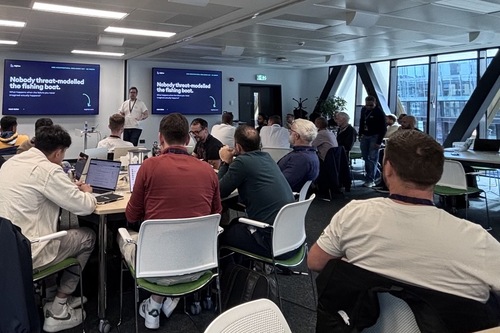
At the TravelTech Show in London earlier this year, Anthropic's Enterprise GTM Lead, Harry Herbert, made a comment that really stood out to me, cutting through two days of AI enthusiasm more than anything else on the agenda.
Anthropic, he noted, has 98% of its own code written by AI. It ships products at a pace most established businesses can barely imagine. But that velocity is only possible because Anthropic didn't have to reorganise around legacy systems.
It was a candid, passing comment but it highlighted something the travel industry rarely says out loud. The constraint on AI transformation in travel isn't ambition, budget or even the AI itself, it's the decades of accumulated infrastructure sitting underneath everything and the very real difficulty of moving fast when your systems were built in a different era, at different times, by different teams.
To understand the scale of the problem, it helps to understand what travel actually runs on.
The global distribution systems (Amadeus, Sabre, Travelport) are the plumbing through which the majority of travel bookings still flow. They were built when airlines sold tickets by phone and managed inventory on paper. The underlying standards that govern how airlines share fares, availability, and booking data across the industry were written in the 1980s, before the web existed, let alone smartphones or AI. Many airlines still run crew scheduling software that predates the modern internet. Some hotel property management systems were designed when a "modern" operating system meant Windows NT.
This isn't unique to travel. McKinsey estimates that 70% of software in Fortune 500 companies is over two decade sold. But travel carries a specific burden. Its legacy systems are deeply interconnected, they handle payments and personal data in real time, and they cannot simply be switched off while something better is built. A booking engine going dark during peak season isn't an inconvenience, it's an existential event.
The result is an industry that, as one Forbes Tech Council analysis put it, is one of the most fragmented in the world. Systems for booking, pricing, guest management, and service often operate independently, creating friction for travellers and staff alike. Hotels may automate check-in while still using manual processes to manage housekeeping. Airlines may use AI to optimise routes but still depend on legacy systems for customer communication.
And now AI, which requires clean data, real-time integration, and API-first architecture, is arriving in this environment and asking it to perform in ways it was never designed to.
The scale of the technical debt across industries is significant, and travel is no exception. According to research from Entrans 85% of enterprises say legacy systems block AI adoption, and these same systems consume 80% of IT budgets, leaving relatively little headroom for the transformation investment the AI moment demands.
A study by Pegasystems Inc. estimates that enterprises lose around $370 million per year on average because of outdated technology and technical debt, through failed modernisation projects, expensive transformation programmes, and the ongoing cost of simply keeping old systems alive.
Deloitte’s 2026 survey found that 72% of private company leaders cite data availability and quality as their primary challenge when it comes to AI adoption, which reflects what multiple speakers at the TravelTech Show flagged independently. AI pilots fail not because the technology is insufficient, but because the data underneath them is unstructured, siloed, and inconsistent.
These aren't abstract figures; they translate into customer-facing failure at the worst possible moments.
A prime example of where legacy debt leads in travel happened over Christmas 2022, and cost one of the world's best-known airlines dearly.
Southwest Airlines cancelled almost 17,000 flights over the festive period, leaving hundreds of thousands of passengers stranded. The trigger was a winter storm, but as US Transportation Secretary, Pete Buttigieg, put it at the time: “This wasn’t just a weather event. It was a systems failure, decades in the making.”
At the centre of the failure was SkySolver, Southwest's crew scheduling software, a decades-old, off-the-shelf application that had been customised over years and was nearing the end of its operational life. When the storm hit and schedule changes cascaded across the network, SkySolver couldn't match crews to flights at the scale and speed required and managers were forced to revert to manual scheduling.
The airline's own people had been raising the alarm for years. One Southwest employee later summarised the situation plainly saying: "We're still using not only IT from the '90s but also processes from when our airline was a tenth of the size. And it's really just not scaled for the operation that we have today."
The financial cost was estimated at $800 million, whilst the reputational damage was harder to quantify, but for an airline that had built its brand on operational reliability, the meltdown was a defining moment.
Southwest's situation was extreme. But the underlying dynamic was that the systems had worked well enough for long enough so replacing them had never felt urgent enough, is far from unique in travel.
The good news is that the industry is beginning to move, and how it's choosing to do so matters. The most significant structural change underway in airline technology is the shift from legacy Passenger Service System architecture to offer-and-order-based models aligned with IATA's Modern Airline Retailing standards. Amadeus Nevio, described by one industry analyst as "one of the most significant restructurings of airline retailing infrastructure in a generation" is a cloud-native, modular platform designed to help carriers make this transition.
What's notable about the approach is its deliberate incrementalism. Finnair became the first airline to implement a fully offer-and-order-based NDC solution on Nevio, replacing multiple legacy documents with unified orders. Lufthansa Group followed, adopting Nevio to replace the multiple order records that characterise legacy bookings with a single Order ID. In both cases, the transition was designed to be modular so airlines can adopt components progressively rather than face a high-risk, high-cost rip-and-replace.
That modularity matters, in an industry where systems cannot go dark and where the risk of a failed migration is extensive, the ability to transform incrementally isn't a compromise. It's the only viable strategy.
Amadeus itself reached what it called "a turning point" in 2025, investing more in Nevio than in its legacy Altéa PSS for the first time. It's a signal that even the infrastructure layer itself is in motion, but it also underlines how long this transition takes. Even now, Altéa still has more human resources dedicated to it than Nevio, because existing customers still depend on it.
There's a twist in this story that makes it more interesting than a straightforward modernisation argument. The arrival of agentic AI doesn't just raise the bar for what travel infrastructure needs to do. It's also changing the economics of modernisation itself.
Research from Entrans suggests that AI and agentic AI are cutting modernisation timelines by 40-50%, by automating code translation, dependency mapping, documentation, and QA - all tasks that previously required months of expensive manual engineering work. So, the problem that once felt too large and too risky to tackle is becoming more tractable.
This creates a paradox, the businesses that move fastest on modernisation will be the ones best placed to deploy AI at scale. The businesses that delay will find themselves spending an ever-larger proportion of their IT budgets keeping legacy systems alive, which leaves less for the transformation investment that would actually close the gap.
None of this means established travel businesses should attempt wholesale infrastructure replacement. The Southwest story is partly a cautionary tale about exactly that kind of thinking, the belief that you can defer the hard work until a moment of crisis forces a big-bang solution.
Harry Herbert's steer at the TravelTech Show was more practical. He urged companies to work to understand their codebase, find where agents can do the heavy lifting and identify where humans still need to be in the loop. It's an incremental, honest approach. Identify the highest-value modernisation targets, sequence the work, and build AI capability progressively as the underlying infrastructure improves.
That framing mirrors what the more thoughtful practitioners on the TravelTech Show floor were actually saying. Tui's Lelde Douglass suggested that delegates should “think about the complexity of your customer journey and own as much of it as you can.” Start with the parts of your stack that most directly block AI value, fix data quality before you build the agent layer and don't treat modernisation as a back-office project, treat it as the prerequisite for everything else on your roadmap.
The start-up advantage is real. Anthropic can move at the speed it does partly because it started with a clean slate. But that doesn't mean established travel businesses are without options, it means the work is harder and the sequencing matters more. The businesses that acknowledge this honestly, and act on it, are the ones that will be able to close the gap.
Want to understand how AI is already reshaping the travel customer journey?
Download our report ‘From inspiration to conversion: AI-powered discovery and the modern travel retail journey’ for findings from exclusive research with 1,000 travellers, CTO insights, and practical guidance on deploying AI for commercial impact.

At the TravelTech Show in London earlier this year, Anthropic's Enterprise GTM Lead, Harry Herbert, made a comment that really stood out to me, cutting through two days of AI enthusiasm more than anything else on the agenda.
Anthropic, he noted, has 98% of its own code written by AI. It ships products at a pace most established businesses can barely imagine. But that velocity is only possible because Anthropic didn't have to reorganise around legacy systems.
It was a candid, passing comment but it highlighted something the travel industry rarely says out loud. The constraint on AI transformation in travel isn't ambition, budget or even the AI itself, it's the decades of accumulated infrastructure sitting underneath everything and the very real difficulty of moving fast when your systems were built in a different era, at different times, by different teams.
To understand the scale of the problem, it helps to understand what travel actually runs on.
The global distribution systems (Amadeus, Sabre, Travelport) are the plumbing through which the majority of travel bookings still flow. They were built when airlines sold tickets by phone and managed inventory on paper. The underlying standards that govern how airlines share fares, availability, and booking data across the industry were written in the 1980s, before the web existed, let alone smartphones or AI. Many airlines still run crew scheduling software that predates the modern internet. Some hotel property management systems were designed when a "modern" operating system meant Windows NT.
This isn't unique to travel. McKinsey estimates that 70% of software in Fortune 500 companies is over two decade sold. But travel carries a specific burden. Its legacy systems are deeply interconnected, they handle payments and personal data in real time, and they cannot simply be switched off while something better is built. A booking engine going dark during peak season isn't an inconvenience, it's an existential event.
The result is an industry that, as one Forbes Tech Council analysis put it, is one of the most fragmented in the world. Systems for booking, pricing, guest management, and service often operate independently, creating friction for travellers and staff alike. Hotels may automate check-in while still using manual processes to manage housekeeping. Airlines may use AI to optimise routes but still depend on legacy systems for customer communication.
And now AI, which requires clean data, real-time integration, and API-first architecture, is arriving in this environment and asking it to perform in ways it was never designed to.
The scale of the technical debt across industries is significant, and travel is no exception. According to research from Entrans 85% of enterprises say legacy systems block AI adoption, and these same systems consume 80% of IT budgets, leaving relatively little headroom for the transformation investment the AI moment demands.
A study by Pegasystems Inc. estimates that enterprises lose around $370 million per year on average because of outdated technology and technical debt, through failed modernisation projects, expensive transformation programmes, and the ongoing cost of simply keeping old systems alive.
Deloitte’s 2026 survey found that 72% of private company leaders cite data availability and quality as their primary challenge when it comes to AI adoption, which reflects what multiple speakers at the TravelTech Show flagged independently. AI pilots fail not because the technology is insufficient, but because the data underneath them is unstructured, siloed, and inconsistent.
These aren't abstract figures; they translate into customer-facing failure at the worst possible moments.
A prime example of where legacy debt leads in travel happened over Christmas 2022, and cost one of the world's best-known airlines dearly.
Southwest Airlines cancelled almost 17,000 flights over the festive period, leaving hundreds of thousands of passengers stranded. The trigger was a winter storm, but as US Transportation Secretary, Pete Buttigieg, put it at the time: “This wasn’t just a weather event. It was a systems failure, decades in the making.”
At the centre of the failure was SkySolver, Southwest's crew scheduling software, a decades-old, off-the-shelf application that had been customised over years and was nearing the end of its operational life. When the storm hit and schedule changes cascaded across the network, SkySolver couldn't match crews to flights at the scale and speed required and managers were forced to revert to manual scheduling.
The airline's own people had been raising the alarm for years. One Southwest employee later summarised the situation plainly saying: "We're still using not only IT from the '90s but also processes from when our airline was a tenth of the size. And it's really just not scaled for the operation that we have today."
The financial cost was estimated at $800 million, whilst the reputational damage was harder to quantify, but for an airline that had built its brand on operational reliability, the meltdown was a defining moment.
Southwest's situation was extreme. But the underlying dynamic was that the systems had worked well enough for long enough so replacing them had never felt urgent enough, is far from unique in travel.
The good news is that the industry is beginning to move, and how it's choosing to do so matters. The most significant structural change underway in airline technology is the shift from legacy Passenger Service System architecture to offer-and-order-based models aligned with IATA's Modern Airline Retailing standards. Amadeus Nevio, described by one industry analyst as "one of the most significant restructurings of airline retailing infrastructure in a generation" is a cloud-native, modular platform designed to help carriers make this transition.
What's notable about the approach is its deliberate incrementalism. Finnair became the first airline to implement a fully offer-and-order-based NDC solution on Nevio, replacing multiple legacy documents with unified orders. Lufthansa Group followed, adopting Nevio to replace the multiple order records that characterise legacy bookings with a single Order ID. In both cases, the transition was designed to be modular so airlines can adopt components progressively rather than face a high-risk, high-cost rip-and-replace.
That modularity matters, in an industry where systems cannot go dark and where the risk of a failed migration is extensive, the ability to transform incrementally isn't a compromise. It's the only viable strategy.
Amadeus itself reached what it called "a turning point" in 2025, investing more in Nevio than in its legacy Altéa PSS for the first time. It's a signal that even the infrastructure layer itself is in motion, but it also underlines how long this transition takes. Even now, Altéa still has more human resources dedicated to it than Nevio, because existing customers still depend on it.
There's a twist in this story that makes it more interesting than a straightforward modernisation argument. The arrival of agentic AI doesn't just raise the bar for what travel infrastructure needs to do. It's also changing the economics of modernisation itself.
Research from Entrans suggests that AI and agentic AI are cutting modernisation timelines by 40-50%, by automating code translation, dependency mapping, documentation, and QA - all tasks that previously required months of expensive manual engineering work. So, the problem that once felt too large and too risky to tackle is becoming more tractable.
This creates a paradox, the businesses that move fastest on modernisation will be the ones best placed to deploy AI at scale. The businesses that delay will find themselves spending an ever-larger proportion of their IT budgets keeping legacy systems alive, which leaves less for the transformation investment that would actually close the gap.
None of this means established travel businesses should attempt wholesale infrastructure replacement. The Southwest story is partly a cautionary tale about exactly that kind of thinking, the belief that you can defer the hard work until a moment of crisis forces a big-bang solution.
Harry Herbert's steer at the TravelTech Show was more practical. He urged companies to work to understand their codebase, find where agents can do the heavy lifting and identify where humans still need to be in the loop. It's an incremental, honest approach. Identify the highest-value modernisation targets, sequence the work, and build AI capability progressively as the underlying infrastructure improves.
That framing mirrors what the more thoughtful practitioners on the TravelTech Show floor were actually saying. Tui's Lelde Douglass suggested that delegates should “think about the complexity of your customer journey and own as much of it as you can.” Start with the parts of your stack that most directly block AI value, fix data quality before you build the agent layer and don't treat modernisation as a back-office project, treat it as the prerequisite for everything else on your roadmap.
The start-up advantage is real. Anthropic can move at the speed it does partly because it started with a clean slate. But that doesn't mean established travel businesses are without options, it means the work is harder and the sequencing matters more. The businesses that acknowledge this honestly, and act on it, are the ones that will be able to close the gap.
Want to understand how AI is already reshaping the travel customer journey?
Download our report ‘From inspiration to conversion: AI-powered discovery and the modern travel retail journey’ for findings from exclusive research with 1,000 travellers, CTO insights, and practical guidance on deploying AI for commercial impact.
At the TravelTech Show in London earlier this year, Anthropic's Enterprise GTM Lead, Harry Herbert, made a comment that really stood out to me, cutting through two days of AI enthusiasm more than anything else on the agenda.
Anthropic, he noted, has 98% of its own code written by AI. It ships products at a pace most established businesses can barely imagine. But that velocity is only possible because Anthropic didn't have to reorganise around legacy systems.
It was a candid, passing comment but it highlighted something the travel industry rarely says out loud. The constraint on AI transformation in travel isn't ambition, budget or even the AI itself, it's the decades of accumulated infrastructure sitting underneath everything and the very real difficulty of moving fast when your systems were built in a different era, at different times, by different teams.
To understand the scale of the problem, it helps to understand what travel actually runs on.
The global distribution systems (Amadeus, Sabre, Travelport) are the plumbing through which the majority of travel bookings still flow. They were built when airlines sold tickets by phone and managed inventory on paper. The underlying standards that govern how airlines share fares, availability, and booking data across the industry were written in the 1980s, before the web existed, let alone smartphones or AI. Many airlines still run crew scheduling software that predates the modern internet. Some hotel property management systems were designed when a "modern" operating system meant Windows NT.
This isn't unique to travel. McKinsey estimates that 70% of software in Fortune 500 companies is over two decade sold. But travel carries a specific burden. Its legacy systems are deeply interconnected, they handle payments and personal data in real time, and they cannot simply be switched off while something better is built. A booking engine going dark during peak season isn't an inconvenience, it's an existential event.
The result is an industry that, as one Forbes Tech Council analysis put it, is one of the most fragmented in the world. Systems for booking, pricing, guest management, and service often operate independently, creating friction for travellers and staff alike. Hotels may automate check-in while still using manual processes to manage housekeeping. Airlines may use AI to optimise routes but still depend on legacy systems for customer communication.
And now AI, which requires clean data, real-time integration, and API-first architecture, is arriving in this environment and asking it to perform in ways it was never designed to.
The scale of the technical debt across industries is significant, and travel is no exception. According to research from Entrans 85% of enterprises say legacy systems block AI adoption, and these same systems consume 80% of IT budgets, leaving relatively little headroom for the transformation investment the AI moment demands.
A study by Pegasystems Inc. estimates that enterprises lose around $370 million per year on average because of outdated technology and technical debt, through failed modernisation projects, expensive transformation programmes, and the ongoing cost of simply keeping old systems alive.
Deloitte’s 2026 survey found that 72% of private company leaders cite data availability and quality as their primary challenge when it comes to AI adoption, which reflects what multiple speakers at the TravelTech Show flagged independently. AI pilots fail not because the technology is insufficient, but because the data underneath them is unstructured, siloed, and inconsistent.
These aren't abstract figures; they translate into customer-facing failure at the worst possible moments.
A prime example of where legacy debt leads in travel happened over Christmas 2022, and cost one of the world's best-known airlines dearly.
Southwest Airlines cancelled almost 17,000 flights over the festive period, leaving hundreds of thousands of passengers stranded. The trigger was a winter storm, but as US Transportation Secretary, Pete Buttigieg, put it at the time: “This wasn’t just a weather event. It was a systems failure, decades in the making.”
At the centre of the failure was SkySolver, Southwest's crew scheduling software, a decades-old, off-the-shelf application that had been customised over years and was nearing the end of its operational life. When the storm hit and schedule changes cascaded across the network, SkySolver couldn't match crews to flights at the scale and speed required and managers were forced to revert to manual scheduling.
The airline's own people had been raising the alarm for years. One Southwest employee later summarised the situation plainly saying: "We're still using not only IT from the '90s but also processes from when our airline was a tenth of the size. And it's really just not scaled for the operation that we have today."
The financial cost was estimated at $800 million, whilst the reputational damage was harder to quantify, but for an airline that had built its brand on operational reliability, the meltdown was a defining moment.
Southwest's situation was extreme. But the underlying dynamic was that the systems had worked well enough for long enough so replacing them had never felt urgent enough, is far from unique in travel.
The good news is that the industry is beginning to move, and how it's choosing to do so matters. The most significant structural change underway in airline technology is the shift from legacy Passenger Service System architecture to offer-and-order-based models aligned with IATA's Modern Airline Retailing standards. Amadeus Nevio, described by one industry analyst as "one of the most significant restructurings of airline retailing infrastructure in a generation" is a cloud-native, modular platform designed to help carriers make this transition.
What's notable about the approach is its deliberate incrementalism. Finnair became the first airline to implement a fully offer-and-order-based NDC solution on Nevio, replacing multiple legacy documents with unified orders. Lufthansa Group followed, adopting Nevio to replace the multiple order records that characterise legacy bookings with a single Order ID. In both cases, the transition was designed to be modular so airlines can adopt components progressively rather than face a high-risk, high-cost rip-and-replace.
That modularity matters, in an industry where systems cannot go dark and where the risk of a failed migration is extensive, the ability to transform incrementally isn't a compromise. It's the only viable strategy.
Amadeus itself reached what it called "a turning point" in 2025, investing more in Nevio than in its legacy Altéa PSS for the first time. It's a signal that even the infrastructure layer itself is in motion, but it also underlines how long this transition takes. Even now, Altéa still has more human resources dedicated to it than Nevio, because existing customers still depend on it.
There's a twist in this story that makes it more interesting than a straightforward modernisation argument. The arrival of agentic AI doesn't just raise the bar for what travel infrastructure needs to do. It's also changing the economics of modernisation itself.
Research from Entrans suggests that AI and agentic AI are cutting modernisation timelines by 40-50%, by automating code translation, dependency mapping, documentation, and QA - all tasks that previously required months of expensive manual engineering work. So, the problem that once felt too large and too risky to tackle is becoming more tractable.
This creates a paradox, the businesses that move fastest on modernisation will be the ones best placed to deploy AI at scale. The businesses that delay will find themselves spending an ever-larger proportion of their IT budgets keeping legacy systems alive, which leaves less for the transformation investment that would actually close the gap.
None of this means established travel businesses should attempt wholesale infrastructure replacement. The Southwest story is partly a cautionary tale about exactly that kind of thinking, the belief that you can defer the hard work until a moment of crisis forces a big-bang solution.
Harry Herbert's steer at the TravelTech Show was more practical. He urged companies to work to understand their codebase, find where agents can do the heavy lifting and identify where humans still need to be in the loop. It's an incremental, honest approach. Identify the highest-value modernisation targets, sequence the work, and build AI capability progressively as the underlying infrastructure improves.
That framing mirrors what the more thoughtful practitioners on the TravelTech Show floor were actually saying. Tui's Lelde Douglass suggested that delegates should “think about the complexity of your customer journey and own as much of it as you can.” Start with the parts of your stack that most directly block AI value, fix data quality before you build the agent layer and don't treat modernisation as a back-office project, treat it as the prerequisite for everything else on your roadmap.
The start-up advantage is real. Anthropic can move at the speed it does partly because it started with a clean slate. But that doesn't mean established travel businesses are without options, it means the work is harder and the sequencing matters more. The businesses that acknowledge this honestly, and act on it, are the ones that will be able to close the gap.
Want to understand how AI is already reshaping the travel customer journey?
Download our report ‘From inspiration to conversion: AI-powered discovery and the modern travel retail journey’ for findings from exclusive research with 1,000 travellers, CTO insights, and practical guidance on deploying AI for commercial impact.
At the TravelTech Show in London earlier this year, Anthropic's Enterprise GTM Lead, Harry Herbert, made a comment that really stood out to me, cutting through two days of AI enthusiasm more than anything else on the agenda.
Anthropic, he noted, has 98% of its own code written by AI. It ships products at a pace most established businesses can barely imagine. But that velocity is only possible because Anthropic didn't have to reorganise around legacy systems.
It was a candid, passing comment but it highlighted something the travel industry rarely says out loud. The constraint on AI transformation in travel isn't ambition, budget or even the AI itself, it's the decades of accumulated infrastructure sitting underneath everything and the very real difficulty of moving fast when your systems were built in a different era, at different times, by different teams.
To understand the scale of the problem, it helps to understand what travel actually runs on.
The global distribution systems (Amadeus, Sabre, Travelport) are the plumbing through which the majority of travel bookings still flow. They were built when airlines sold tickets by phone and managed inventory on paper. The underlying standards that govern how airlines share fares, availability, and booking data across the industry were written in the 1980s, before the web existed, let alone smartphones or AI. Many airlines still run crew scheduling software that predates the modern internet. Some hotel property management systems were designed when a "modern" operating system meant Windows NT.
This isn't unique to travel. McKinsey estimates that 70% of software in Fortune 500 companies is over two decade sold. But travel carries a specific burden. Its legacy systems are deeply interconnected, they handle payments and personal data in real time, and they cannot simply be switched off while something better is built. A booking engine going dark during peak season isn't an inconvenience, it's an existential event.
The result is an industry that, as one Forbes Tech Council analysis put it, is one of the most fragmented in the world. Systems for booking, pricing, guest management, and service often operate independently, creating friction for travellers and staff alike. Hotels may automate check-in while still using manual processes to manage housekeeping. Airlines may use AI to optimise routes but still depend on legacy systems for customer communication.
And now AI, which requires clean data, real-time integration, and API-first architecture, is arriving in this environment and asking it to perform in ways it was never designed to.
The scale of the technical debt across industries is significant, and travel is no exception. According to research from Entrans 85% of enterprises say legacy systems block AI adoption, and these same systems consume 80% of IT budgets, leaving relatively little headroom for the transformation investment the AI moment demands.
A study by Pegasystems Inc. estimates that enterprises lose around $370 million per year on average because of outdated technology and technical debt, through failed modernisation projects, expensive transformation programmes, and the ongoing cost of simply keeping old systems alive.
Deloitte’s 2026 survey found that 72% of private company leaders cite data availability and quality as their primary challenge when it comes to AI adoption, which reflects what multiple speakers at the TravelTech Show flagged independently. AI pilots fail not because the technology is insufficient, but because the data underneath them is unstructured, siloed, and inconsistent.
These aren't abstract figures; they translate into customer-facing failure at the worst possible moments.
A prime example of where legacy debt leads in travel happened over Christmas 2022, and cost one of the world's best-known airlines dearly.
Southwest Airlines cancelled almost 17,000 flights over the festive period, leaving hundreds of thousands of passengers stranded. The trigger was a winter storm, but as US Transportation Secretary, Pete Buttigieg, put it at the time: “This wasn’t just a weather event. It was a systems failure, decades in the making.”
At the centre of the failure was SkySolver, Southwest's crew scheduling software, a decades-old, off-the-shelf application that had been customised over years and was nearing the end of its operational life. When the storm hit and schedule changes cascaded across the network, SkySolver couldn't match crews to flights at the scale and speed required and managers were forced to revert to manual scheduling.
The airline's own people had been raising the alarm for years. One Southwest employee later summarised the situation plainly saying: "We're still using not only IT from the '90s but also processes from when our airline was a tenth of the size. And it's really just not scaled for the operation that we have today."
The financial cost was estimated at $800 million, whilst the reputational damage was harder to quantify, but for an airline that had built its brand on operational reliability, the meltdown was a defining moment.
Southwest's situation was extreme. But the underlying dynamic was that the systems had worked well enough for long enough so replacing them had never felt urgent enough, is far from unique in travel.
The good news is that the industry is beginning to move, and how it's choosing to do so matters. The most significant structural change underway in airline technology is the shift from legacy Passenger Service System architecture to offer-and-order-based models aligned with IATA's Modern Airline Retailing standards. Amadeus Nevio, described by one industry analyst as "one of the most significant restructurings of airline retailing infrastructure in a generation" is a cloud-native, modular platform designed to help carriers make this transition.
What's notable about the approach is its deliberate incrementalism. Finnair became the first airline to implement a fully offer-and-order-based NDC solution on Nevio, replacing multiple legacy documents with unified orders. Lufthansa Group followed, adopting Nevio to replace the multiple order records that characterise legacy bookings with a single Order ID. In both cases, the transition was designed to be modular so airlines can adopt components progressively rather than face a high-risk, high-cost rip-and-replace.
That modularity matters, in an industry where systems cannot go dark and where the risk of a failed migration is extensive, the ability to transform incrementally isn't a compromise. It's the only viable strategy.
Amadeus itself reached what it called "a turning point" in 2025, investing more in Nevio than in its legacy Altéa PSS for the first time. It's a signal that even the infrastructure layer itself is in motion, but it also underlines how long this transition takes. Even now, Altéa still has more human resources dedicated to it than Nevio, because existing customers still depend on it.
There's a twist in this story that makes it more interesting than a straightforward modernisation argument. The arrival of agentic AI doesn't just raise the bar for what travel infrastructure needs to do. It's also changing the economics of modernisation itself.
Research from Entrans suggests that AI and agentic AI are cutting modernisation timelines by 40-50%, by automating code translation, dependency mapping, documentation, and QA - all tasks that previously required months of expensive manual engineering work. So, the problem that once felt too large and too risky to tackle is becoming more tractable.
This creates a paradox, the businesses that move fastest on modernisation will be the ones best placed to deploy AI at scale. The businesses that delay will find themselves spending an ever-larger proportion of their IT budgets keeping legacy systems alive, which leaves less for the transformation investment that would actually close the gap.
None of this means established travel businesses should attempt wholesale infrastructure replacement. The Southwest story is partly a cautionary tale about exactly that kind of thinking, the belief that you can defer the hard work until a moment of crisis forces a big-bang solution.
Harry Herbert's steer at the TravelTech Show was more practical. He urged companies to work to understand their codebase, find where agents can do the heavy lifting and identify where humans still need to be in the loop. It's an incremental, honest approach. Identify the highest-value modernisation targets, sequence the work, and build AI capability progressively as the underlying infrastructure improves.
That framing mirrors what the more thoughtful practitioners on the TravelTech Show floor were actually saying. Tui's Lelde Douglass suggested that delegates should “think about the complexity of your customer journey and own as much of it as you can.” Start with the parts of your stack that most directly block AI value, fix data quality before you build the agent layer and don't treat modernisation as a back-office project, treat it as the prerequisite for everything else on your roadmap.
The start-up advantage is real. Anthropic can move at the speed it does partly because it started with a clean slate. But that doesn't mean established travel businesses are without options, it means the work is harder and the sequencing matters more. The businesses that acknowledge this honestly, and act on it, are the ones that will be able to close the gap.
Want to understand how AI is already reshaping the travel customer journey?
Download our report ‘From inspiration to conversion: AI-powered discovery and the modern travel retail journey’ for findings from exclusive research with 1,000 travellers, CTO insights, and practical guidance on deploying AI for commercial impact.