Travel's AI future depends on fixing the existing problems first
.webp)



Artificial intelligence is rapidly changing how travellers discover, plan and book journeys. Despite the excitement around agentic AI, personalisation, and autonomous booking experiences, one message emerged consistently during Leighton's latest travel industry roundtable: the biggest obstacle to AI success isn't AI itself. It's everything underneath it.
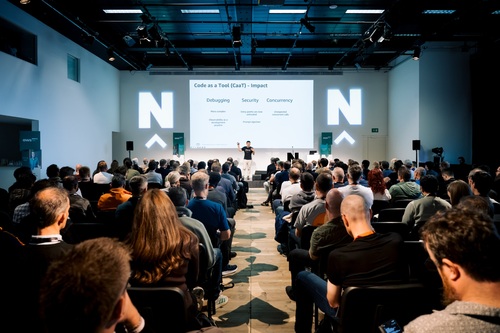
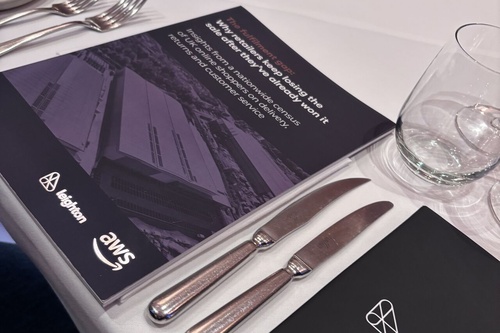
Bringing together leaders from across the travel sector, the roundtable discussion – held at NoMad London near Covent Garden – centred around the findings from Leighton’s inaugural travel report, ‘From Inspiration to Conversion: AI-Powered Discovery and the Modern Travel Retail Journey’.
Throughout the evening attendees from BigBus, IAG Loyalty, British Airways, British Airways Holidays, Raven, Arriva, Travel Chapter and Leighton explored how AI is changing customer expectations, what it means for travel brands, and why modernisation remains the industry's most pressing challenge.
Our latest research revealed that 57% of travellers already use AI at some stage of their travel planning journey, while more than a quarter expect to rely on AI more than brand websites within the next two years.
For travel brands, this represents a significant shift. Historically, travel companies owned much of the discovery process. Customers would visit websites, compare options, browse destinations, and build shortlists directly with brands. Increasingly, those moments are happening elsewhere, specifically inside AI-powered experiences.
The implications are particularly significant for businesses that rely on in-destination discovery. As travellers begin asking AI tools questions like "What should I do in London today?" or "What's the best way to see Paris?", visibility within AI-generated recommendations becomes increasingly important.
While many organisations are monitoring the trend closely, most participants agreed that the traffic shift is still an emerging one rather than one that’s already transformed the industry.
Traditional organic search continues to drive most of the demand for many travel businesses today. However, several participants highlighted a growing challenge – if AI becomes the primary interface between travellers and travel brands, organisations may lose visibility of customer intent and behaviour, with decisions being made long before customers reach their owned channels making it harder to tailor experiences and understand users.
While much of the industry conversation centres on future AI capabilities, participants repeatedly returned to a simpler question - are we solving the problems customers face today?
Our research found that one in eight travellers abandon bookings because of technical issues. For many organisations, reducing existing friction remains a bigger opportunity than implementing advanced AI experiences, not least because of the complex, legacy infrastructure many companies within the travel sector operate on.
The complexity of travel booking journeys also surfaced throughout the discussion. From rail ticketing and dynamic holiday packaging to loyalty programmes, participants described ecosystems built on intricate pricing rules, multiple suppliers, and fragmented customer journeys.
For customers, however, they simply want the right product, at the right price, with minimal effort. This gap between operational complexity and customer expectations is where many organisations are focusing their efforts today, whether through platform modernisation, improved user experiences, or more transparent pricing.
Several participants also highlighted the growing expectation that AI should remove unnecessary steps from booking journeys entirely, particularly when customer preferences are already known. The future isn't simply about providing better recommendations. It's about reducing effort for the customer and making the booking process as easy as possible.
Personalisation remains one of the most talked-about topics in travel, and perhaps also one of the least capitalised. Our research found that 82% of travellers consider personalisation important, with saved preferences and tailored recommendations continuing to rank highly among booking drivers.
Yet despite years of investment, many travellers still don't feel particularly understood. Throughout the evening our roundtable participants explored why.
For some organisations, the challenge is fragmented customer data spread across multiple systems and sometimes multiple departments within one organisation. For others, it's a lack of experimentation capability to really bring personalisation work programmes to life. In many cases, businesses possess huge volumes of valuable customer information but struggle to operationalise it effectively.
Perhaps one of the most interesting observations of the evening was that great personalisation often relies on retaining that human touch, for example recognising returning customers, remembering preferences, or creating a sense of familiarity. By delivering experiences that feel more personal organisations can create more meaningful customer experiences.
Participants discussed how AI is unlikely to effectively replace the human side of personalisation, instead they see it raising the standard. AI can eliminate routine tasks, reduce friction, and simplify complex processes. It can make recommendations, automate workflows, and surface insights at a scale that humans never could, but the experiences customers remember are the ones that make them feel special.
The organisations that succeed won't simply be those that deploy the most AI; they'll be the ones that use AI to create more time, more relevance, and more opportunities for meaningful human experiences.
One of the most revealing discussions centred on a simple question, when organisations say they have an AI strategy, how much of it is actually an AI strategy, and how much is a modernisation strategy?
Across the room, participants described challenges that had little to do with machine learning models and everything to do with foundational technology including legacy systems, fragmented architectures, industry-wide technology dependencies, data quality issues, and organisational silos.
For some transport operators, critical operational processes still rely heavily on manual workflows. Others are constrained by industry platforms that evolve slowly and limit their ability to innovate independently.
Many organisations find themselves in a position where they understand the opportunities AI presents but lack the underlying infrastructure required to take advantage of them. The consensus was clear; AI transformation and technology modernisation are increasingly inseparable. Without modern platforms, connected data and scalable architectures, many of the industry's AI ambitions will remain difficult to realise.
As the discussion drew to a close, participants were asked what technological shift would have the greatest impact on travel over the next few years with some common themes emerging:
· AI will increasingly become the interface through which customers discover and transact.
· Search behaviour will become more conversational, prompt-driven, and voice-enabled.
· AI agents will orchestrate more of the customer journey.
· Biometrics will remove friction from travel experiences.
· Personal AI assistants will become increasingly capable of understanding preferences, comparing options, and making recommendations on behalf of travellers.
However, attendees agreed that the future of travel won't be determined solely by who adopts AI fastest, it will be determined by who builds the modern foundations required to make AI meaningful. Before AI can transform the travel experience, organisations need to solve the technology, data and operational challenges that have existed for years.
If you’d like to access the full report you can download the digital version here.
Leighton is a digital product engineering consultancy focused on application modernisation, cloud enablement, and practical AI adoption and implementation for the travel, aviation, and hospitality industries.
We design, build, and continuously improve digital products and platforms that are scalable, secure, and commercially effective. Our expertise covers the full product lifecycle, including architecture, engineering, data, UX, QA, delivery and analysis. Our mission is to empower our customers to deliver value with greater speed and certainty.
Specialists in cloud enablement, we modernise applications and cloud infrastructure to improve performance, security, resilience, and cost efficiency. We also help organisations move beyond AI experimentation by identifying practical use cases, building AI-enabled features and automation, and putting the right governance in place to scale safely and responsibly.
We offer two clear starting points: a modernisation assessment to establish what needs to change and in what order, and an AI ideation workshop to turn AI ambition into prioritised, technically feasible use cases. Both are designed to move you from strategy to execution quickly.
If you have a project you’re working on, we’d love to talk.You can contact the team here.

Artificial intelligence is rapidly changing how travellers discover, plan and book journeys. Despite the excitement around agentic AI, personalisation, and autonomous booking experiences, one message emerged consistently during Leighton's latest travel industry roundtable: the biggest obstacle to AI success isn't AI itself. It's everything underneath it.
Bringing together leaders from across the travel sector, the roundtable discussion – held at NoMad London near Covent Garden – centred around the findings from Leighton’s inaugural travel report, ‘From Inspiration to Conversion: AI-Powered Discovery and the Modern Travel Retail Journey’.
Throughout the evening attendees from BigBus, IAG Loyalty, British Airways, British Airways Holidays, Raven, Arriva, Travel Chapter and Leighton explored how AI is changing customer expectations, what it means for travel brands, and why modernisation remains the industry's most pressing challenge.
Our latest research revealed that 57% of travellers already use AI at some stage of their travel planning journey, while more than a quarter expect to rely on AI more than brand websites within the next two years.
For travel brands, this represents a significant shift. Historically, travel companies owned much of the discovery process. Customers would visit websites, compare options, browse destinations, and build shortlists directly with brands. Increasingly, those moments are happening elsewhere, specifically inside AI-powered experiences.
The implications are particularly significant for businesses that rely on in-destination discovery. As travellers begin asking AI tools questions like "What should I do in London today?" or "What's the best way to see Paris?", visibility within AI-generated recommendations becomes increasingly important.
While many organisations are monitoring the trend closely, most participants agreed that the traffic shift is still an emerging one rather than one that’s already transformed the industry.
Traditional organic search continues to drive most of the demand for many travel businesses today. However, several participants highlighted a growing challenge – if AI becomes the primary interface between travellers and travel brands, organisations may lose visibility of customer intent and behaviour, with decisions being made long before customers reach their owned channels making it harder to tailor experiences and understand users.
While much of the industry conversation centres on future AI capabilities, participants repeatedly returned to a simpler question - are we solving the problems customers face today?
Our research found that one in eight travellers abandon bookings because of technical issues. For many organisations, reducing existing friction remains a bigger opportunity than implementing advanced AI experiences, not least because of the complex, legacy infrastructure many companies within the travel sector operate on.
The complexity of travel booking journeys also surfaced throughout the discussion. From rail ticketing and dynamic holiday packaging to loyalty programmes, participants described ecosystems built on intricate pricing rules, multiple suppliers, and fragmented customer journeys.
For customers, however, they simply want the right product, at the right price, with minimal effort. This gap between operational complexity and customer expectations is where many organisations are focusing their efforts today, whether through platform modernisation, improved user experiences, or more transparent pricing.
Several participants also highlighted the growing expectation that AI should remove unnecessary steps from booking journeys entirely, particularly when customer preferences are already known. The future isn't simply about providing better recommendations. It's about reducing effort for the customer and making the booking process as easy as possible.
Personalisation remains one of the most talked-about topics in travel, and perhaps also one of the least capitalised. Our research found that 82% of travellers consider personalisation important, with saved preferences and tailored recommendations continuing to rank highly among booking drivers.
Yet despite years of investment, many travellers still don't feel particularly understood. Throughout the evening our roundtable participants explored why.
For some organisations, the challenge is fragmented customer data spread across multiple systems and sometimes multiple departments within one organisation. For others, it's a lack of experimentation capability to really bring personalisation work programmes to life. In many cases, businesses possess huge volumes of valuable customer information but struggle to operationalise it effectively.
Perhaps one of the most interesting observations of the evening was that great personalisation often relies on retaining that human touch, for example recognising returning customers, remembering preferences, or creating a sense of familiarity. By delivering experiences that feel more personal organisations can create more meaningful customer experiences.
Participants discussed how AI is unlikely to effectively replace the human side of personalisation, instead they see it raising the standard. AI can eliminate routine tasks, reduce friction, and simplify complex processes. It can make recommendations, automate workflows, and surface insights at a scale that humans never could, but the experiences customers remember are the ones that make them feel special.
The organisations that succeed won't simply be those that deploy the most AI; they'll be the ones that use AI to create more time, more relevance, and more opportunities for meaningful human experiences.
One of the most revealing discussions centred on a simple question, when organisations say they have an AI strategy, how much of it is actually an AI strategy, and how much is a modernisation strategy?
Across the room, participants described challenges that had little to do with machine learning models and everything to do with foundational technology including legacy systems, fragmented architectures, industry-wide technology dependencies, data quality issues, and organisational silos.
For some transport operators, critical operational processes still rely heavily on manual workflows. Others are constrained by industry platforms that evolve slowly and limit their ability to innovate independently.
Many organisations find themselves in a position where they understand the opportunities AI presents but lack the underlying infrastructure required to take advantage of them. The consensus was clear; AI transformation and technology modernisation are increasingly inseparable. Without modern platforms, connected data and scalable architectures, many of the industry's AI ambitions will remain difficult to realise.
As the discussion drew to a close, participants were asked what technological shift would have the greatest impact on travel over the next few years with some common themes emerging:
· AI will increasingly become the interface through which customers discover and transact.
· Search behaviour will become more conversational, prompt-driven, and voice-enabled.
· AI agents will orchestrate more of the customer journey.
· Biometrics will remove friction from travel experiences.
· Personal AI assistants will become increasingly capable of understanding preferences, comparing options, and making recommendations on behalf of travellers.
However, attendees agreed that the future of travel won't be determined solely by who adopts AI fastest, it will be determined by who builds the modern foundations required to make AI meaningful. Before AI can transform the travel experience, organisations need to solve the technology, data and operational challenges that have existed for years.
If you’d like to access the full report you can download the digital version here.
Leighton is a digital product engineering consultancy focused on application modernisation, cloud enablement, and practical AI adoption and implementation for the travel, aviation, and hospitality industries.
We design, build, and continuously improve digital products and platforms that are scalable, secure, and commercially effective. Our expertise covers the full product lifecycle, including architecture, engineering, data, UX, QA, delivery and analysis. Our mission is to empower our customers to deliver value with greater speed and certainty.
Specialists in cloud enablement, we modernise applications and cloud infrastructure to improve performance, security, resilience, and cost efficiency. We also help organisations move beyond AI experimentation by identifying practical use cases, building AI-enabled features and automation, and putting the right governance in place to scale safely and responsibly.
We offer two clear starting points: a modernisation assessment to establish what needs to change and in what order, and an AI ideation workshop to turn AI ambition into prioritised, technically feasible use cases. Both are designed to move you from strategy to execution quickly.
If you have a project you’re working on, we’d love to talk.You can contact the team here.
Artificial intelligence is rapidly changing how travellers discover, plan and book journeys. Despite the excitement around agentic AI, personalisation, and autonomous booking experiences, one message emerged consistently during Leighton's latest travel industry roundtable: the biggest obstacle to AI success isn't AI itself. It's everything underneath it.
Bringing together leaders from across the travel sector, the roundtable discussion – held at NoMad London near Covent Garden – centred around the findings from Leighton’s inaugural travel report, ‘From Inspiration to Conversion: AI-Powered Discovery and the Modern Travel Retail Journey’.
Throughout the evening attendees from BigBus, IAG Loyalty, British Airways, British Airways Holidays, Raven, Arriva, Travel Chapter and Leighton explored how AI is changing customer expectations, what it means for travel brands, and why modernisation remains the industry's most pressing challenge.
Our latest research revealed that 57% of travellers already use AI at some stage of their travel planning journey, while more than a quarter expect to rely on AI more than brand websites within the next two years.
For travel brands, this represents a significant shift. Historically, travel companies owned much of the discovery process. Customers would visit websites, compare options, browse destinations, and build shortlists directly with brands. Increasingly, those moments are happening elsewhere, specifically inside AI-powered experiences.
The implications are particularly significant for businesses that rely on in-destination discovery. As travellers begin asking AI tools questions like "What should I do in London today?" or "What's the best way to see Paris?", visibility within AI-generated recommendations becomes increasingly important.
While many organisations are monitoring the trend closely, most participants agreed that the traffic shift is still an emerging one rather than one that’s already transformed the industry.
Traditional organic search continues to drive most of the demand for many travel businesses today. However, several participants highlighted a growing challenge – if AI becomes the primary interface between travellers and travel brands, organisations may lose visibility of customer intent and behaviour, with decisions being made long before customers reach their owned channels making it harder to tailor experiences and understand users.
While much of the industry conversation centres on future AI capabilities, participants repeatedly returned to a simpler question - are we solving the problems customers face today?
Our research found that one in eight travellers abandon bookings because of technical issues. For many organisations, reducing existing friction remains a bigger opportunity than implementing advanced AI experiences, not least because of the complex, legacy infrastructure many companies within the travel sector operate on.
The complexity of travel booking journeys also surfaced throughout the discussion. From rail ticketing and dynamic holiday packaging to loyalty programmes, participants described ecosystems built on intricate pricing rules, multiple suppliers, and fragmented customer journeys.
For customers, however, they simply want the right product, at the right price, with minimal effort. This gap between operational complexity and customer expectations is where many organisations are focusing their efforts today, whether through platform modernisation, improved user experiences, or more transparent pricing.
Several participants also highlighted the growing expectation that AI should remove unnecessary steps from booking journeys entirely, particularly when customer preferences are already known. The future isn't simply about providing better recommendations. It's about reducing effort for the customer and making the booking process as easy as possible.
Personalisation remains one of the most talked-about topics in travel, and perhaps also one of the least capitalised. Our research found that 82% of travellers consider personalisation important, with saved preferences and tailored recommendations continuing to rank highly among booking drivers.
Yet despite years of investment, many travellers still don't feel particularly understood. Throughout the evening our roundtable participants explored why.
For some organisations, the challenge is fragmented customer data spread across multiple systems and sometimes multiple departments within one organisation. For others, it's a lack of experimentation capability to really bring personalisation work programmes to life. In many cases, businesses possess huge volumes of valuable customer information but struggle to operationalise it effectively.
Perhaps one of the most interesting observations of the evening was that great personalisation often relies on retaining that human touch, for example recognising returning customers, remembering preferences, or creating a sense of familiarity. By delivering experiences that feel more personal organisations can create more meaningful customer experiences.
Participants discussed how AI is unlikely to effectively replace the human side of personalisation, instead they see it raising the standard. AI can eliminate routine tasks, reduce friction, and simplify complex processes. It can make recommendations, automate workflows, and surface insights at a scale that humans never could, but the experiences customers remember are the ones that make them feel special.
The organisations that succeed won't simply be those that deploy the most AI; they'll be the ones that use AI to create more time, more relevance, and more opportunities for meaningful human experiences.
One of the most revealing discussions centred on a simple question, when organisations say they have an AI strategy, how much of it is actually an AI strategy, and how much is a modernisation strategy?
Across the room, participants described challenges that had little to do with machine learning models and everything to do with foundational technology including legacy systems, fragmented architectures, industry-wide technology dependencies, data quality issues, and organisational silos.
For some transport operators, critical operational processes still rely heavily on manual workflows. Others are constrained by industry platforms that evolve slowly and limit their ability to innovate independently.
Many organisations find themselves in a position where they understand the opportunities AI presents but lack the underlying infrastructure required to take advantage of them. The consensus was clear; AI transformation and technology modernisation are increasingly inseparable. Without modern platforms, connected data and scalable architectures, many of the industry's AI ambitions will remain difficult to realise.
As the discussion drew to a close, participants were asked what technological shift would have the greatest impact on travel over the next few years with some common themes emerging:
· AI will increasingly become the interface through which customers discover and transact.
· Search behaviour will become more conversational, prompt-driven, and voice-enabled.
· AI agents will orchestrate more of the customer journey.
· Biometrics will remove friction from travel experiences.
· Personal AI assistants will become increasingly capable of understanding preferences, comparing options, and making recommendations on behalf of travellers.
However, attendees agreed that the future of travel won't be determined solely by who adopts AI fastest, it will be determined by who builds the modern foundations required to make AI meaningful. Before AI can transform the travel experience, organisations need to solve the technology, data and operational challenges that have existed for years.
If you’d like to access the full report you can download the digital version here.
Leighton is a digital product engineering consultancy focused on application modernisation, cloud enablement, and practical AI adoption and implementation for the travel, aviation, and hospitality industries.
We design, build, and continuously improve digital products and platforms that are scalable, secure, and commercially effective. Our expertise covers the full product lifecycle, including architecture, engineering, data, UX, QA, delivery and analysis. Our mission is to empower our customers to deliver value with greater speed and certainty.
Specialists in cloud enablement, we modernise applications and cloud infrastructure to improve performance, security, resilience, and cost efficiency. We also help organisations move beyond AI experimentation by identifying practical use cases, building AI-enabled features and automation, and putting the right governance in place to scale safely and responsibly.
We offer two clear starting points: a modernisation assessment to establish what needs to change and in what order, and an AI ideation workshop to turn AI ambition into prioritised, technically feasible use cases. Both are designed to move you from strategy to execution quickly.
If you have a project you’re working on, we’d love to talk.You can contact the team here.
Artificial intelligence is rapidly changing how travellers discover, plan and book journeys. Despite the excitement around agentic AI, personalisation, and autonomous booking experiences, one message emerged consistently during Leighton's latest travel industry roundtable: the biggest obstacle to AI success isn't AI itself. It's everything underneath it.
Bringing together leaders from across the travel sector, the roundtable discussion – held at NoMad London near Covent Garden – centred around the findings from Leighton’s inaugural travel report, ‘From Inspiration to Conversion: AI-Powered Discovery and the Modern Travel Retail Journey’.
Throughout the evening attendees from BigBus, IAG Loyalty, British Airways, British Airways Holidays, Raven, Arriva, Travel Chapter and Leighton explored how AI is changing customer expectations, what it means for travel brands, and why modernisation remains the industry's most pressing challenge.
Our latest research revealed that 57% of travellers already use AI at some stage of their travel planning journey, while more than a quarter expect to rely on AI more than brand websites within the next two years.
For travel brands, this represents a significant shift. Historically, travel companies owned much of the discovery process. Customers would visit websites, compare options, browse destinations, and build shortlists directly with brands. Increasingly, those moments are happening elsewhere, specifically inside AI-powered experiences.
The implications are particularly significant for businesses that rely on in-destination discovery. As travellers begin asking AI tools questions like "What should I do in London today?" or "What's the best way to see Paris?", visibility within AI-generated recommendations becomes increasingly important.
While many organisations are monitoring the trend closely, most participants agreed that the traffic shift is still an emerging one rather than one that’s already transformed the industry.
Traditional organic search continues to drive most of the demand for many travel businesses today. However, several participants highlighted a growing challenge – if AI becomes the primary interface between travellers and travel brands, organisations may lose visibility of customer intent and behaviour, with decisions being made long before customers reach their owned channels making it harder to tailor experiences and understand users.
While much of the industry conversation centres on future AI capabilities, participants repeatedly returned to a simpler question - are we solving the problems customers face today?
Our research found that one in eight travellers abandon bookings because of technical issues. For many organisations, reducing existing friction remains a bigger opportunity than implementing advanced AI experiences, not least because of the complex, legacy infrastructure many companies within the travel sector operate on.
The complexity of travel booking journeys also surfaced throughout the discussion. From rail ticketing and dynamic holiday packaging to loyalty programmes, participants described ecosystems built on intricate pricing rules, multiple suppliers, and fragmented customer journeys.
For customers, however, they simply want the right product, at the right price, with minimal effort. This gap between operational complexity and customer expectations is where many organisations are focusing their efforts today, whether through platform modernisation, improved user experiences, or more transparent pricing.
Several participants also highlighted the growing expectation that AI should remove unnecessary steps from booking journeys entirely, particularly when customer preferences are already known. The future isn't simply about providing better recommendations. It's about reducing effort for the customer and making the booking process as easy as possible.
Personalisation remains one of the most talked-about topics in travel, and perhaps also one of the least capitalised. Our research found that 82% of travellers consider personalisation important, with saved preferences and tailored recommendations continuing to rank highly among booking drivers.
Yet despite years of investment, many travellers still don't feel particularly understood. Throughout the evening our roundtable participants explored why.
For some organisations, the challenge is fragmented customer data spread across multiple systems and sometimes multiple departments within one organisation. For others, it's a lack of experimentation capability to really bring personalisation work programmes to life. In many cases, businesses possess huge volumes of valuable customer information but struggle to operationalise it effectively.
Perhaps one of the most interesting observations of the evening was that great personalisation often relies on retaining that human touch, for example recognising returning customers, remembering preferences, or creating a sense of familiarity. By delivering experiences that feel more personal organisations can create more meaningful customer experiences.
Participants discussed how AI is unlikely to effectively replace the human side of personalisation, instead they see it raising the standard. AI can eliminate routine tasks, reduce friction, and simplify complex processes. It can make recommendations, automate workflows, and surface insights at a scale that humans never could, but the experiences customers remember are the ones that make them feel special.
The organisations that succeed won't simply be those that deploy the most AI; they'll be the ones that use AI to create more time, more relevance, and more opportunities for meaningful human experiences.
One of the most revealing discussions centred on a simple question, when organisations say they have an AI strategy, how much of it is actually an AI strategy, and how much is a modernisation strategy?
Across the room, participants described challenges that had little to do with machine learning models and everything to do with foundational technology including legacy systems, fragmented architectures, industry-wide technology dependencies, data quality issues, and organisational silos.
For some transport operators, critical operational processes still rely heavily on manual workflows. Others are constrained by industry platforms that evolve slowly and limit their ability to innovate independently.
Many organisations find themselves in a position where they understand the opportunities AI presents but lack the underlying infrastructure required to take advantage of them. The consensus was clear; AI transformation and technology modernisation are increasingly inseparable. Without modern platforms, connected data and scalable architectures, many of the industry's AI ambitions will remain difficult to realise.
As the discussion drew to a close, participants were asked what technological shift would have the greatest impact on travel over the next few years with some common themes emerging:
· AI will increasingly become the interface through which customers discover and transact.
· Search behaviour will become more conversational, prompt-driven, and voice-enabled.
· AI agents will orchestrate more of the customer journey.
· Biometrics will remove friction from travel experiences.
· Personal AI assistants will become increasingly capable of understanding preferences, comparing options, and making recommendations on behalf of travellers.
However, attendees agreed that the future of travel won't be determined solely by who adopts AI fastest, it will be determined by who builds the modern foundations required to make AI meaningful. Before AI can transform the travel experience, organisations need to solve the technology, data and operational challenges that have existed for years.
If you’d like to access the full report you can download the digital version here.
Leighton is a digital product engineering consultancy focused on application modernisation, cloud enablement, and practical AI adoption and implementation for the travel, aviation, and hospitality industries.
We design, build, and continuously improve digital products and platforms that are scalable, secure, and commercially effective. Our expertise covers the full product lifecycle, including architecture, engineering, data, UX, QA, delivery and analysis. Our mission is to empower our customers to deliver value with greater speed and certainty.
Specialists in cloud enablement, we modernise applications and cloud infrastructure to improve performance, security, resilience, and cost efficiency. We also help organisations move beyond AI experimentation by identifying practical use cases, building AI-enabled features and automation, and putting the right governance in place to scale safely and responsibly.
We offer two clear starting points: a modernisation assessment to establish what needs to change and in what order, and an AI ideation workshop to turn AI ambition into prioritised, technically feasible use cases. Both are designed to move you from strategy to execution quickly.
If you have a project you’re working on, we’d love to talk.You can contact the team here.