The future of e-commerce: Built on trust, powered by AI, led by humans




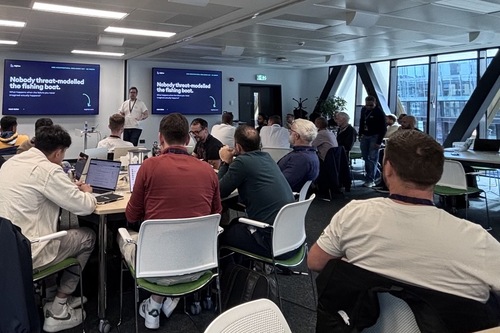
Manchester Digital ECOM 2026 brought together a wide range of perspectives on where e-commerce is heading, but a consistent theme ran through almost every session was that while AI is accelerating change, the fundamentals of good e-commerce still matter more than ever.
Across discussions spanning logistics, accessibility, performance marketing and emerging AI use cases, the same tension kept surfacing. The industry is pushing rapidly towards automation, agentic commerce and personalisation at scale, yet many organisations are still building the foundations required to make those ambitions work effectively.
What follows are the key themes that came from the event and what they mean in practice.
E-commerce businesses are increasingly being defined not just by what they sell, but by how efficiently and reliably they deliver it.
Advancements in automated warehousing are enabling significant gains in operational efficiency, with some organisations achieving up to tenfold improvements in speed. This is not simply an operational win; it directly shapes customer expectations. Faster fulfilment, including next-day delivery, is quickly becoming a baseline rather than a differentiator.
However, the shift towards automation is not about removing people entirely. Human oversight remains critical, particularly when processes fail or require intervention. The most effective models combine automation with human resilience, reducing reliance on temporary resource while maintaining service quality.
In this context, logistics is no longer a back-end function. It is a core part of the customer experience and therefore a core part of the brand.
While AI dominated the conversation, there was a clear recognition that many organisations are still not fully prepared to take advantage of it.
The effectiveness of AI is fundamentally dependent on the quality of the data it is built on. Without clean, structured and well-governed data, AI does not create value but instead amplifies existing issues. Challenges such as bias, hallucinations and data drift remain prevalent, reinforcing the need for robust governance frameworks and ongoing iteration.
Significant investment is being directed towards data infrastructure and observability, but this is an ongoing process rather than a solved problem. The gap between ambition and capability is still evident across much of the industry.
For performance marketing teams, this has a direct implication. Before scaling AI-driven activity, the priority must be ensuring that data pipelines, tracking frameworks and governance models are fit for purpose.
One of the most consistent themes across the event was the role of trust in modern e-commerce.
Trust is no longer a soft brand metric; it is a measurable driver of performance. It influences whether customers choose to engage, convert and return. Transparency in pricing, clarity in product information and fairness in customer treatment are all critical components.
This is particularly relevant in areas such as dynamic pricing, where consumer expectations are still evolving. While price fluctuations are accepted in sectors like travel, they can erode trust in categories where they are less expected for example ticketing. Similarly, regulatory developments are increasingly focused on ensuring that businesses provide accurate, complete and fair information to consumers, regardless of whether interactions are driven by humans or AI systems.
When trust breaks down, the impact is immediate. It affects not only revenue, but also brand perception and supply chain stability. In an increasingly competitive market, trust is becoming a key differentiator.
Accessibility was highlighted not just as a compliance requirement, but as a significant commercial opportunity.
Despite representing hundreds of billions in annual spending power, disabled users remain underserved by the vast majority of digital experiences. The fact that the overwhelming majority of websites still fail to meet accessibility standards illustrates the scale of the gap.
Importantly, improving accessibility does not only benefit a specific audience. It enhances usability for all users, leading to better overall experiences and improved conversion rates. Conversely, poor accessibility often results in friction, abandonment and lost revenue.
While AI introduces new possibilities, such as voice interfaces and conversational experiences, it is not a complete solution. Accessibility must be designed into products from the outset. Retrofitting solutions later is both more costly and less effective.
For many organisations, this represents one of the most immediate and underutilised opportunities for growth.
Beyond its impact on customer-facing experiences, AI is fundamentally changing how teams work.
The ability to move from idea to prototype in a matter of minutes is transforming product development cycles. Roles are evolving, with greater emphasis on prompt engineering, workflow design and AI oversight. In many cases, individuals are shifting from execution-focused roles to more strategic and operational positions.
However, this shift is not without challenges. There are concerns around the loss of craft in certain disciplines, as well as the risk of over-reliance on AI-generated outputs. There is also a longer-term question around skills development, particularly if foundational knowledge is not maintained.
The organisations that succeed will be those that intentionally guide this transition and use AI to enhance capability while continuing to invest in core skills and expertise.
In performance marketing, the most immediate impact of AI is being felt in workflow efficiency rather than strategy replacement.
Teams are using AI to accelerate creative production, testing and iteration. Structured approaches, such as reward-based systems and clearly defined guardrails, are enabling more consistent outputs while maintaining brand control. In some cases, AI agents are being deployed at a product or campaign level to support execution at scale.
Despite these advancements, the fundamentals remain unchanged. Clear audience definition, strong messaging and robust measurement frameworks are still essential. AI can enhance these processes, but it cannot replace them.
In practice, the most effective use cases are often the simplest for example, removing manual effort, increasing speed and enabling teams to focus on higher-value activity.
The traditional model of search-led discovery is being replaced by a far more complex ecosystem.
Consumers now encounter products across a wide range of touch points, including social platforms, video content, community forums and emerging AI-driven interfaces. While traditional search remains a dominant channel, it is no longer the sole entry point.
This fragmentation has significant implications for performance marketing. Attribution is becoming more challenging, as journeys span multiple platforms and formats. As a result, there is a growing need for more sophisticated measurement approaches and a greater emphasis on upper-funnel activity, particularly content strategy.
A diversified media strategy is no longer optional. It is essential for capturing demand across the full range of discovery channels.
Despite the level of attention it is receiving, fully AI-driven commerce remains in its early stages.
Traffic and conversion from AI-led journeys are still relatively limited, and there are ongoing concerns around trust, transparency and data control. The idea of fully agentic purchasing experiences, while compelling, is not yet widely adopted.
Equally there remains a question mark over whether consumers will ever want to actually buy within LLMs, instead preferring to take what they’ve learned and purchase through brand apps and websites.
There are also strategic considerations around ownership and control. Relying heavily on third-party AI platforms risks losing visibility into customer behaviour and limiting access to valuable first-party data.
For now, the most effective approach is pragmatic. Rather than focusing on external visibility within large language models, brands should prioritise enhancing their own owned experiences. Integrating AI into on-site journeys, particularly in areas such as product discovery and customer support, to offer a more immediate and controllable opportunity.
If there was one overarching takeaway from ECOM 2026, it is that the fundamentals of e-commerce remain unchanged.
Understanding customers, building trust, maintaining strong data foundations and delivering high-quality experiences are still the core drivers of success. AI does not replace these principles, it amplifies them.

Manchester Digital ECOM 2026 brought together a wide range of perspectives on where e-commerce is heading, but a consistent theme ran through almost every session was that while AI is accelerating change, the fundamentals of good e-commerce still matter more than ever.
Across discussions spanning logistics, accessibility, performance marketing and emerging AI use cases, the same tension kept surfacing. The industry is pushing rapidly towards automation, agentic commerce and personalisation at scale, yet many organisations are still building the foundations required to make those ambitions work effectively.
What follows are the key themes that came from the event and what they mean in practice.
E-commerce businesses are increasingly being defined not just by what they sell, but by how efficiently and reliably they deliver it.
Advancements in automated warehousing are enabling significant gains in operational efficiency, with some organisations achieving up to tenfold improvements in speed. This is not simply an operational win; it directly shapes customer expectations. Faster fulfilment, including next-day delivery, is quickly becoming a baseline rather than a differentiator.
However, the shift towards automation is not about removing people entirely. Human oversight remains critical, particularly when processes fail or require intervention. The most effective models combine automation with human resilience, reducing reliance on temporary resource while maintaining service quality.
In this context, logistics is no longer a back-end function. It is a core part of the customer experience and therefore a core part of the brand.
While AI dominated the conversation, there was a clear recognition that many organisations are still not fully prepared to take advantage of it.
The effectiveness of AI is fundamentally dependent on the quality of the data it is built on. Without clean, structured and well-governed data, AI does not create value but instead amplifies existing issues. Challenges such as bias, hallucinations and data drift remain prevalent, reinforcing the need for robust governance frameworks and ongoing iteration.
Significant investment is being directed towards data infrastructure and observability, but this is an ongoing process rather than a solved problem. The gap between ambition and capability is still evident across much of the industry.
For performance marketing teams, this has a direct implication. Before scaling AI-driven activity, the priority must be ensuring that data pipelines, tracking frameworks and governance models are fit for purpose.
One of the most consistent themes across the event was the role of trust in modern e-commerce.
Trust is no longer a soft brand metric; it is a measurable driver of performance. It influences whether customers choose to engage, convert and return. Transparency in pricing, clarity in product information and fairness in customer treatment are all critical components.
This is particularly relevant in areas such as dynamic pricing, where consumer expectations are still evolving. While price fluctuations are accepted in sectors like travel, they can erode trust in categories where they are less expected for example ticketing. Similarly, regulatory developments are increasingly focused on ensuring that businesses provide accurate, complete and fair information to consumers, regardless of whether interactions are driven by humans or AI systems.
When trust breaks down, the impact is immediate. It affects not only revenue, but also brand perception and supply chain stability. In an increasingly competitive market, trust is becoming a key differentiator.
Accessibility was highlighted not just as a compliance requirement, but as a significant commercial opportunity.
Despite representing hundreds of billions in annual spending power, disabled users remain underserved by the vast majority of digital experiences. The fact that the overwhelming majority of websites still fail to meet accessibility standards illustrates the scale of the gap.
Importantly, improving accessibility does not only benefit a specific audience. It enhances usability for all users, leading to better overall experiences and improved conversion rates. Conversely, poor accessibility often results in friction, abandonment and lost revenue.
While AI introduces new possibilities, such as voice interfaces and conversational experiences, it is not a complete solution. Accessibility must be designed into products from the outset. Retrofitting solutions later is both more costly and less effective.
For many organisations, this represents one of the most immediate and underutilised opportunities for growth.
Beyond its impact on customer-facing experiences, AI is fundamentally changing how teams work.
The ability to move from idea to prototype in a matter of minutes is transforming product development cycles. Roles are evolving, with greater emphasis on prompt engineering, workflow design and AI oversight. In many cases, individuals are shifting from execution-focused roles to more strategic and operational positions.
However, this shift is not without challenges. There are concerns around the loss of craft in certain disciplines, as well as the risk of over-reliance on AI-generated outputs. There is also a longer-term question around skills development, particularly if foundational knowledge is not maintained.
The organisations that succeed will be those that intentionally guide this transition and use AI to enhance capability while continuing to invest in core skills and expertise.
In performance marketing, the most immediate impact of AI is being felt in workflow efficiency rather than strategy replacement.
Teams are using AI to accelerate creative production, testing and iteration. Structured approaches, such as reward-based systems and clearly defined guardrails, are enabling more consistent outputs while maintaining brand control. In some cases, AI agents are being deployed at a product or campaign level to support execution at scale.
Despite these advancements, the fundamentals remain unchanged. Clear audience definition, strong messaging and robust measurement frameworks are still essential. AI can enhance these processes, but it cannot replace them.
In practice, the most effective use cases are often the simplest for example, removing manual effort, increasing speed and enabling teams to focus on higher-value activity.
The traditional model of search-led discovery is being replaced by a far more complex ecosystem.
Consumers now encounter products across a wide range of touch points, including social platforms, video content, community forums and emerging AI-driven interfaces. While traditional search remains a dominant channel, it is no longer the sole entry point.
This fragmentation has significant implications for performance marketing. Attribution is becoming more challenging, as journeys span multiple platforms and formats. As a result, there is a growing need for more sophisticated measurement approaches and a greater emphasis on upper-funnel activity, particularly content strategy.
A diversified media strategy is no longer optional. It is essential for capturing demand across the full range of discovery channels.
Despite the level of attention it is receiving, fully AI-driven commerce remains in its early stages.
Traffic and conversion from AI-led journeys are still relatively limited, and there are ongoing concerns around trust, transparency and data control. The idea of fully agentic purchasing experiences, while compelling, is not yet widely adopted.
Equally there remains a question mark over whether consumers will ever want to actually buy within LLMs, instead preferring to take what they’ve learned and purchase through brand apps and websites.
There are also strategic considerations around ownership and control. Relying heavily on third-party AI platforms risks losing visibility into customer behaviour and limiting access to valuable first-party data.
For now, the most effective approach is pragmatic. Rather than focusing on external visibility within large language models, brands should prioritise enhancing their own owned experiences. Integrating AI into on-site journeys, particularly in areas such as product discovery and customer support, to offer a more immediate and controllable opportunity.
If there was one overarching takeaway from ECOM 2026, it is that the fundamentals of e-commerce remain unchanged.
Understanding customers, building trust, maintaining strong data foundations and delivering high-quality experiences are still the core drivers of success. AI does not replace these principles, it amplifies them.
Manchester Digital ECOM 2026 brought together a wide range of perspectives on where e-commerce is heading, but a consistent theme ran through almost every session was that while AI is accelerating change, the fundamentals of good e-commerce still matter more than ever.
Across discussions spanning logistics, accessibility, performance marketing and emerging AI use cases, the same tension kept surfacing. The industry is pushing rapidly towards automation, agentic commerce and personalisation at scale, yet many organisations are still building the foundations required to make those ambitions work effectively.
What follows are the key themes that came from the event and what they mean in practice.
E-commerce businesses are increasingly being defined not just by what they sell, but by how efficiently and reliably they deliver it.
Advancements in automated warehousing are enabling significant gains in operational efficiency, with some organisations achieving up to tenfold improvements in speed. This is not simply an operational win; it directly shapes customer expectations. Faster fulfilment, including next-day delivery, is quickly becoming a baseline rather than a differentiator.
However, the shift towards automation is not about removing people entirely. Human oversight remains critical, particularly when processes fail or require intervention. The most effective models combine automation with human resilience, reducing reliance on temporary resource while maintaining service quality.
In this context, logistics is no longer a back-end function. It is a core part of the customer experience and therefore a core part of the brand.
While AI dominated the conversation, there was a clear recognition that many organisations are still not fully prepared to take advantage of it.
The effectiveness of AI is fundamentally dependent on the quality of the data it is built on. Without clean, structured and well-governed data, AI does not create value but instead amplifies existing issues. Challenges such as bias, hallucinations and data drift remain prevalent, reinforcing the need for robust governance frameworks and ongoing iteration.
Significant investment is being directed towards data infrastructure and observability, but this is an ongoing process rather than a solved problem. The gap between ambition and capability is still evident across much of the industry.
For performance marketing teams, this has a direct implication. Before scaling AI-driven activity, the priority must be ensuring that data pipelines, tracking frameworks and governance models are fit for purpose.
One of the most consistent themes across the event was the role of trust in modern e-commerce.
Trust is no longer a soft brand metric; it is a measurable driver of performance. It influences whether customers choose to engage, convert and return. Transparency in pricing, clarity in product information and fairness in customer treatment are all critical components.
This is particularly relevant in areas such as dynamic pricing, where consumer expectations are still evolving. While price fluctuations are accepted in sectors like travel, they can erode trust in categories where they are less expected for example ticketing. Similarly, regulatory developments are increasingly focused on ensuring that businesses provide accurate, complete and fair information to consumers, regardless of whether interactions are driven by humans or AI systems.
When trust breaks down, the impact is immediate. It affects not only revenue, but also brand perception and supply chain stability. In an increasingly competitive market, trust is becoming a key differentiator.
Accessibility was highlighted not just as a compliance requirement, but as a significant commercial opportunity.
Despite representing hundreds of billions in annual spending power, disabled users remain underserved by the vast majority of digital experiences. The fact that the overwhelming majority of websites still fail to meet accessibility standards illustrates the scale of the gap.
Importantly, improving accessibility does not only benefit a specific audience. It enhances usability for all users, leading to better overall experiences and improved conversion rates. Conversely, poor accessibility often results in friction, abandonment and lost revenue.
While AI introduces new possibilities, such as voice interfaces and conversational experiences, it is not a complete solution. Accessibility must be designed into products from the outset. Retrofitting solutions later is both more costly and less effective.
For many organisations, this represents one of the most immediate and underutilised opportunities for growth.
Beyond its impact on customer-facing experiences, AI is fundamentally changing how teams work.
The ability to move from idea to prototype in a matter of minutes is transforming product development cycles. Roles are evolving, with greater emphasis on prompt engineering, workflow design and AI oversight. In many cases, individuals are shifting from execution-focused roles to more strategic and operational positions.
However, this shift is not without challenges. There are concerns around the loss of craft in certain disciplines, as well as the risk of over-reliance on AI-generated outputs. There is also a longer-term question around skills development, particularly if foundational knowledge is not maintained.
The organisations that succeed will be those that intentionally guide this transition and use AI to enhance capability while continuing to invest in core skills and expertise.
In performance marketing, the most immediate impact of AI is being felt in workflow efficiency rather than strategy replacement.
Teams are using AI to accelerate creative production, testing and iteration. Structured approaches, such as reward-based systems and clearly defined guardrails, are enabling more consistent outputs while maintaining brand control. In some cases, AI agents are being deployed at a product or campaign level to support execution at scale.
Despite these advancements, the fundamentals remain unchanged. Clear audience definition, strong messaging and robust measurement frameworks are still essential. AI can enhance these processes, but it cannot replace them.
In practice, the most effective use cases are often the simplest for example, removing manual effort, increasing speed and enabling teams to focus on higher-value activity.
The traditional model of search-led discovery is being replaced by a far more complex ecosystem.
Consumers now encounter products across a wide range of touch points, including social platforms, video content, community forums and emerging AI-driven interfaces. While traditional search remains a dominant channel, it is no longer the sole entry point.
This fragmentation has significant implications for performance marketing. Attribution is becoming more challenging, as journeys span multiple platforms and formats. As a result, there is a growing need for more sophisticated measurement approaches and a greater emphasis on upper-funnel activity, particularly content strategy.
A diversified media strategy is no longer optional. It is essential for capturing demand across the full range of discovery channels.
Despite the level of attention it is receiving, fully AI-driven commerce remains in its early stages.
Traffic and conversion from AI-led journeys are still relatively limited, and there are ongoing concerns around trust, transparency and data control. The idea of fully agentic purchasing experiences, while compelling, is not yet widely adopted.
Equally there remains a question mark over whether consumers will ever want to actually buy within LLMs, instead preferring to take what they’ve learned and purchase through brand apps and websites.
There are also strategic considerations around ownership and control. Relying heavily on third-party AI platforms risks losing visibility into customer behaviour and limiting access to valuable first-party data.
For now, the most effective approach is pragmatic. Rather than focusing on external visibility within large language models, brands should prioritise enhancing their own owned experiences. Integrating AI into on-site journeys, particularly in areas such as product discovery and customer support, to offer a more immediate and controllable opportunity.
If there was one overarching takeaway from ECOM 2026, it is that the fundamentals of e-commerce remain unchanged.
Understanding customers, building trust, maintaining strong data foundations and delivering high-quality experiences are still the core drivers of success. AI does not replace these principles, it amplifies them.
Manchester Digital ECOM 2026 brought together a wide range of perspectives on where e-commerce is heading, but a consistent theme ran through almost every session was that while AI is accelerating change, the fundamentals of good e-commerce still matter more than ever.
Across discussions spanning logistics, accessibility, performance marketing and emerging AI use cases, the same tension kept surfacing. The industry is pushing rapidly towards automation, agentic commerce and personalisation at scale, yet many organisations are still building the foundations required to make those ambitions work effectively.
What follows are the key themes that came from the event and what they mean in practice.
E-commerce businesses are increasingly being defined not just by what they sell, but by how efficiently and reliably they deliver it.
Advancements in automated warehousing are enabling significant gains in operational efficiency, with some organisations achieving up to tenfold improvements in speed. This is not simply an operational win; it directly shapes customer expectations. Faster fulfilment, including next-day delivery, is quickly becoming a baseline rather than a differentiator.
However, the shift towards automation is not about removing people entirely. Human oversight remains critical, particularly when processes fail or require intervention. The most effective models combine automation with human resilience, reducing reliance on temporary resource while maintaining service quality.
In this context, logistics is no longer a back-end function. It is a core part of the customer experience and therefore a core part of the brand.
While AI dominated the conversation, there was a clear recognition that many organisations are still not fully prepared to take advantage of it.
The effectiveness of AI is fundamentally dependent on the quality of the data it is built on. Without clean, structured and well-governed data, AI does not create value but instead amplifies existing issues. Challenges such as bias, hallucinations and data drift remain prevalent, reinforcing the need for robust governance frameworks and ongoing iteration.
Significant investment is being directed towards data infrastructure and observability, but this is an ongoing process rather than a solved problem. The gap between ambition and capability is still evident across much of the industry.
For performance marketing teams, this has a direct implication. Before scaling AI-driven activity, the priority must be ensuring that data pipelines, tracking frameworks and governance models are fit for purpose.
One of the most consistent themes across the event was the role of trust in modern e-commerce.
Trust is no longer a soft brand metric; it is a measurable driver of performance. It influences whether customers choose to engage, convert and return. Transparency in pricing, clarity in product information and fairness in customer treatment are all critical components.
This is particularly relevant in areas such as dynamic pricing, where consumer expectations are still evolving. While price fluctuations are accepted in sectors like travel, they can erode trust in categories where they are less expected for example ticketing. Similarly, regulatory developments are increasingly focused on ensuring that businesses provide accurate, complete and fair information to consumers, regardless of whether interactions are driven by humans or AI systems.
When trust breaks down, the impact is immediate. It affects not only revenue, but also brand perception and supply chain stability. In an increasingly competitive market, trust is becoming a key differentiator.
Accessibility was highlighted not just as a compliance requirement, but as a significant commercial opportunity.
Despite representing hundreds of billions in annual spending power, disabled users remain underserved by the vast majority of digital experiences. The fact that the overwhelming majority of websites still fail to meet accessibility standards illustrates the scale of the gap.
Importantly, improving accessibility does not only benefit a specific audience. It enhances usability for all users, leading to better overall experiences and improved conversion rates. Conversely, poor accessibility often results in friction, abandonment and lost revenue.
While AI introduces new possibilities, such as voice interfaces and conversational experiences, it is not a complete solution. Accessibility must be designed into products from the outset. Retrofitting solutions later is both more costly and less effective.
For many organisations, this represents one of the most immediate and underutilised opportunities for growth.
Beyond its impact on customer-facing experiences, AI is fundamentally changing how teams work.
The ability to move from idea to prototype in a matter of minutes is transforming product development cycles. Roles are evolving, with greater emphasis on prompt engineering, workflow design and AI oversight. In many cases, individuals are shifting from execution-focused roles to more strategic and operational positions.
However, this shift is not without challenges. There are concerns around the loss of craft in certain disciplines, as well as the risk of over-reliance on AI-generated outputs. There is also a longer-term question around skills development, particularly if foundational knowledge is not maintained.
The organisations that succeed will be those that intentionally guide this transition and use AI to enhance capability while continuing to invest in core skills and expertise.
In performance marketing, the most immediate impact of AI is being felt in workflow efficiency rather than strategy replacement.
Teams are using AI to accelerate creative production, testing and iteration. Structured approaches, such as reward-based systems and clearly defined guardrails, are enabling more consistent outputs while maintaining brand control. In some cases, AI agents are being deployed at a product or campaign level to support execution at scale.
Despite these advancements, the fundamentals remain unchanged. Clear audience definition, strong messaging and robust measurement frameworks are still essential. AI can enhance these processes, but it cannot replace them.
In practice, the most effective use cases are often the simplest for example, removing manual effort, increasing speed and enabling teams to focus on higher-value activity.
The traditional model of search-led discovery is being replaced by a far more complex ecosystem.
Consumers now encounter products across a wide range of touch points, including social platforms, video content, community forums and emerging AI-driven interfaces. While traditional search remains a dominant channel, it is no longer the sole entry point.
This fragmentation has significant implications for performance marketing. Attribution is becoming more challenging, as journeys span multiple platforms and formats. As a result, there is a growing need for more sophisticated measurement approaches and a greater emphasis on upper-funnel activity, particularly content strategy.
A diversified media strategy is no longer optional. It is essential for capturing demand across the full range of discovery channels.
Despite the level of attention it is receiving, fully AI-driven commerce remains in its early stages.
Traffic and conversion from AI-led journeys are still relatively limited, and there are ongoing concerns around trust, transparency and data control. The idea of fully agentic purchasing experiences, while compelling, is not yet widely adopted.
Equally there remains a question mark over whether consumers will ever want to actually buy within LLMs, instead preferring to take what they’ve learned and purchase through brand apps and websites.
There are also strategic considerations around ownership and control. Relying heavily on third-party AI platforms risks losing visibility into customer behaviour and limiting access to valuable first-party data.
For now, the most effective approach is pragmatic. Rather than focusing on external visibility within large language models, brands should prioritise enhancing their own owned experiences. Integrating AI into on-site journeys, particularly in areas such as product discovery and customer support, to offer a more immediate and controllable opportunity.
If there was one overarching takeaway from ECOM 2026, it is that the fundamentals of e-commerce remain unchanged.
Understanding customers, building trust, maintaining strong data foundations and delivering high-quality experiences are still the core drivers of success. AI does not replace these principles, it amplifies them.